Wedding planning is exciting right up until the numbers start showing up. Once you start looking at venues and all the little details in between, the budget ends up shaping almost every decision you make.
That’s why learning how to budget for a wedding early matters. The average U.S. wedding costs around $33,000 to $34,200, but the real number can look very different depending on where you’re getting married and how many people you’re inviting. A clear budget helps you avoid unnecessary stress and make room for the parts of the wedding that actually matter most to you.
Why setting a wedding budget early matters

The first real step in figuring out how to set a wedding budget is having a clear number to work with. Without it, it’s easy to fall in love with venues or vendors that don’t match what you can actually afford.
Your budget shapes almost every decision you’ll make. It affects your guest count, venue options, catering style, and how much you can spend on things like photography or decorations. Looking at a wedding budget early on can help you understand where your money typically goes and set realistic expectations.
It also keeps spending under control. Weddings involve more pieces than most couples expect, from big-ticket vendors to smaller costs like rentals and service fees. Without a plan, those add up fast. A clear budget helps you prioritize what matters and avoid financial stress later.
Budgeting early also makes vendor research easier. When you know your price range, you can compare options faster and make better decisions without second-guessing. This is where your budgeting skills actually make a difference.
Finally, it helps you stay organized throughout the process. With multiple payments and deadlines, tracking your spending becomes just as important as setting the budget itself. Couples who start early usually feel more in control and less overwhelmed as planning moves forward.
What is a reasonable wedding budget?
There’s no single answer. The right number depends on your finances and the kind of wedding you want to have. A “reasonable” budget is simply one you can afford comfortably while still covering the essentials.
That said, there are general ranges that help set expectations. Smaller weddings often fall between $5,000 and $10,000, especially with fewer guests or simpler setups. A more traditional wedding usually lands at around $30,000 or more based on national averages. Luxury weddings can start at $50,000 and go up quickly depending on the scale and experience.
Costs vary because a few key factors drive most of your spending. Major cities and destination venues tend to be more expensive since location plays a big role.
Guest count is another major factor since many costs are priced per person. Venue type and time of year also affect your total. Peak wedding seasons like late spring through early fall usually come with higher prices due to demand, while off-season dates can offer more flexibility and lower rates.
As you figure out how to create a wedding budget, it helps to look at these ranges as a guide, not a rule. Using a tracker for your wedding budget can also give you a clearer picture of where your money is going and how your decisions impact the total.
How to create a wedding budget step by step
Once you know what you can realistically spend, the next step is turning that number into a clear plan.
Step 1: Determine who is contributing financially
Start by identifying exactly who is paying for the wedding. Most couples rely on a mix of sources, including their own savings or money from their parents.
Don’t assume anything. Get clear on the numbers early. Ask each contributor how much they’re giving and if it’s tied to a specific expense. For example, someone might cover the rehearsal dinner or flowers.
This clarity avoids confusion later and keeps expectations aligned. It also helps you build a more accurate plan instead of guessing what you can afford. Once you know what’s coming in, you can move forward with a budget that actually works.
Step 2: Decide how much you can realistically afford
Once you know what’s coming in, figure out how much you can personally contribute. Look at your savings and monthly expenses, or any debts that you are currently paying off. This gives you a clear limit before you start making decisions.
Be honest about what feels comfortable, not just what’s possible on paper. Don’t rely on credit or stretch your finances just to match a certain type of wedding. The goal is to celebrate without carrying financial stress into your marriage.
It helps to map everything out in a budget sheet for wedding planning. List your available funds alongside your fixed expenses so you can see what’s left. A clear view of your numbers makes it easier to stick to your budget as you move forward.
Step 3: Identify your wedding priorities
Now decide what actually matters most to both of you. This could be a large guest list, a premium venue, photography, designer attire, or detailed décor. Your priorities will guide where your budget should go.
Keep it simple by choosing your top three. These are the areas you’re willing to spend more on, while everything else becomes flexible. Not every category needs equal attention or budget.
Every choice comes with a tradeoff. Spending more on one priority means cutting back somewhere else, whether that’s guest count or extras. Being clear on this early helps you make decisions faster without second-guessing later.
Step 4: Estimate your guest count
Create a rough guest list to estimate how many people you’re inviting. This number affects some of the biggest parts of your budget, so it’s better to figure it out early. Even a ballpark estimate helps you plan more accurately.
Guest count directly impacts catering, venue size, rentals, and invitations. Since many vendors charge per person, every added guest increases your total cost. This is why guest count is often the biggest driver of your wedding budget.
Small changes can make a big difference. Adding or cutting even 10 to 20 guests can shift your costs across multiple categories. Getting clear on your numbers now makes the rest of your planning decisions easier.
Step 5: Create your wedding budget breakdown
Here, you need to divide your total budget into categories. A typical wedding budget breakdown helps you see how much to allocate for each part of the wedding. Most couples follow a structure similar to this:
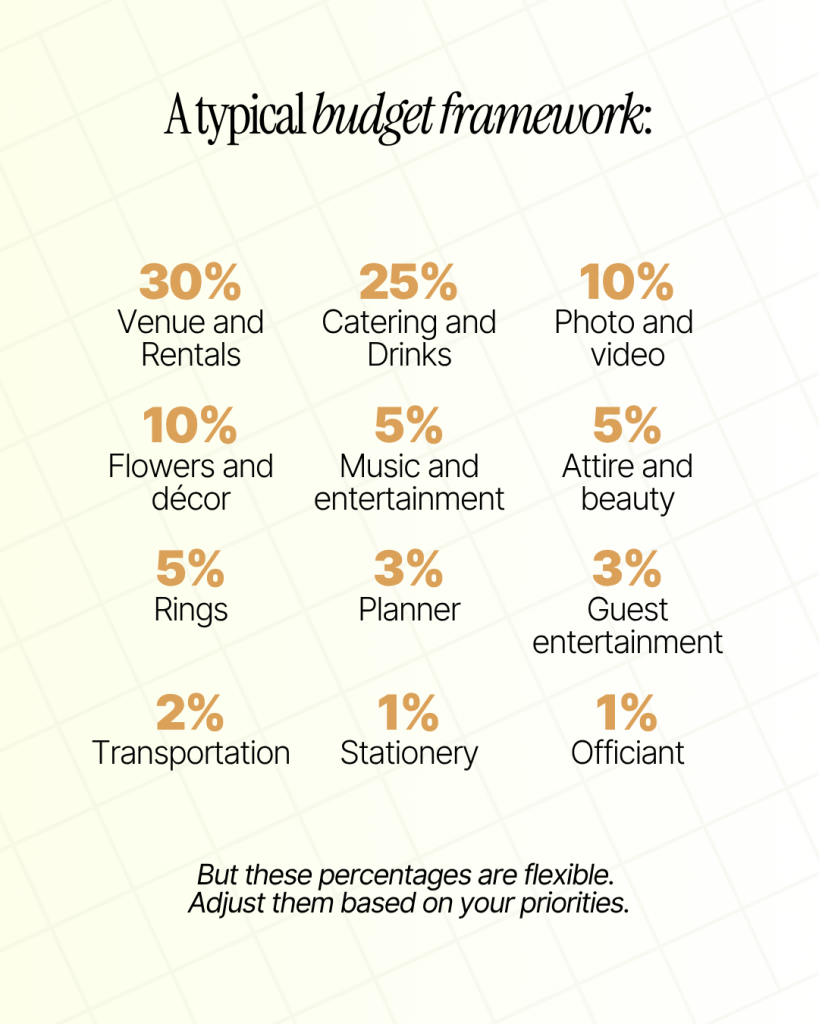
However, this just gives you a starting point, not a fixed rule. Your actual numbers will shift based on your priorities and guest count. For example, you might spend more on photography and less on décor, or the other way around.
The goal is clarity, not perfection. Breaking your budget down makes it easier to plan and adjust to stay on track as you book vendors. Once you see where your money is going, your decisions become much more straightforward.
Complete list of wedding expenses
A wedding budget includes more than most couples expect. Having a clear list of wedding expenses helps you see where your money will go and avoid missing smaller costs that add up quickly. Most budgets are built around a few major categories, with venue and catering usually taking the largest share. Here is a bulleted compilation of things that you need to consider for your wedding expenses:
Venue and rentals (often the largest portion of the budget)
- Ceremony and reception space
- Tables, chairs, linens, and tableware
- Lighting, dance floors, tents (for outdoor weddings)
- Setup, cleanup, and venue staff
Catering, cake, and drinks (typically priced per guest)
- Food service: plated, buffet, family-style, or food stations
- Cocktail hour, main meal, and dessert
- Alcohol options: open bar, limited bar, signature drinks
- Bartender fees, glassware, and service staff
Photography and videography
- Lead photographer and second shooter
- Engagement session and full-day coverage
- Photo editing, albums, and digital galleries
- Videography: highlight film, full recording, social clips
Flowers and décor
- Bridal bouquet and wedding party flowers
- Ceremony décor and reception centerpieces
- Signage, candles, lighting, and styling elements
- Larger installations like arches or backdrops
Music and entertainment
- DJ or live band
- Ceremony and cocktail hour musicians
- Extras like photo booths or specialty performers
Wedding attire and beauty
- Wedding dress, suit or tuxedo
- Alterations, shoes, and accessories
- Hair and makeup services
Wedding rings
- Bands for both partners
- Engraving, resizing, insurance, and accessories
Wedding planner or coordinator
- Full-service planner, partial planner, or day-of coordinator
- Helps with vendor coordination, timelines, and logistics
Stationery
- Invitations and RSVP cards
- Ceremony programs and menus
- Place cards, seating charts, and thank-you cards
Transportation
- Guest shuttles or transportation
- Wedding party transport
- Getaway car for the couple
Wedding expenses couples often forget
Most couples plan for the big-ticket items first, then get surprised by smaller costs that quietly add up. These overlooked expenses can push your total higher than expected if you don’t plan for them early. Factoring them in is one of the most practical smart budgeting tips for wedding expenses.
- Vendor tips are one of the most common misses. Gratuities typically range from 5% to 15% (sometimes higher) depending on the vendor. With multiple vendors involved, the total adds up fast. Always check contracts too, since some venues already include service charges.
- Legal and time-related costs are easy to overlook. A marriage license usually costs around $25 to $100, and overtime charges can apply if your event runs longer than planned. Vendors like photographers and venues often charge hourly once you go past the agreed-upon time.
- Pre- and post-wedding events also affect your budget. This includes the rehearsal dinner and post-wedding brunch, all of which come with their own venue and logistics costs. Even if someone else hosts them, it’s still worth accounting for the full picture.
- There are also hidden operational costs. Vendor travel fees and service charges can increase your bill by 15% to 22% or more, depending on the provider. These are often added at the end, which is why they catch couples off guard.
To cope with this, set aside a contingency fund. Most planners recommend 5% to 15% of your total budget for unexpected expenses like last-minute changes or extra rentals. This buffer keeps you from going over budget when something inevitably shifts.
Wedding budget tools that help you stay organized
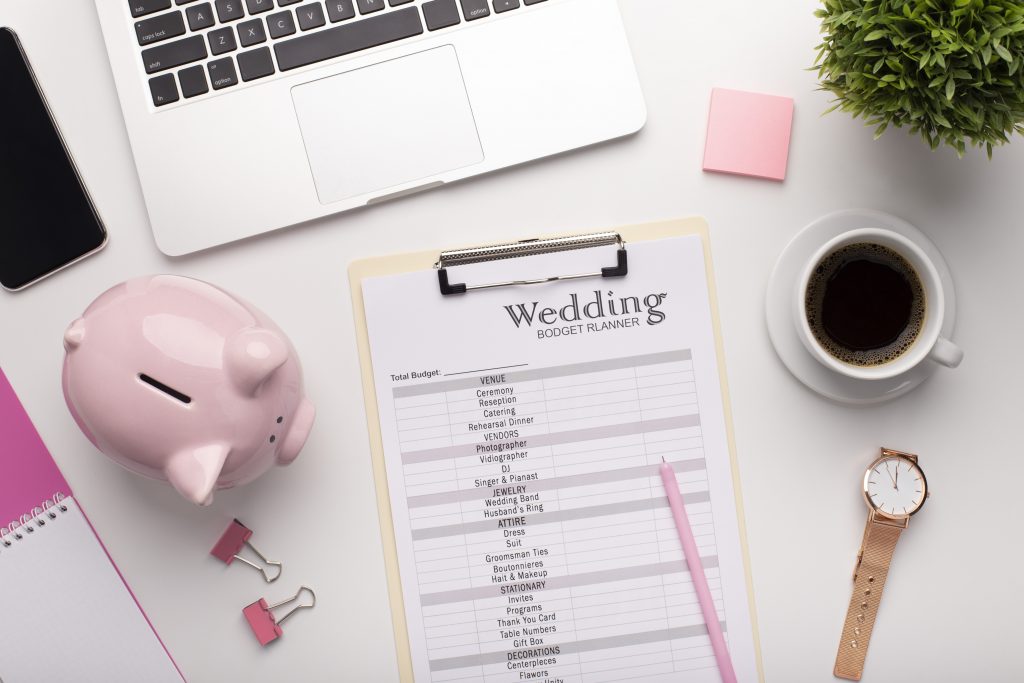
Planning a wedding means tracking multiple vendors and payments at the same time. A reliable wedding budget tracker helps you stay on top of spending and avoid surprises.
Spreadsheets are the most common option for a wedding planning budget sheet. You can use Google Sheets or Excel to track estimated vs. actual costs and payment deadlines. They’re flexible and give you full control, but you’ll need to update them manually.
Wedding planning apps combine budgeting with other tools in one place. Platforms like Zola and WeddingWire include budget trackers and guest list management. This makes it easier to track spending while organizing everything else at the same time.
Dedicated budgeting tools focus more on financial tracking. These include wedding budget calculators or apps that track expenses in real time and compare them to your planned budget. They’re useful if you want a clearer view of your spending habits and payment schedules.
The goal is simple: keep everything in one place. Whether you use a spreadsheet or an app, having a clear system helps you track every expense and stick to your budget.
Wedding budget tips that actually save money
Saving money doesn’t mean cutting everything. It means making smarter decisions. The most effective wedding budget tips focus on the biggest cost drivers like guest count and venue. Small changes in these areas can lead to the biggest savings. Here are some of the wedding budget tips that can actually save you money:
- Reduce your guest count
Fewer guests lower costs across multiple categories at once. Catering, rentals, invitations, and favors are all priced per person. Even trimming a small number of guests can save thousands.
- Choose off-season or weekday dates
Peak season drives prices up due to demand. Booking during off-season months or on weekdays can reduce venue and vendor costs significantly. Some discounts can reach 25–40% depending on availability.
- Pick venues with rentals included
Some venues already include tables, chairs, linens, and basic lighting. This removes the need for separate rental vendors and extra delivery fees. It also simplifies your planning.
- Use digital invitations
Printed invitations come with design and printing costs. Digital invites or wedding websites cut these expenses almost entirely. Guests also find them easier to access and respond to.
- Skip extras that don’t add value
Not every detail needs a budget. Things like elaborate favors or overly complex décor often go unnoticed. Focus on elements guests actually experience, like food and music.
- Compare vendor quotes
Prices vary widely between vendors offering similar services. Getting multiple quotes helps you spot better deals and negotiate. It also gives you a clearer idea of what’s included in each package.
- DIY selectively
DIY can save money if done right. Stick to simple projects like signage or small décor pieces you can prepare early. Avoid taking on too much, especially close to the wedding date.
- Prioritize what matters most
Spend more on the elements you care about and scale back on the rest. This keeps your budget focused instead of spread thin.
Being intentional with your choices makes a bigger impact than cutting randomly. When you focus on what matters and adjust the rest, your budget works for you—not against you.
Budget-friendly ways to preserve wedding memories
Capturing your wedding doesn’t have to mean overspending. The key is choosing options that give you lasting value, not just content you’ll scroll past once. Focus on what you’ll actually revisit years from now.
Photography is usually the priority, but you don’t always need the biggest package. A skilled photographer with shorter coverage or fewer add-ons can still capture the most important moments. You can also skip extras like multiple albums and upgrade later if you want.
Videography can be flexible too. Instead of a full-day production, some couples choose highlight films or shorter coverage to reduce costs. This still gives you a meaningful way to relive the day without committing to a higher price point.
What many couples overlook, though, are the voices and stories behind the day.
This is where The Toast fits naturally. Instead of adding another traditional vendor, it focuses on collecting and turning guest messages into a professionally edited keepsake video. You end up with something personal, emotional, and completely different from standard wedding footage.
Final thoughts
A wedding budget isn’t there to limit your celebration. It’s there to help you stay focused on what actually matters and make decisions with confidence. When you have a clear plan, you’re shaping the kind of experience you want to have.
Years from now, you won’t be thinking about how much you spent on the venue or rentals. You’ll remember the people who showed up and the moments you shared. That’s where the real value of your wedding is.
So, spend with intention. Prioritize meaningful experiences and lasting memories. Your budget will be easier to build and follow.
FAQs about wedding budgets
How do you start planning a budget for a wedding?
Start by looking at your total available funds. Include contributions from you and your family. Set a realistic limit, estimate your guest count, research costs, and allocate your budget across key categories.
What percentage of a wedding budget goes to the venue?
The venue typically takes about 20–30% of the total budget, or 40–50% when combined with catering and drinks. It’s usually the largest expense because it covers the core guest experience.
How can couples reduce wedding costs?
Couples can lower costs by reducing the guest list, choosing off-season or weekday dates, and simplifying décor and extras. Focusing on priorities helps cut spending without losing meaning.
How much should you save before planning a wedding?
There’s no fixed amount, but couples should set a total budget based on savings and maintain an emergency fund. Many spend months or years saving, especially since average weddings can cost $31,000 to $36,000.
Is a $10,000 wedding realistic?
Yes, but it requires careful planning and tradeoffs. Couples usually keep guest counts smaller and limit extras to stay within budget.