
Creating your wedding guest list sounds simple… until you actually start writing names down. What begins as a rough idea can quickly turn into a long, overwhelming list.
This one decision shapes almost everything that follows. Your budget, your venue, even the overall feel of your wedding all come back to who’s on that list.
If you’re wondering how to make a wedding guest list without second-guessing every name, this guide will walk you through it step by step.
Why your wedding guest list matters
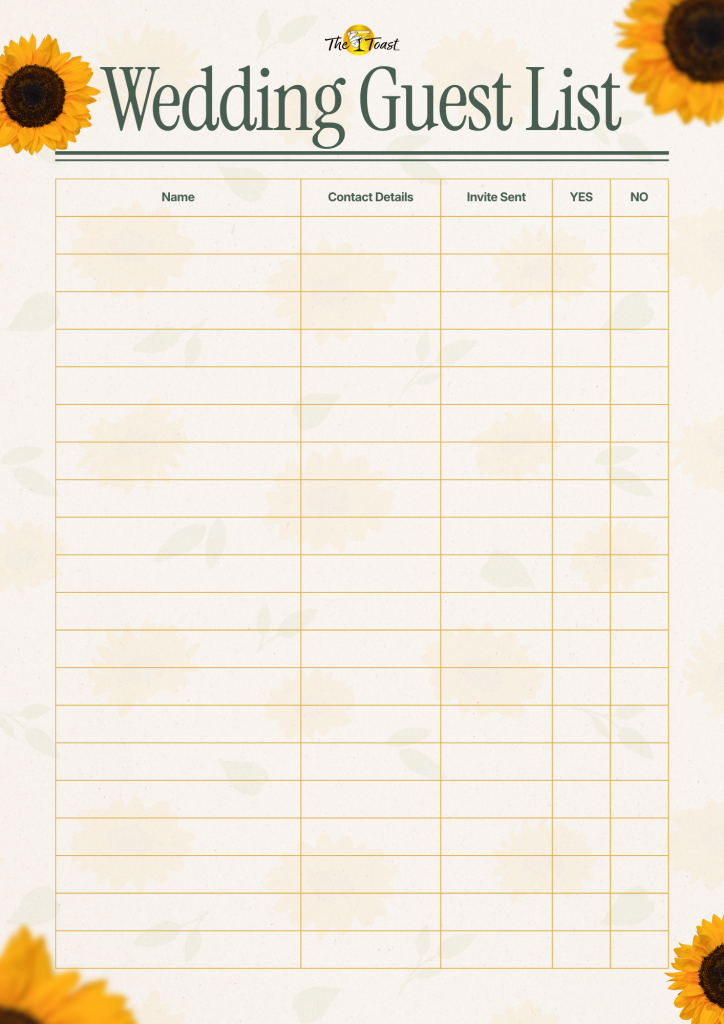
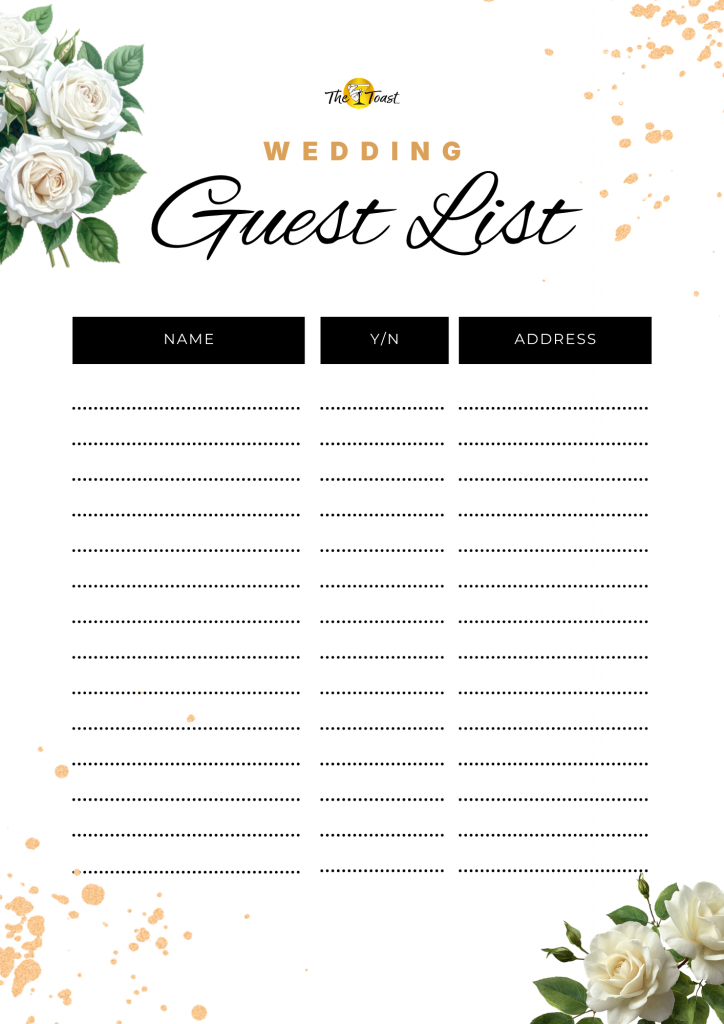
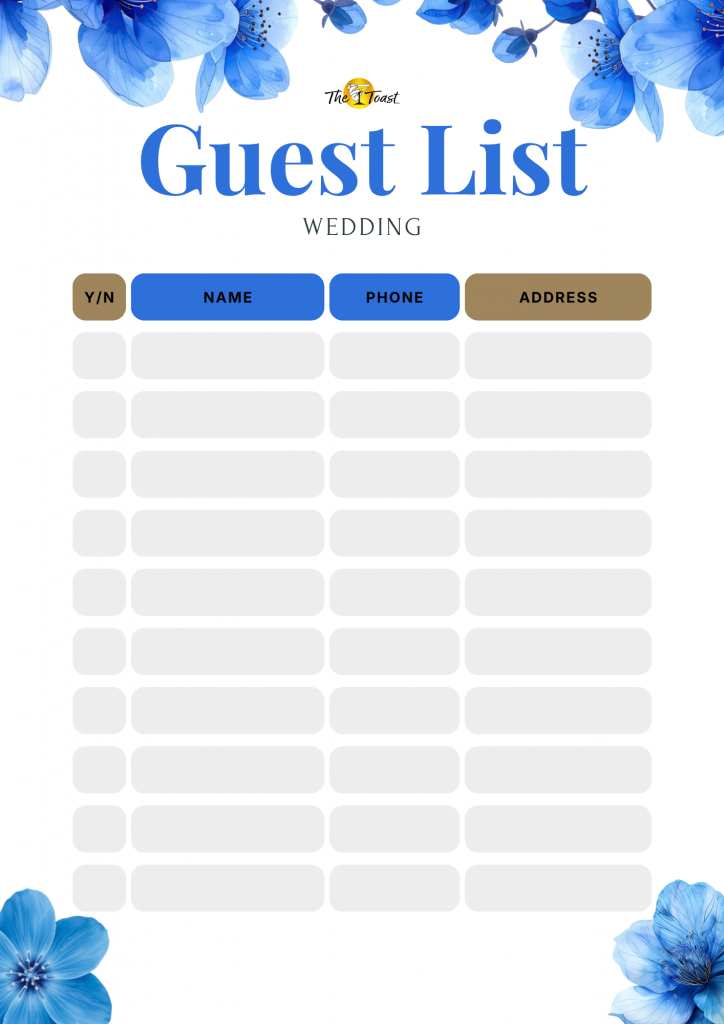
Your guest list is the starting point for almost every wedding decision. Even a rough headcount helps you figure out your budget, narrow down venues, and understand the overall scale of your day.
Most wedding costs are tied to the number of guests. Catering, rentals, seating, and even stationery are usually priced per person, so the list directly affects how much you’ll spend.
Add ten more people, and you’re not just adding chairs. You’re increasing multiple line items at once.
The size of your guest list also shapes the atmosphere. A smaller group feels more personal and relaxed, while a larger one brings more energy and a more social vibe. That shift changes how the entire day plays out, from the flow of the event to how much time you can spend with each guest.
Then there’s the emotional side. You’re balancing family expectations, friendships, and your own priorities. It’s one of the few parts of wedding planning where logistics and feelings collide, which is why it can get tricky fast.
Before you make your wedding guest list
Before you start listing names, you need a clear direction. A few early decisions will shape how your list comes together and help you avoid second-guessing later. This is where you set boundaries before the list starts growing faster than expected.
Define your wedding vision
Start with the kind of wedding you actually want. Decide if you’re aiming for something intimate, mid-sized, or a larger celebration, and who you want at the center of it. Your wedding party guest list should be built around the people who matter most.
Set a realistic budget
Your budget will limit how many people you can invite, whether you like it or not. Knowing your numbers early makes it easier to stay in control as you figure out how to organize a wedding guest list.
Consider venue capacity
Your venue sets a hard limit on how many guests you can host. If your list goes beyond that, you’ll either need to cut people or change venues. It’s much easier to adjust early than fix it later once decisions are locked in.
How to make a wedding guest list step by step
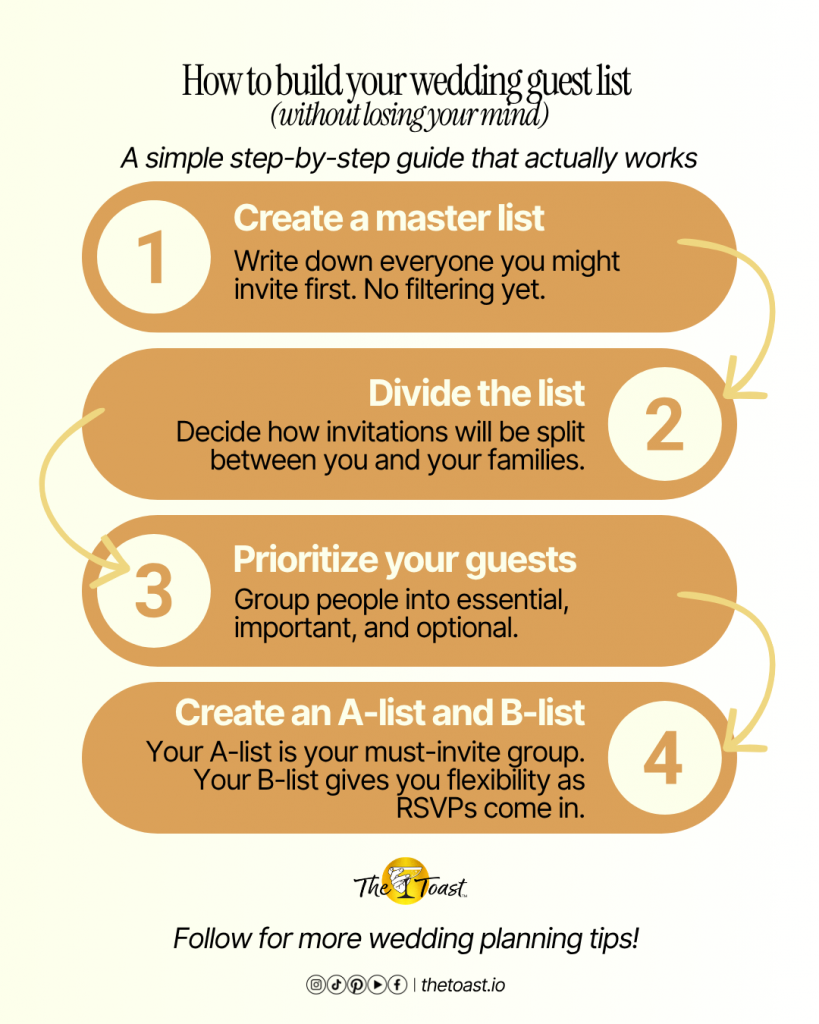
Once you’ve set your boundaries, you can start building the list itself. The easiest way to do that is in stages, so you’re not making every decision at once.
Step 1: Create a master list
Start by writing down everyone you might invite before you worry about cuts. Include immediate family, extended family, close friends, coworkers, family friends, and anyone else who could realistically make the list.
The point is to see the full picture first, because it’s easier to trim a complete list than build one from memory later.
Step 2: Divide the guest list between families
Once your master list is down, decide how invitations will be split. Some couples divide them evenly between themselves and both families, while others give the couple a larger share and split the rest between each side of the family.
This step helps set expectations early, especially if parents are contributing financially or have their own must-invite names.
Step 3: Prioritize your guests
Now rank people by importance so you know who needs to be invited first.
A simple way to do this is to separate guests into essential, important, and optional groups based on how close they are to you and how involved they are in your life. This gives you a clear order to follow if your list needs to shrink.
Step 4: Create an A-list, B-list, and T-list
After prioritizing, turn your list into clear groups. Your A-list includes the people you absolutely want there, while your B-list includes guests you’ll invite if space opens up after RSVPs come in.
This keeps your numbers under control without closing the door on additional guests later. It also gives you flexibility as plans change.
You can also create what we like to call a “T-list.” These are the people who may not be able to attend in person—whether they live far away, have schedule conflicts, or can’t travel—but can be included via The Toast.
Instead of leaving them out, you include them in your wedding video keepsake. You can invite these guests to share messages, stories, or well wishes that become part of the wedding experience.
Who usually goes on a wedding guest list
Most couples build their list by grouping people based on their relationship. This keeps things organized and makes it easier to ow see where your numbers are going. It also helps you shape your list without missing anyone important.
Here’s how most guest lists are typically structured:
| Category | Who to include | Notes |
| Immediate family | Parents, grandparents, siblings, nieces and nephews | Usually non-negotiable and invited first |
| Friends | Childhood friends, school friends, close social circles | Focus on people you still have an active relationship with |
| Extended family | Aunts, uncles, cousins | Depends on closeness, traditions, and guest count limits |
| Coworkers | Close colleagues you see outside work | Usually limited to avoid awkwardness or over-inviting |
| Family friends | Parents’ friends, longtime family connections | Often included if they’ve been part of your life growing up |
| Remote guests | Family, friends, extended family, coworkers, family friends who can’t attend | Guests who can’t travel, live abroad, or RSVP no can still be included through video messages or keepsakes |
Wedding guest list etiquette couples should know
Once you start locking in names, a few etiquette rules will save you from awkward situations later.
Plus-one rules
You don’t have to give everyone a plus-one. Married, engaged, and long-term couples are usually invited together, and your wedding party typically gets one as well. Beyond that, decide your rule and stick to it so no one feels singled out.
Inviting children
You’ll need to choose if kids are included or not. Inviting them adds to your numbers quickly, while going adults-only keeps things simpler. Either way, be clear on the invitation so guests know exactly who’s invited.
Handling family expectations
Parents may want a say, especially if they’re contributing. That can mean requests to invite their friends or extend the list beyond what you planned. It helps to agree on a set number of guest spots early so expectations are clear from the start.
How to trim your wedding guest list
Most couples start with more names than they can realistically invite. Once you see your numbers, trimming becomes necessary to stay within budget and space. These are the easiest ways to cut it down without overthinking every name.
- Cut categories instead of individuals: It’s easier to remove entire groups than pick people one by one. For example, you can choose not to invite coworkers at all instead of deciding which ones make the cut. This keeps things fair and avoids awkward situations.
- Use the one-year rule: If you haven’t spoken to someone in the past year, it’s worth reconsidering the invite. This helps you focus on relationships that are still active, not just people you used to be close with. You can still make exceptions for family or long-distance friendships, though.
- Limit plus-ones: Plus-ones can quickly double your numbers if you’re not careful. Stick to clear rules, like inviting married or long-term partners only, and apply them consistently. This keeps your list manageable without breaking basic etiquette.
- Consider an adults-only wedding: Children can significantly increase your guest count, especially if many guests have families. Choosing an adults-only event is one of the fastest ways to reduce numbers. Just make sure the rule is clear so guests know what to expect and they can make arrangements as needed.
How to organize a wedding guest list

Once your list is set, the next step is keeping everything organized. Details can slip if you don’t have a system in place. The goal is to keep all guest information in one place and easy to update.
Use spreadsheets or wedding planning apps
Start with a tool that lets you track everything clearly. A spreadsheet or planning app works best since you can sort, filter, and update details as things change. Include key fields like names, contact info, RSVP status, dietary restrictions, and notes so nothing gets missed.
Track RSVPs carefully
Keep responses organized as they come in so you always know your numbers. Use simple categories like Yes, No, and Awaiting response to track where each guest stands. Check regularly and follow up with anyone who hasn’t replied before your deadline.
Collect addresses early
Don’t wait until invitations are ready before asking for addresses. Use a form or your wedding website to collect them in one step and avoid back-and-forth messages. Getting this done early makes it easier to send everything on time without delays.
Your guest list is done… now what?
Once your list is finalized, the next thing to tackle is your wedding invitation list. Make it clear exactly who’s invited so there’s no confusion around plus-ones or whether kids are included. Clear wording upfront saves you from a lot of follow-up messages later.
Send invitations out at the same time so everyone gets them together. If invites go out in batches, people will notice (and start asking questions). Keeping it consistent makes everything feel more intentional.
At this point, you’ve made the hard decisions. Stick to them, send the invites, and move forward with the rest of your planning.
FAQs about wedding guest lists
How many guests should a wedding have?
There’s no fixed number. It depends on your budget, venue, and how you want the day to feel. Most weddings fall between 75 to 150 guests, with smaller weddings under 50 and larger ones over 150. A helpful rule is to start with your must-invite group, then expand only if space and budget allow.
Who should be on a wedding party guest list?
Your list should include the people who are actively part of your life. This usually starts with immediate family and closest friends, then extends to relatives, your wedding party, and a few meaningful connections. The goal is to prioritize relationships that actually matter to your day.
Is it rude not to give someone a plus-one?
Not necessarily. Plus-ones aren’t required for every guest. Married, engaged, or long-term couples are typically invited together, while others depend on your rules and limits. What matters most is being consistent so no one feels singled out.
How early should you finalize your wedding guest list?
You should have a solid list early in planning since it affects key decisions like venue and budget. Finalize it before sending invitations, which usually go out 6–8 weeks before the wedding. Your final headcount is typically confirmed about a month before the event for vendors.
Should coworkers be invited to weddings?
Only if you have a real relationship outside of work. Many couples either invite a small, close group or skip coworkers entirely to avoid complications. If inviting some but not others could cause tension, it’s often better to set a clear rule and stick to it.