Most couples start planning a wedding before they’ve decided what kind of wedding they actually want. They’re looking at venues before they’ve figured out the guest list. They’re setting a budget before they know what format they’re budgeting for. They’re deep in Pinterest boards before they’ve asked the one question that changes everything: what kind of event are we actually having?
The format you choose shapes every decision that follows: your budget, your timeline, your venue options, your guest list, your logistics. Getting this right first makes everything else significantly easier. Getting it wrong means planning an event that doesn’t fit you, for a price tag that doesn’t need to be that high.
Here’s a plain-language guide to the real options.
Why the format decision comes first
The average US wedding costs around $35,000. But that number reflects one particular format: the traditional, full-scale reception with a hundred-plus guests, a formal venue, a plated dinner, and a full wedding party. It’s not a universal baseline.
An elopement can cost a few hundred dollars. A destination wedding package in Mexico or the Caribbean averages around $6,000, a fraction of the domestic number. A well-executed micro wedding can come in beautifully under $10,000. The format shapes the budget. Not the other way around.
There’s also a conversation worth having before you start planning: are you choosing a wedding style because it genuinely fits you, or because it’s what a wedding is “supposed to look like”? That’s a real distinction.
Plenty of couples feel the pull of a traditional wedding not because they want one, but because of family expectations, FOMO, or the feeling that anything smaller is somehow less meaningful. It isn’t. Every format on this list is a legitimate choice. The question is which one is actually yours.
7 types of weddings, and who each one is actually for
| Wedding type | Guest count | Best for |
| Traditional/classic | 100–200+ | Full ceremony, reception, speeches. Needs 12–18 months planning. |
| Micro wedding | 15–50 (average 30) | Full day, fewer people. Connect with everyone. |
| Elopement | Up to 10 | Couple-focused. Lowest cost. Can celebrate separately later. |
| Destination | Average 65 | Wedding + honeymoon. Location as part of story. ~60–70% acceptance. |
| Courthouse/civil | Few or none | Legal ceremony now. Minimal cost. Celebrate separately later. |
| Weekend celebration | Variable | Multiple events (Friday rehearsal, Saturday wedding, Sunday brunch). Extended gathering. |
| Backyard/home | 20–150+ | Meaningful property. Personal. Budget for rentals/logistics. |
1. Traditional or classic wedding
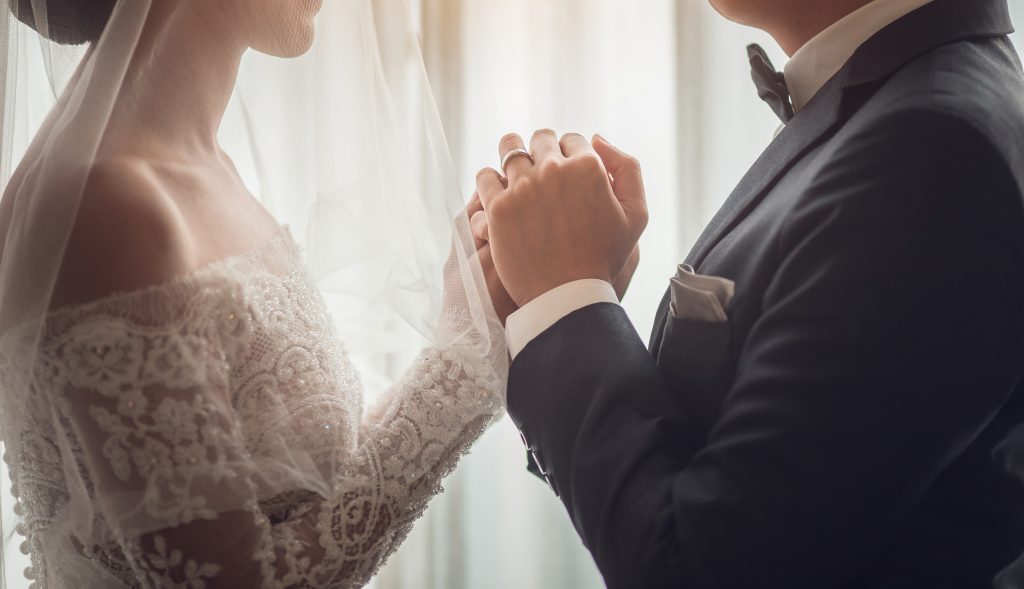
This is the format most people picture when they hear the word “wedding.” A formal ceremony—often religious, in a church, synagogue, or dedicated venue—followed by a cocktail hour, a seated reception dinner, speeches, first dances, and dancing. A full wedding party. A three-course meal. The whole production.
Guest count: 100 to 200+ guests, though some traditional weddings run smaller with more formal structure.
Best for: Couples who genuinely value the tradition, who want to honor religious or cultural roots, who have large families with a real stake in being there, or who simply want the full experience. The dress, the speeches, the first dance, the whole night. If that genuinely excites you, this format is built for exactly that.
One honest consideration: This format requires the most planning time, typically 12–18 months, and the most budget. It also involves the most coordination with other people’s expectations. Worth examining honestly whether you want it because you want it, or because it feels like what you’re supposed to want.
2. Micro wedding
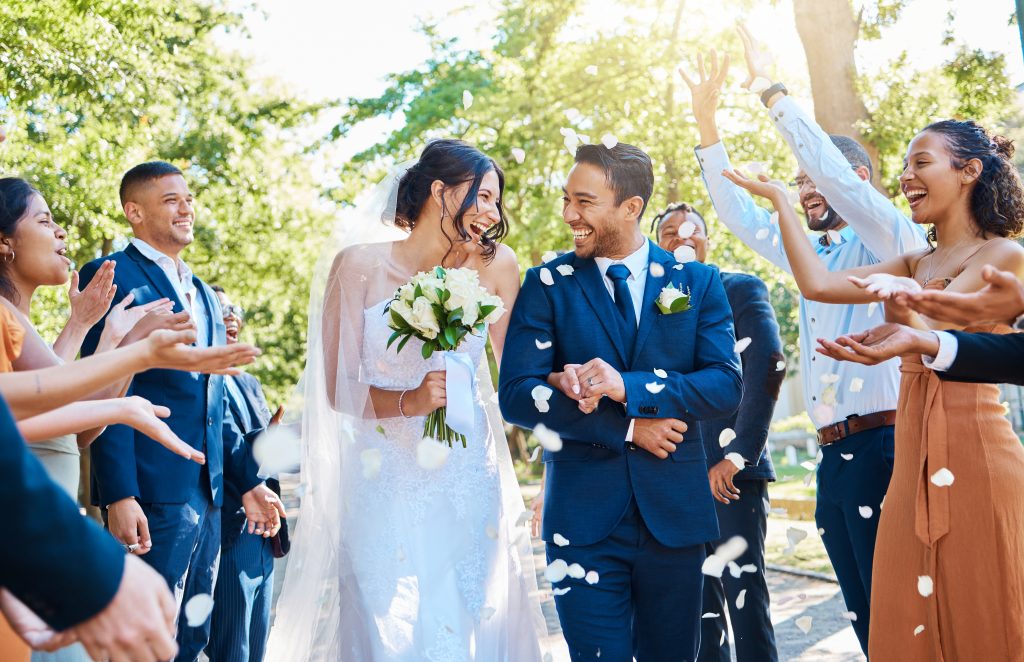
A micro wedding has all the elements of a traditional wedding—ceremony, dinner, toasts, dancing—scaled down dramatically. You’re not cutting corners. You’re cutting the guest list. The result is often a more personal, more intentional, and frequently more beautiful day than a full-scale event could be.
Guest count: Typically 15 to 50 guests, with around 30 being the norm.
Best for: Couples who want to actually connect with every person at their wedding. Who want to spend their budget on quality rather than quantity. Who want venue flexibility, smaller groups can access spaces that 150-person events simply can’t. As one wedding planner puts it: “A microwedding is for the couple who wants to really focus and spend the majority of their budget on the smaller details, whereas it might be difficult to replicate the same experience for, say, 200 guests.”
The key distinction from an elopement: Guests are present. The day still has structure, ceremony, dinner, the works. It’s not a stripped-back event. It’s a full wedding day with people who genuinely matter.
3. Elopement
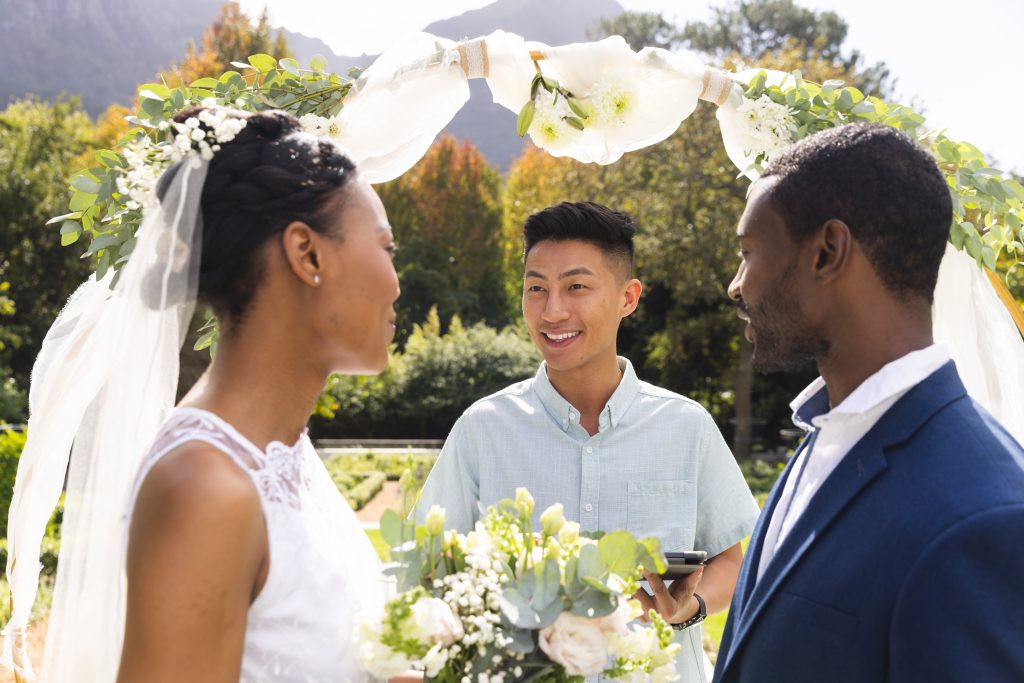
An elopement is focused entirely on the couple. That’s the core of it. Not the guests, not the timeline, not what anybody else thinks it should look like. Just the two of you. Your commitment to each other, in a place that means something, in a way that feels right.
Modern elopements have evolved well past the old image of a courthouse dash. Today they’re intentional, often beautiful, and sometimes more carefully planned than a traditional wedding. Adventure elopements in national parks or on clifftops. Intimate ceremonies in the vineyard where you had your first trip together. A quiet afternoon in a city you love.
Guest count: Up to 10 people. Most elopements involve just the couple and an officiant, with room for a witness or two.
Cost: Generally the lowest cost of any format. Even destination elopements tend to come in well under a traditional wedding, because there’s no catering for a crowd, no large venue minimum.
Best for: Couples who find large gatherings exhausting rather than energizing. Couples who want the ceremony to belong entirely to them, without an audience. Couples who face complicated family dynamics and find that “planning a wedding” means managing everyone else’s feelings more than their own. Couples who’d rather invest in an experience than an event.
One honest consideration: Some family members will be disappointed. Worth thinking through ahead of time how you’ll communicate it, and whether a celebration dinner or party afterward would help. You can elope and still celebrate. Those aren’t mutually exclusive.
4. Destination wedding
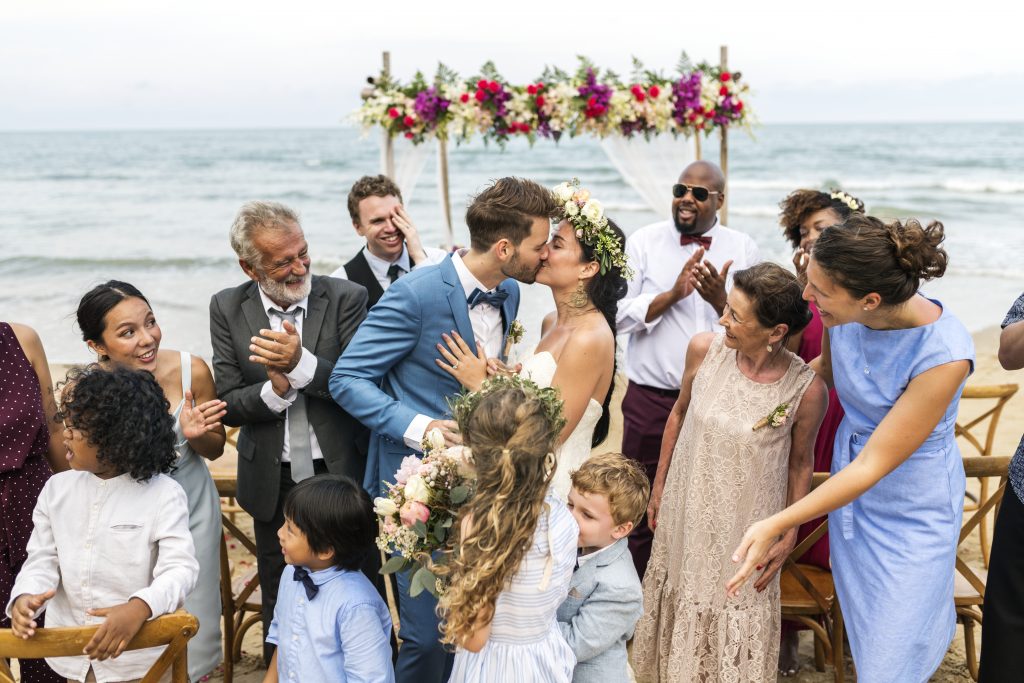
A destination wedding happens somewhere away from where you live, either domestic (Hawaii, Napa Valley, Nashville, the Florida Keys) or international (Mexico, the Caribbean, Italy, Greece). The defining feature is that guests travel to get there, often staying for multiple days at a resort that handles most of the planning.
Guest count: The average destination wedding has 65 guests. Some are more intimate (20–30 people), others are full-scale events in a beautiful location.
Cost: Widely misunderstood. The average all-inclusive destination wedding package in 2024 ran around $6,550, compared to the $33,000 domestic average. Most couples who go the all-inclusive resort route spend between $5,000 to $15,000 total. The structure of bundling venue, ceremony, reception, and often the honeymoon into one package removes a lot of the surprise expenses couples face at home.
What it costs guests? Around $2,000 per person on average (airfare plus accommodations). Worth being thoughtful about who you’re asking to make that commitment.
Best for: Couples who want to combine the wedding and the honeymoon into one experience. Couples who prefer a naturally smaller guest list as destination travel self-filters. Couples who want location to be part of the story, not just the backdrop.
One consideration: About 60 to 70% of invited guests typically accept destination wedding invitations. Going in with that expectation helps.
5. Courthouse or civil ceremony
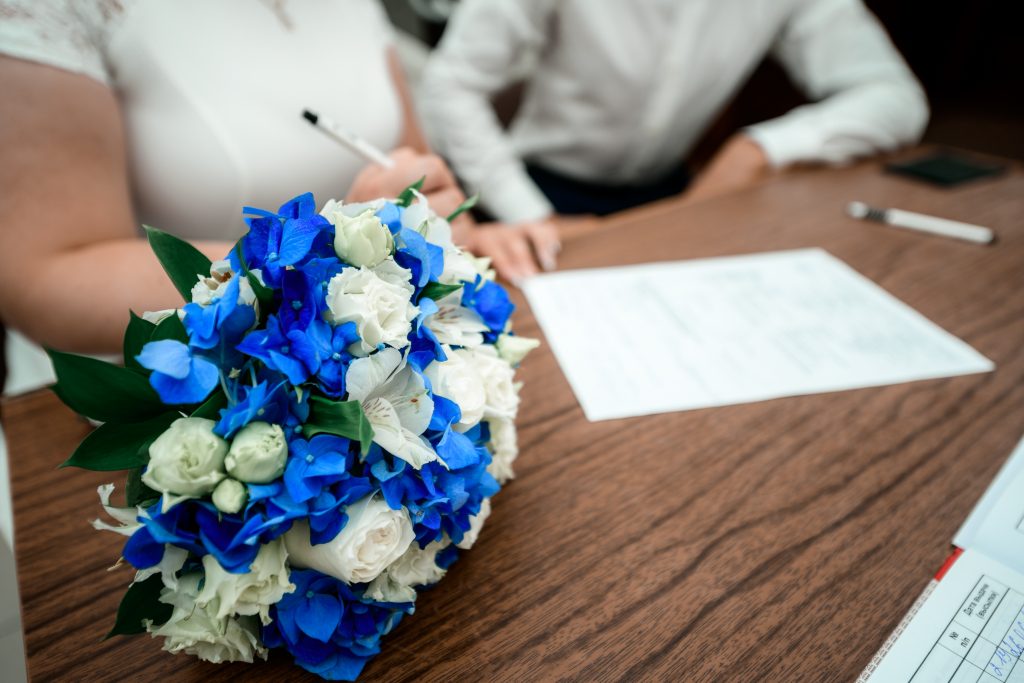
A brief legal ceremony officiated by a judge or justice of the peace at a courthouse or city hall. Typically 15–30 minutes. Few or no guests. The most stripped-back form of legally recognized marriage.
Cost: Essentially just the marriage license, usually $25 to $100 depending on your state.
Best for: Couples who want to be married now without the months of planning. Couples on genuinely tight budgets. Couples who plan to celebrate separately: a casual dinner that night, a party a few months later, or an anniversary reception someday. This format is also popular with couples who’ve been together for years and want to make it official without the production.
It’s worth noting this format pairs well with a later celebration. Some couples elope legally at the courthouse, then have a larger gathering months later when the planning feels less overwhelming and the budget has had time to recover.
6. Weekend wedding or multi-day celebration
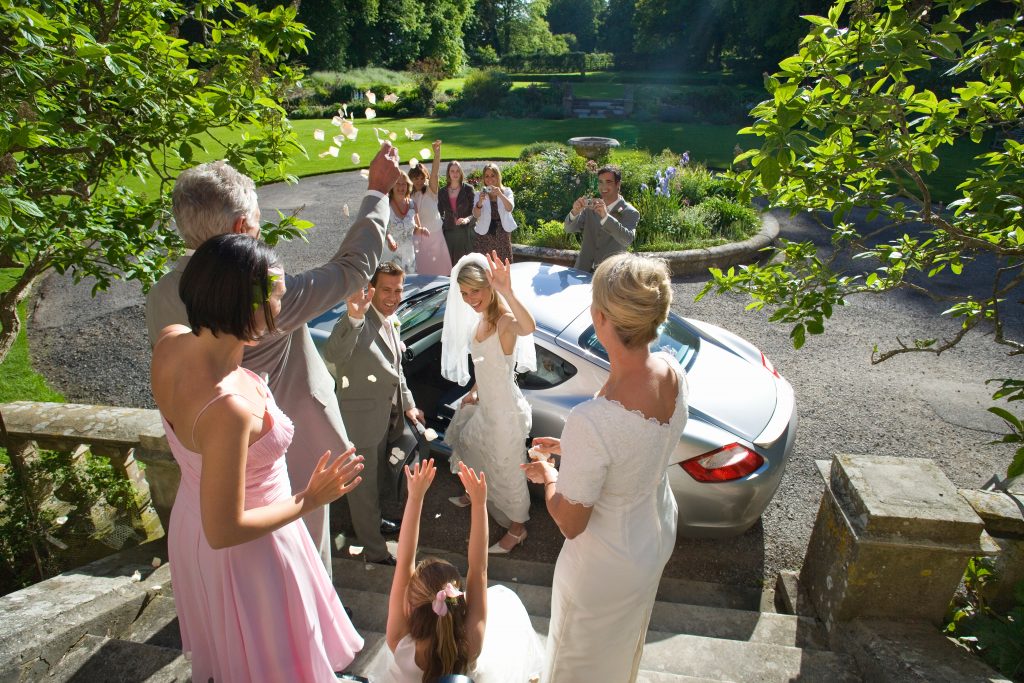
Instead of one day, you get a full wedding weekend. Welcome party or rehearsal dinner on Friday, wedding on Saturday, farewell brunch on Sunday. Sometimes longer, especially for destination-style celebrations. The wedding becomes an experience rather than a single event.
Best for: Couples with a lot of out-of-town guests who don’t want to spend three minutes with each person before being pulled to the next table. Couples who genuinely love hosting and entertaining. Couples who want the celebration to feel like a gathering rather than a production.
One consideration: More events means more cost and more coordination. Worth deciding which elements are worth the investment and which you can simplify.
7. Backyard or intimate home wedding
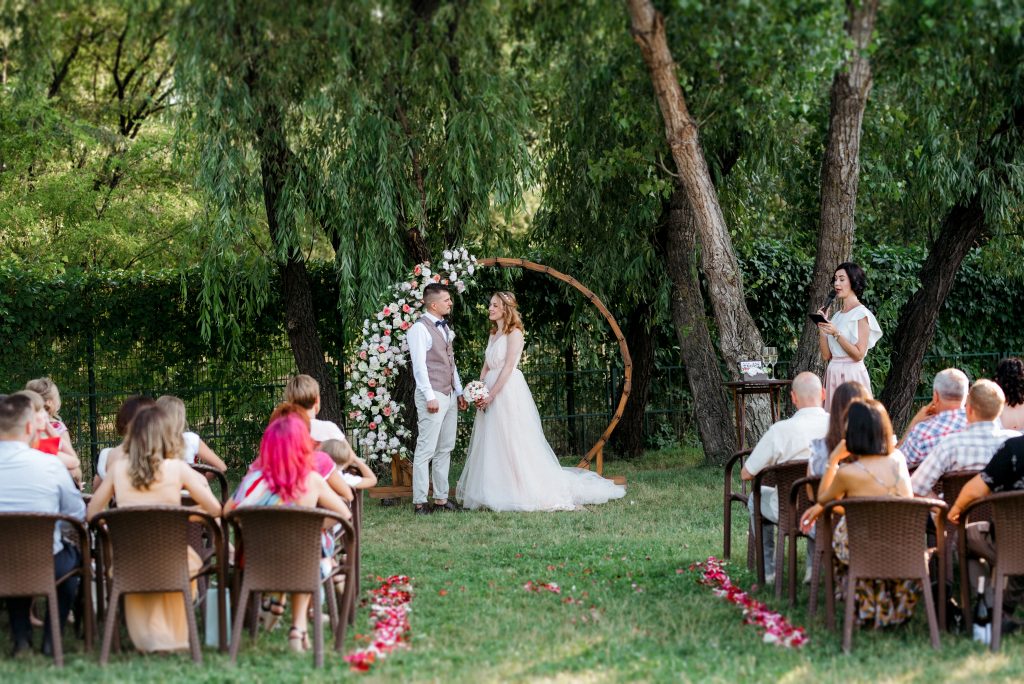
A wedding at a private home or family property, the backyard where you grew up, a family farm, a relative’s garden. Not necessarily small (guest counts can range from 20 to 150+), but inherently personal and typically more relaxed than a formal venue.
Best for: Couples with access to a suitable property who want the atmosphere to feel genuinely theirs. Couples who find formal venues impersonal. Couples who want a setting with real meaning rather than a rented space.
One honest consideration: Backyard weddings often cost more than people expect. Tents, catering equipment, restrooms, lighting, seating rentals, and cleanup logistics add up quickly. Go in with a realistic budget before assuming it’s the economical choice.
A note on wedding styles and aesthetics
There’s an important distinction worth making clear: a wedding type is the format and scale of your event. A wedding aesthetic or wedding style is how it looks and feels. These aren’t the same thing, and conflating them is a common source of confusion early in planning.
You can have a rustic micro wedding or a rustic traditional wedding. A minimalist elopement or a minimalist destination wedding. A bohemian backyard celebration or a bohemian weekend event. The format and the aesthetic are independent choices. One doesn’t determine the other.
Some of the most commonly searched wedding styles and wedding theme ideas right now:
- Rustic/barn: Natural materials, warm lighting, organic florals, farmhouse venues. Works across almost every format.
- Bohemian: Free-spirited, earthy, flowy. Outdoor settings, wildflower arrangements, relaxed formality. Especially natural for elopements and micro weddings.
- Modern/minimalist: Clean lines, intentional details, restrained color palettes. Works beautifully for couples who’d rather invest in fewer, higher-quality elements.
- Classic/elegant: The timeless version of the traditional wedding—candlelight, fine linens, formal florals, black tie or cocktail attire.
- Garden/floral: Lush greenery, overflowing blooms, natural light. Works from backyard weddings to formal venue events.
- Coastal/beach: Relaxed, sun-lit, nautical or tropical details. Natural territory for destination and elopement formats.
- Vintage: Specific era references—1920s glamour, 1970s warmth, Victorian detail—layered onto any format.
These are visual directions, not separate types of wedding ceremonies. Pick the format first, then find the aesthetic that fits it.
The questions that actually help you decide
Before you book anything, have this conversation with your partner. The answers will point you toward a format more reliably than any trend list.
| On the guest list: Who absolutely needs to be at your wedding? Whose presence would feel like joy rather than obligation? Is your ideal guest list something you genuinely want, or something shaped by what other people expect? | On the experience: Do large gatherings energize you or exhaust you? Do you want to be able to have a real conversation with every person there? Is the wedding primarily an event for you two, or an event for the people who love you? (Both are valid answers, but they point toward different formats.) | On the budget: What’s the honest number you’re comfortable spending, before family input shapes it? Would you rather spend more per person on a smaller group, or spread a budget across a larger event? |
| On planning: How much of the next 12–18 months do you want to spend coordinating vendors, seating charts, and other people’s dietary restrictions? Does the idea of that process feel exciting or exhausting? | On tradition: Are there religious or cultural elements that genuinely matter to you? Are there traditions you feel obligated to include but wouldn’t miss if they weren’t there? |
The answers to these questions will reveal a format. Trust them more than the pressure to do what weddings are “supposed to” look like.
One more thing: These formats can be combined
The categories above aren’t walls. Couples mix them all the time, and often the best wedding is a hybrid.
Elope legally on a Tuesday, then have a dinner party with your closest people that weekend. Have the micro wedding ceremony, then throw a bigger celebration once the chaos settles. Do a destination ceremony with 30 guests, then host a local party for everyone who couldn’t travel. Have the courthouse moment first, then the backyard gathering months later when you’ve had time to plan something you actually want.
There’s no rule that says the legal moment and the celebration have to happen the same way or even the same day. Figure out what each piece of the day means to you, and build from there.
Whatever you choose, the people are the whole thing
The format you pick changes the logistics. It doesn’t change what matters most: the voices of the people who love you, the things they’d say if they had a moment and a microphone.
That’s true whether you have 200 guests in a ballroom or ten people on a mountain. And it’s exactly what The Toast captures: guest messages, edited into a keepsake video you’ll actually come back to, no matter what kind of wedding you had.