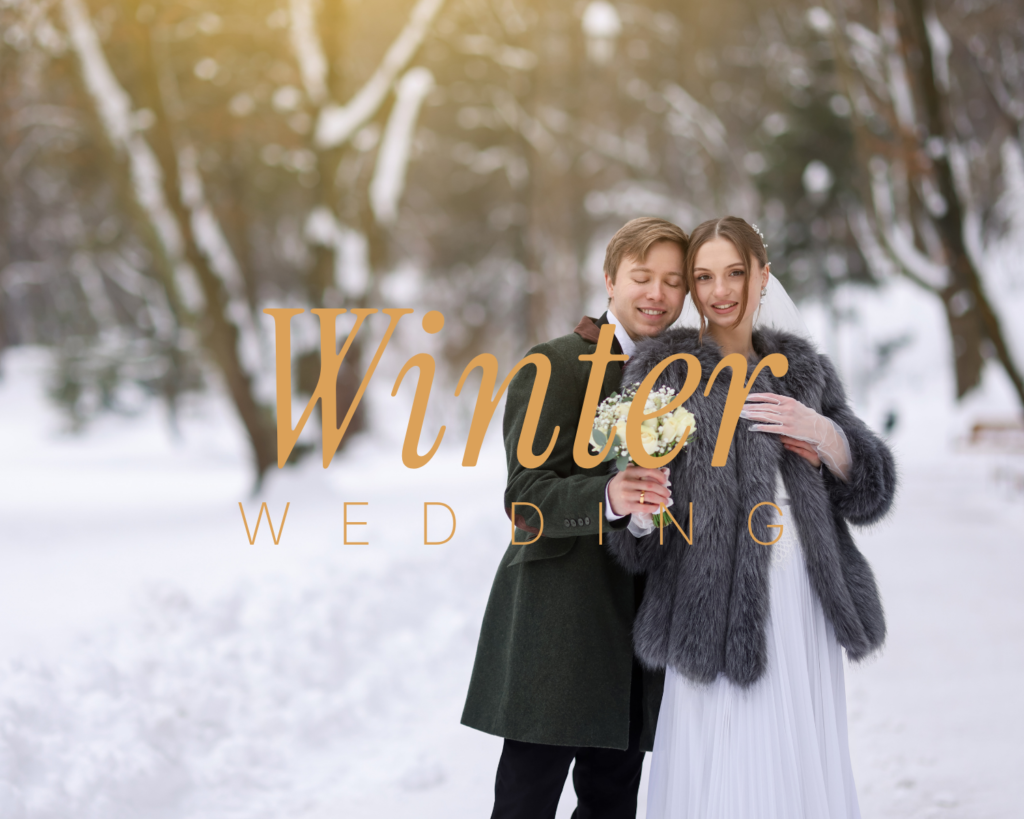
Winter weddings are genuinely underrated. The combination of candlelight, velvet textures, intimate indoor settings, and the season’s natural drama creates an aesthetic that summer and fall can’t fully replicate. And beyond the atmosphere, winter weddings offer something no other season does: a meaningful financial advantage.
If you’ve been drawn to the idea of a winter celebration but aren’t sure how to make it work practically, this guide covers everything: the real case for choosing winter, how to find the right venue, what to know about photography with shorter days, colors and flowers, attire for everyone in the room, and how to build a menu that actually suits the season.
The real case for a winter wedding
Let’s start with the numbers because they’re genuinely compelling.
January weddings average around $33,200 compared to the $34,200 national average, a difference that adds up fast across vendors. Venue discounts in off-peak winter months can reach 20 to 60%. Photographers and DJs typically offer 10 to 15% discounts. Catering can run up to $32 less per guest. For out-of-town guests, airfare and hotel rates are lower too, especially in January and February.
Only 2 to 3% of couples get married in January or February. That means the vendors you book during those months have genuinely more time and attention to give to your wedding specifically. A florist with four January weddings invests differently in each one than the same florist with sixteen September bookings.
The December exception is worth flagging upfront. December is a busy month for holiday-themed weddings, which means the cost and availability advantages largely disappear. New Year’s Eve can price-spike significantly. If your goal is the financial and logistical benefits of off-season winter, January and February are where those benefits materialize.
Beyond the numbers, winter weddings carry an atmospheric quality that other seasons can’t easily manufacture. Candlelight glows differently in December than it does in July. Velvet and rich jewel tones feel inherently right. Indoor venues with fireplaces and twinkling lights don’t need much extra decoration. The season creates an ambiance that costs real money to replicate at any other time of year.
Choosing your winter wedding venue
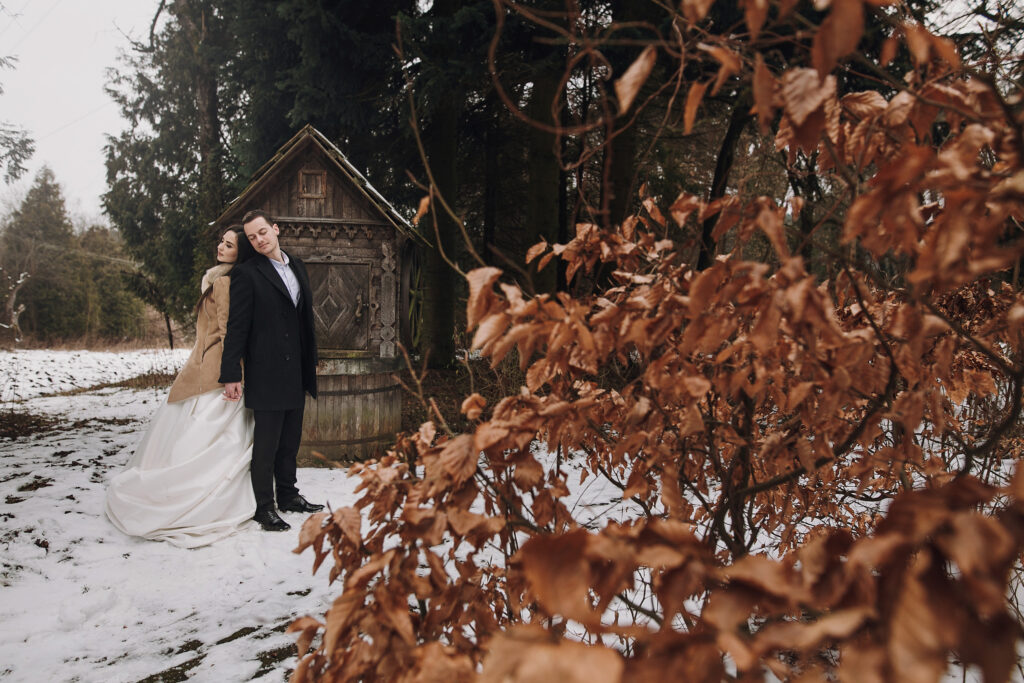
Winter wedding venues require a different evaluation lens than venues for warmer seasons. The most important question isn’t “does it look beautiful?” It’s “what happens if the weather doesn’t cooperate?”
The primary plan is an indoor backup for a winter wedding. The best venues for a winter wedding offer both indoor and outdoor capability with a genuinely seamless transition between the two. When you tour venues, understand exactly what the indoor backup looks like and how quickly the switch can happen. Knowing ahead of time at what temperature or condition the backup plan activates makes the day-of call far less stressful.
Venue types that tend to work particularly well in winter: historic estate houses and manor homes (built-in atmosphere, candlelight-friendly, often available at significant discounts), rustic barns with proper heating, hotel ballrooms, lodges, and chapels. These are spaces where the season enhances the existing aesthetic rather than fighting it.
For couples planning an outdoor winter wedding, the experience can be genuinely beautiful, especially in regions with reliable snow cover. It requires real contingency planning, though. Discuss force majeure and postponement clauses with the venue ahead of time. Identify a Plan B for vendors and guests if travel conditions become difficult. Know in advance which elements of the day can and can’t proceed under certain weather conditions.
Using one venue for both ceremony and reception is a stronger choice in winter than any other season. It removes the risk of guests navigating icy roads between locations and creates a seamless guest experience.
If your guest list includes people traveling from out of town, reserve room blocks at a nearby hotel early. Winter accommodation fills up around holidays and major events. Guests appreciate not having to figure out lodging on their own in an unfamiliar area.
Guest logistics and winter wedding invitations
Winter introduces timing and communication challenges that other seasons don’t.
December weddings compete directly with holiday travel plans and family commitments. Guests who would happily attend in October may already have flights booked or family obligations locked in for December. Expect a higher RSVP decline rate than you would at other times of year and plan your guest count around that reality.
Send save the dates earlier than you think. For any winter wedding near a holiday, 6 to 8 months out is the minimum for local guests. For destination weddings or holiday-adjacent dates, push that to 8 to 12 months so guests can book travel before flights and hotels get competitive. Winter wedding invitations follow 6 to 8 weeks before the date, slightly earlier for holiday-period weddings.
Communicate the setting to your guests in advance. If any part of the day is outdoors, say so on the invitation or in a follow-up communication. Let guests know about parking and what to expect weather-wise. This isn’t overexplaining. It’s helping people arrive prepared rather than underdressed.
Build weather contingency into the vendor contracts, not just the day-of timeline. Have the backup plan documented and understood by every vendor before the wedding week so no one is figuring it out under pressure.
Photography: the shortest days need the most planning
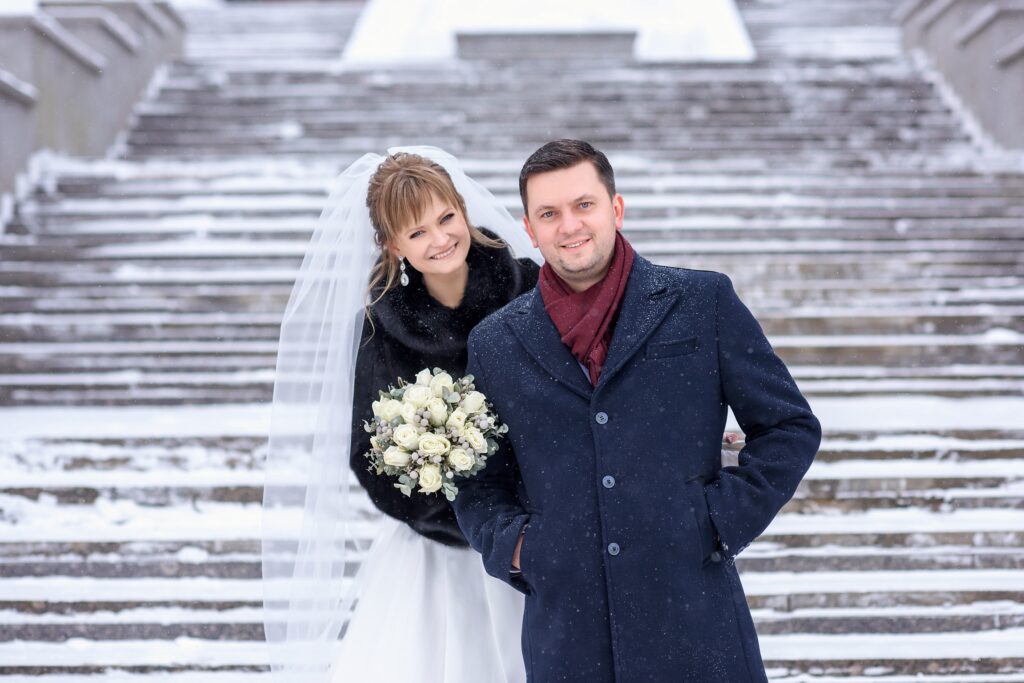
Winter produces genuinely beautiful wedding photography. The soft, diffused light throughout the day and the blue-hour sky after sunset create conditions that summer couples often wish for. But the compressed timeline requires deliberate planning.
Sunset arrives as early as 4:00 to 5:00 PM in winter depending on your location. That’s the anchor point for the entire day’s schedule, and everything else builds backward from it.
The strongest approach for a winter wedding is to complete portraits before the ceremony, not after. A first look and a 90 to 120-minute portrait session before the ceremony means all the natural-light outdoor photos are done before the sun drops. After the ceremony, the couple can actually attend cocktail hour with their guests. What’s left is a short blue-hour session after sunset. That 20 to 30-minute window, when the sky goes deep blue and venue lights start glowing, produces some of the most beautiful footage of the day.
If anything runs behind schedule in winter, there’s no recovery time. Hair, makeup, and transportation all need to be on schedule. Make sure vendors know this specifically and build in transit time for icy or slow-driving conditions.
Choose a photographer who is genuinely skilled with flash. Winter ceremonies often have no natural light streaming through windows. If your photographer isn’t comfortable using off-camera flash well, it will show in the ceremony images. This isn’t a place to take a chance on someone building their portfolio.
When you do step outside for portraits, keep outdoor sessions short. A 15-minute outdoor portrait session in winter light yields better results than an hour of everyone getting cold and stiff. Plan the outdoor moments intentionally and let the indoor setting do the rest.
Winter wedding colors, flowers, and décor
Winter wedding colors
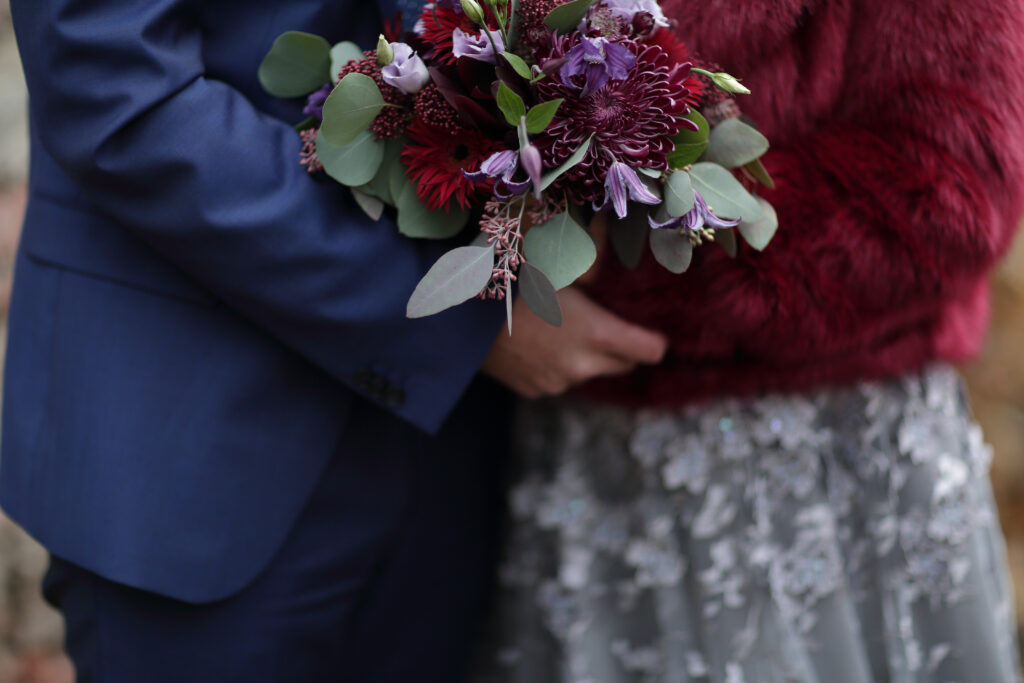
Winter wedding colors give couples more range than most people expect. The season supports everything from icy elegance to moody drama to unexpectedly warm neutrals. The right direction depends on your venue and aesthetic more than on any trend.
| Palette | Colors | Best for |
|---|---|---|
| Jewel tones & metallics | Deep burgundy, emerald, navy, plum + antique gold or brass | 2026 dominant trend. Works barn to ballroom. Warm, elevated, candlelit. |
| Icy & cool | Dusty blue, slate, silver, ivory | Crystalline elegance. Add texture (velvet, metallics, frosted glass) to avoid feeling cold. |
| Champagne & gold | Champagne, gold, evergreen, candlelight | Classic across all formality levels. Luxurious, naturally seasonal. |
| Dusty rose & terracotta | Dusty rose, terracotta, warm neutrals | Warm, muted, modern. Unexpected for winter but feels right. Through 2026. |
Jewel tones with metallics are the dominant 2026 direction: deep burgundy, emerald green, navy, and plum paired with antique gold or brass. These tones add warmth to indoor venues and feel elevated without being overdone. This is the palette that works in almost any winter wedding venue from a barn to a ballroom.
Icy and cool palettes (dusty blue, slate, silver, and ivory) evoke snowflakes and crystalline elegance. The key to keeping this palette from reading as cold is texture: metallic chargers and frosted glass layered together make it feel visually rich rather than spare.
Champagne and gold are classic winter directions that work across formality levels. Gold-dipped greenery with evergreen garlands and shimmering candles creates a luxurious feel that suits the season naturally.
Dusty rose and terracotta are projected to be strong winter wedding colors through 2026: warm, muted, modern, and genuinely unexpected for the season. If you want something that doesn’t read as a typical winter palette but still feels right, this direction works.
Winter wedding bouquets and flowers
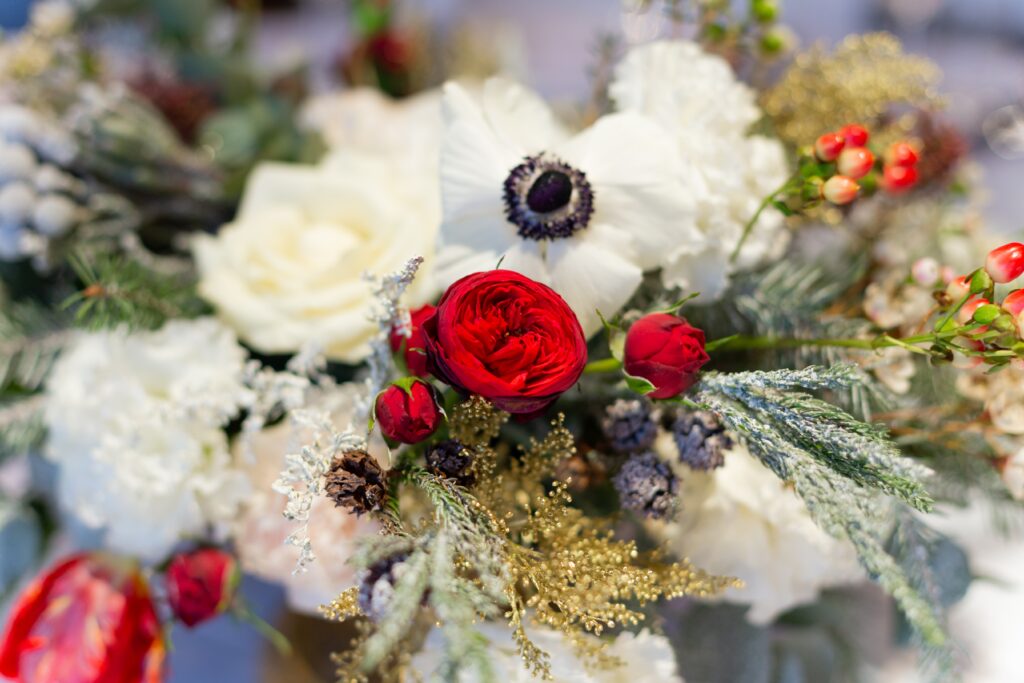
Winter has a reputation for being floral-scarce that’s not entirely deserved. The selection shifts, but what’s available is genuinely beautiful.
| Month | What’s available | Palette direction |
|---|---|---|
| December | White anemones, white ranunculus, hellebores, amaryllis, roses, evergreen foliage | Ethereal or warm festive. Pair with silver dollar eucalyptus or deep red. |
| January | Purple anemones, ruby roses, amethyst ranunculus, orchids, dark magnolia leaves | Luxurious and vibrant. Can be among the most dramatic of the year. |
| February | Blush roses, pink ranunculus, blush hellebores | Moving toward spring. Palette softens. |
What’s in season: anemones (at their peak in winter), amaryllis, hellebores, ranunculus, tulips, orchids, and roses (reliably available year-round). Each month has its own direction.
December can go either ethereal or festive. For ethereal: white anemones with dark centers, white ranunculus, hellebores, and silver dollar eucalyptus. For warm and festive: deep red roses, red amaryllis, burgundy ranunculus, and evergreen foliage.
January shifts toward luxurious and vibrant: purple anemones, ruby roses, amethyst ranunculus, orchids, and dark magnolia leaves. Winter wedding bouquets in January can be among the most dramatic of the year.
February begins moving toward spring with blush roses and blush hellebores as the palette softens toward the next season.
The evergreen advantage: pine, cedar, fir, and eucalyptus provide fullness and natural seasonal scent that purely floral arrangements can’t achieve. They’re more affordable than fresh blooms and extend arrangements significantly. Winter wedding centerpieces built around evergreen garlands with fresh blooms as accents are both cost-effective and genuinely stunning.
One honest note: fresh flowers are more expensive per stem in winter due to limited domestic supply. Building arrangements around evergreens and dried botanicals with fresh blooms as focal points is the smartest winter floral strategy. Dried florals are also on-trend in 2026 and last considerably longer than fresh-cut alternatives.
Décor
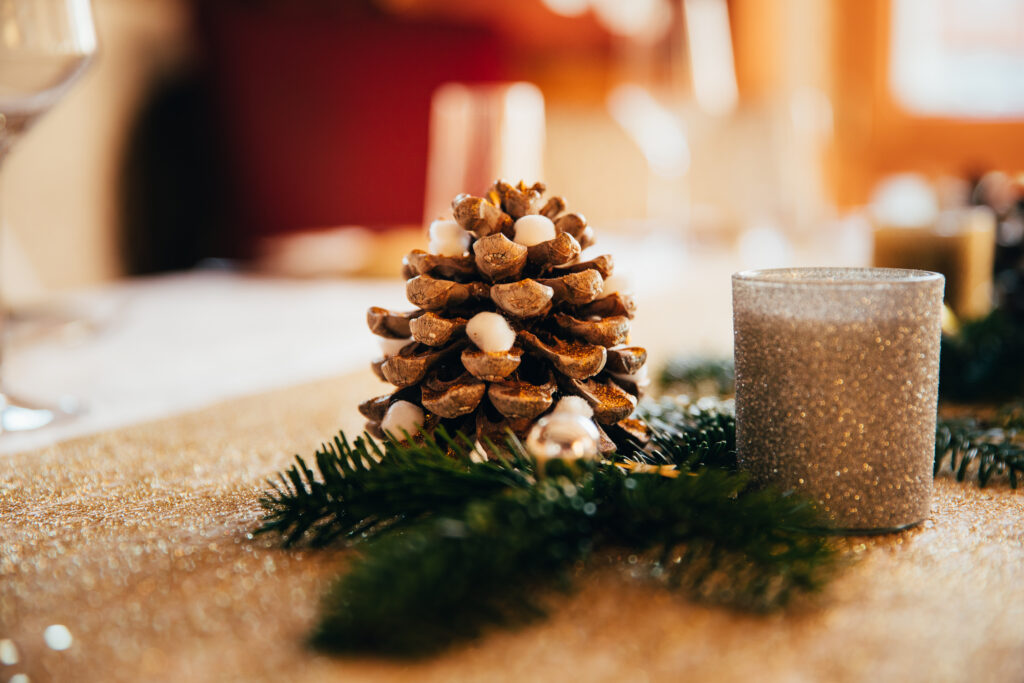
Winter is the one season where the atmosphere often arrives for free. Early dark evenings make candlelight glow the way it can’t in summer. Twinkling lights look different against a dark winter night than they do at a July garden party. Frosted landscapes, if you have them, provide a backdrop no decorator can manufacture.
Winter wedding ideas for décor that are working well in 2026: velvet table runners and chair accents, hanging lanterns and oversized chandeliers, faux-fur lounge throws, dried floral and seasonal berry garland, and warm Edison bulb lighting that creates intimacy in larger spaces.
Pick two or three textural elements and let the venue carry the rest. The biggest mistake with winter themed wedding décor is over-adding when the season is already doing significant work.
Attire: couples and guests
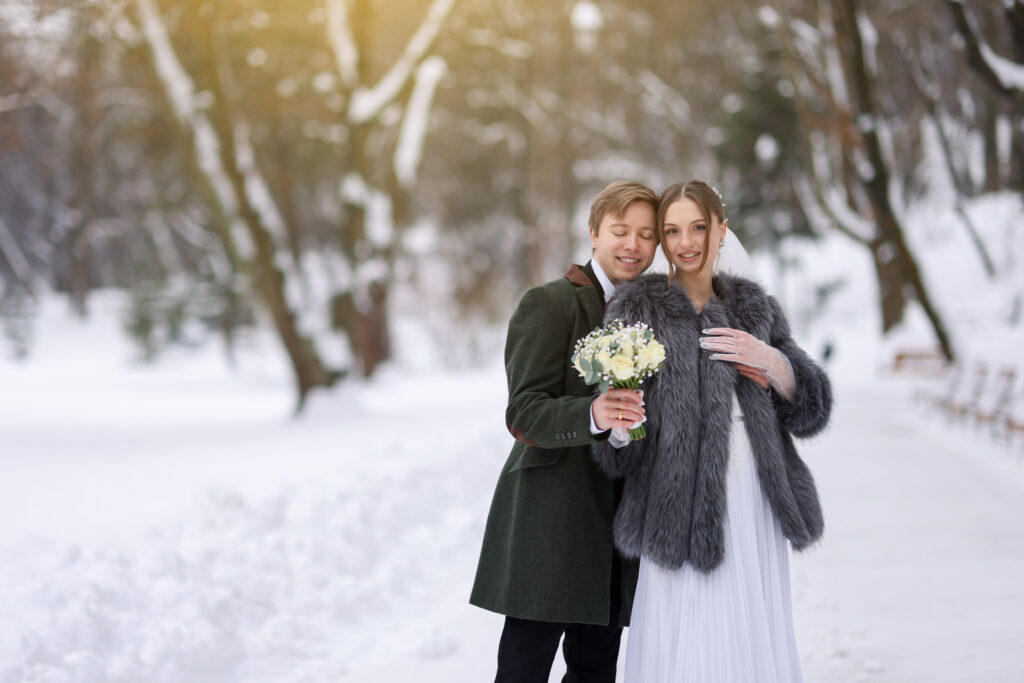
Winter wedding dresses and bridal attire
Winter wedding dresses open up the most luxurious fabric options in the bridal calendar. Velvet, heavy satin, structured crepe, and illusion lace with long sleeves all photograph richly in winter light and feel inherently right for the season in a way they don’t in July.
Long-sleeve gowns and high-neck silhouettes are trending strongly in 2025 and 2026. Statement sleeves, whether puffed, lace-detailed, or detachable, offer versatility between an outdoor ceremony and a warm reception. A bridal dress for winter that includes a detachable element gives you a different look across the day without a full dress change.
Winter bridal accessories that work particularly well: a faux fur stole or cape, which is both warm and visually stunning in photographs; velvet headbands or jeweled hair pieces; metallic shoes with enough embellishment to feel season-appropriate.
For the gown for a winter wedding: if you love a lighter, more minimal style, it absolutely still works. Pair it with a dramatic cape or faux fur wrap for outdoor moments and let the gown stand on its own indoors.
Winter wedding shoes: closed-toe heels are the practical choice for most winter venues. Block heels are more stable on wet or potentially icy surfaces. Stylish boots work beautifully at rustic or barn winter wedding venues and have become a legitimate bridal option. Whatever you choose for the ceremony, bring a practical weather-appropriate pair for outdoor portraits. Nobody wants their winter marriage dress photographed next to soaking wet satin shoes.
What to wear to a winter wedding as a guest
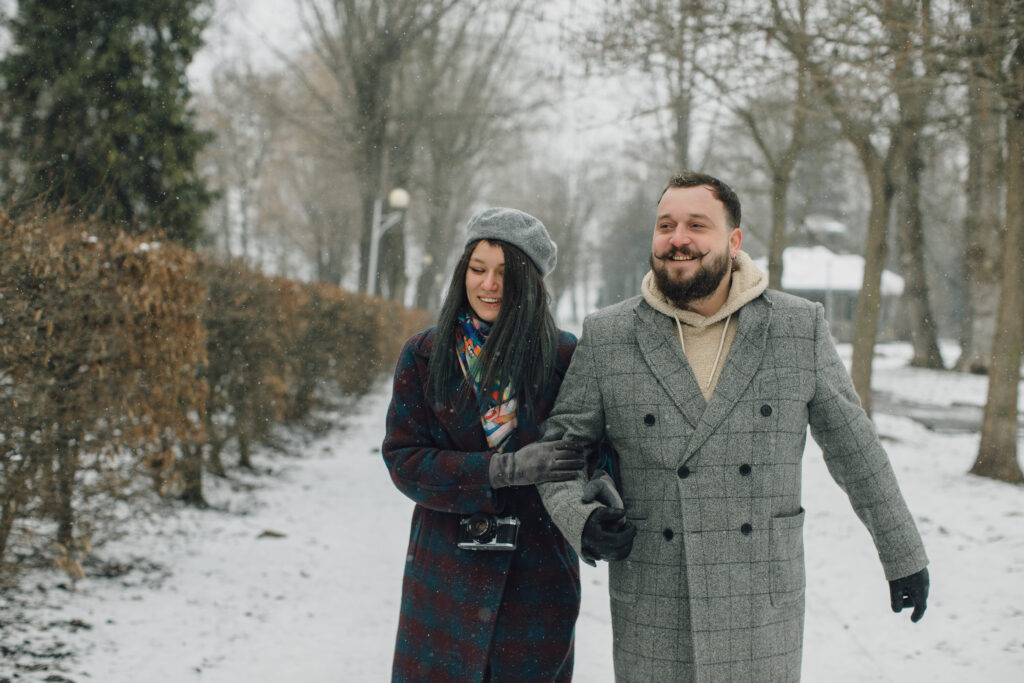
The attire keywords here represent a genuinely high-volume search audience: guests trying to figure out what to wear to a winter wedding before showing up underprepared.
Winter wedding guest dresses and wedding outfits for winter wedding guests depend heavily on the dress code and venue, but a few principles hold across most settings.
Fabric first. Velvet, satin, crepe, and structured fabrics with some weight feel season-appropriate in a way that lightweight summer florals don’t. These materials also photograph better in winter’s richer light. Three-quarter or long sleeves balance warmth and elegance without requiring a full-length coverage approach.
Color. Jewel tones (burgundy, emerald, navy, and plum) are the natural fit for winter wedding outfits and feel genuinely season-appropriate. All black is always a safe choice at a formal winter wedding. Avoid pale summer florals or breezy pastels unless the invitation specifically calls for a lighter aesthetic.
Dress length. Midi and maxi lengths are practical for winter wedding guest outfit ideas because they provide coverage for cold transitions between indoor and outdoor spaces without sacrificing style.
Layers are essential. Always bring a coat, wrap, structured blazer, or jacket. Receptions with outdoor moments or venue transitions get cold quickly in winter. Arriving without a layer is a guarantee of spending half the night uncomfortable.
Winter wedding shoes for guests: closed-toe heels are the safest choice. Block heels provide more stability on wet or icy surfaces. Elegant boots work well at casual or rustic venues. Avoid thin stilettos at any winter venue with outdoor walking paths.
For men, a well-fitted suit in a richer winter tone (charcoal or deep navy) in a heavier weight fabric reads as genuinely seasonal. A tie or pocket square in a seasonal accent color is the simplest way to look pulled together without over-coordinating.
Always check the invitation’s dress code. “Black tie,” “cocktail attire,” and “festive attire” have different implications at a winter wedding and inform how dressed up to actually go.
Food, drinks, and winter wedding cakes
Winter wedding cakes
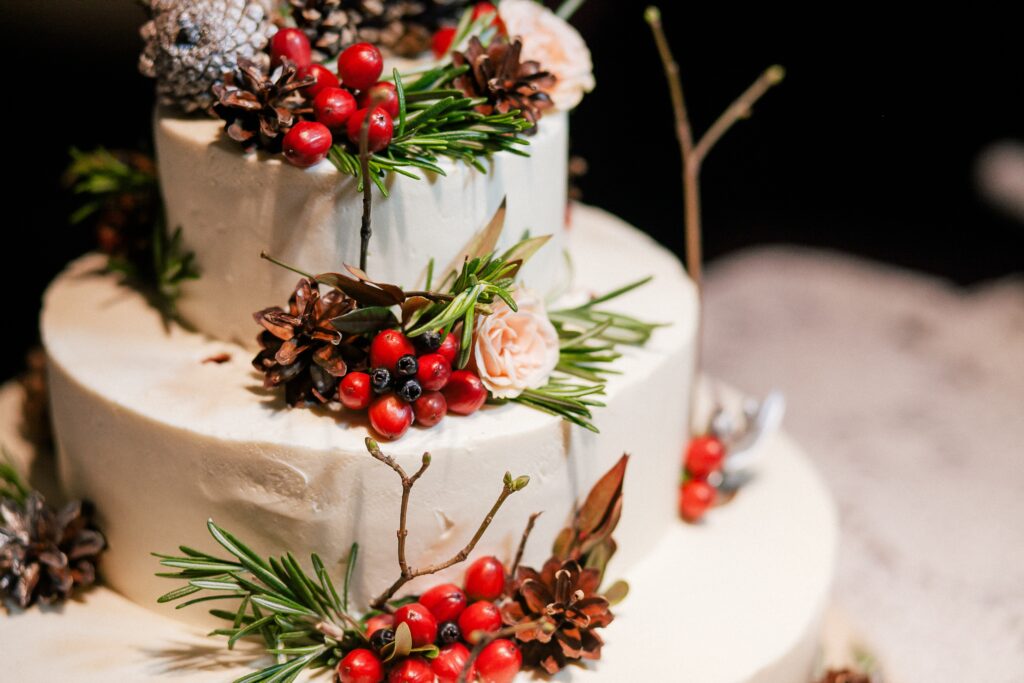
Winter wedding cakes have access to the richest flavor territory in the calendar year. Dark chocolate, salted caramel, red velvet, cranberry and orange, spiced pear, and eggnog are all crowd-pleasing flavors that feel genuinely seasonal without tipping into cliché.
Aesthetically, winter wedding cake ideas that work well right now: semi-naked cakes with deep berry or cream tones and evergreen or dried floral accents; smooth fondant cakes with metallic gold or silver detail; tiered cakes incorporating sugar-dusted pinecones or seasonal fruits like figs and pomegranates.
Non-cake dessert alternatives that suit the season beautifully: individual molten chocolate cups, warm bread pudding, mini berry cobblers, and a dessert shooter station with mousse, cheesecake, or truffle fillings.
Food and drink
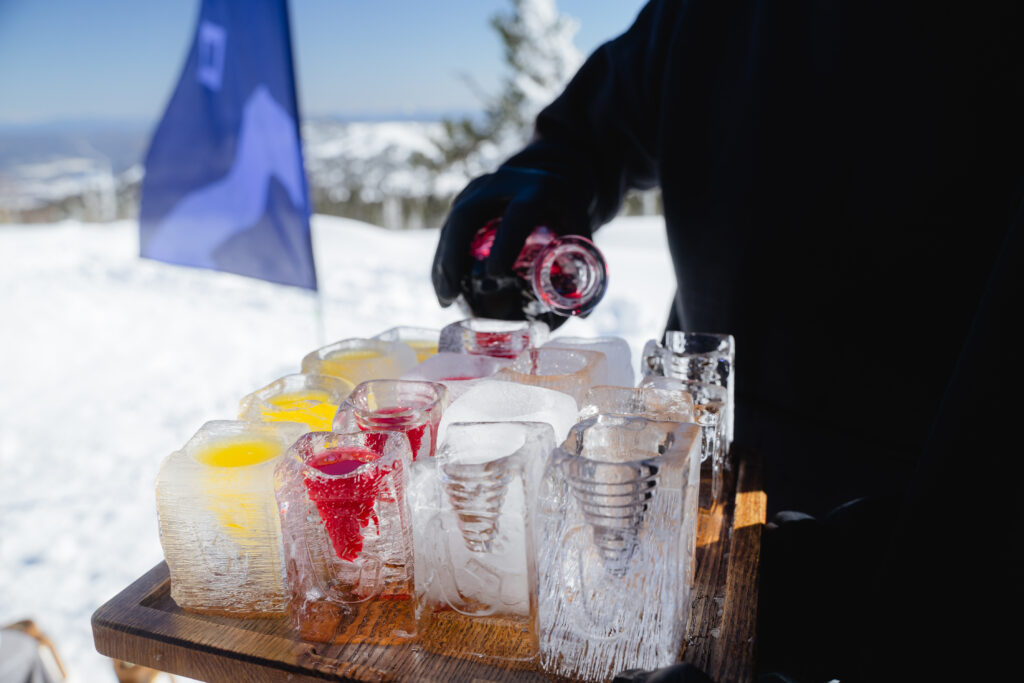
Winter is the best season for wedding food because it’s the season that actually permits indulgence. Braised short ribs, slow-roasted chicken, truffle risotto, and roasted root vegetable sides are all genuinely satisfying in a way that lighter summer fare isn’t when it’s cold outside. This is the season to lean into hearty comfort food without apologizing for it.
Interactive stations are trending strongly for winter receptions: cheese fondue with bread cubes, sausage, and vegetables for dipping; charcuterie grazing tables; soup shooter stations with butternut squash or lobster bisque. These give guests something to do during cocktail hour and reinforce the cozy atmosphere that winter weddings do so well.
A hot cocoa bar is consistently the most appreciated winter wedding catering addition, and it’s one of the most cost-effective. Offer toppings like marshmallows and peppermint stir sticks alongside a spiked option with Baileys or coffee liqueur. Serve it at cocktail hour, as a late-night option, or both. Non-alcoholic guests love it, kids love it, and it fits almost every aesthetic.
Signature warm cocktails do double duty in winter: mulled wine, hot toddies, spiced apple cider, and eggnog keep guests warm and reinforce the season’s atmosphere. Mulled wine in particular fills a room with a scent that no décor detail can match.
One more thing before the day arrives
There’s something distinct about the people who come to a winter wedding. A January or February guest didn’t clear their calendar because it was convenient. They booked a flight in the off-season, drove through cold weather, and showed up because they wanted to be there. Winter weddings draw your people together with a kind of deliberateness that peak-season weddings don’t always have.
That makes the voices in that room worth keeping. Not just the vows, not just the ceremony footage, but the toast your uncle gave at the rehearsal dinner, the message your best friend recorded from across the country, the grandmother who traveled in January because she wasn’t going to miss it.
That’s what The Toast is built for. We turn your guests’ video messages, recorded from wherever they are before or during the wedding, into a professionally edited keepsake you’ll watch long after the season turns. Winter brings the people who matter most. The Toast makes sure you can hear them again.
Book a free discovery call and we’ll show you what a finished keepsake looks like.