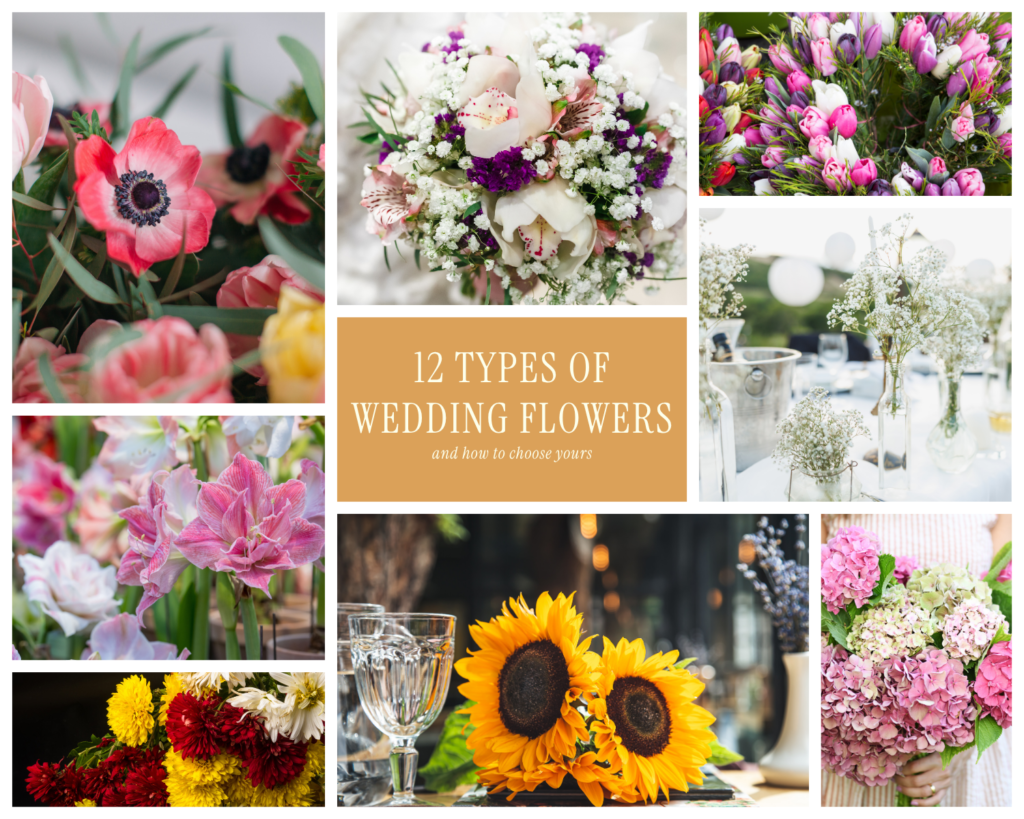
You know you want flowers. You do not know, six months out, whether that means peonies or ranunculus, or why one bouquet quote came back at $250 and another at $650 for what looked like roughly the same handful of blooms. Types of wedding flowers aren’t ranked by prettiness so much as by season, availability, and how much hand-work a florist has to put into them, and knowing that changes how you choose.
This piece walks through which flowers are actually in season when, the classic bouquet blooms worth knowing by name, budget-friendly stand-ins for the pricier ones, and where flowers show up beyond the bouquet itself.
Start with your season, not your Pinterest board
The single biggest factor in both a flower’s look and its cost is whether it’s in natural season for your wedding month or has to be flown in and forced. Peonies and ranunculus, two of the most requested bridal blooms, only grow outdoors in spring, which is exactly why a fall couple who insists on peonies pays a premium for imported stems.
| Season | Flowers naturally in bloom | Typical cost impact |
| Spring | Peonies, ranunculus, tulips, garden roses | Peak availability for spring-only blooms, generally the best value if you want peonies specifically |
| Summer | Dahlias, garden roses, sunflowers, zinnias | Wide variety and strong availability, though peak wedding season demand can push florist pricing up regardless of bloom |
| Fall | Chrysanthemums, marigolds, dahlias (late season), amaranthus | Warm-toned blooms are abundant and often more affordable than spring or winter alternatives |
| Winter | Amaryllis, anemones, evergreen, ranunculus (greenhouse) | Fewer outdoor-grown options, more reliance on greenhouse or imported stems, which raises cost |
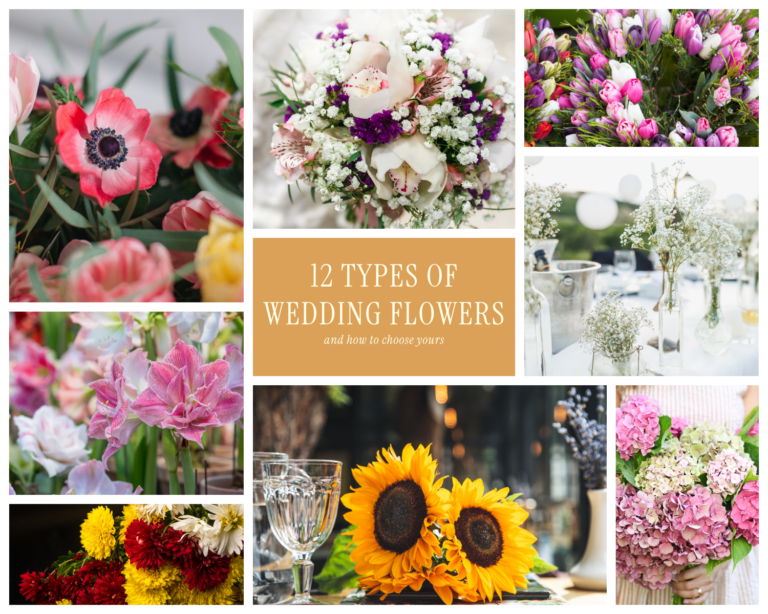
Some flowers, like roses, gerbera daisies, and hydrangeas, are greenhouse grown year-round and available regardless of your wedding month, which is why they show up so often as reliable, budget-friendly bouquet staples. The national average cost of wedding flowers lands around $2,800, with a full range anywhere from $1,500 to $6,000 depending on guest count, flower choices, and location, and a professionally arranged bridal bouquet alone typically runs $200 to $400, so knowing where flowers fit against everything else you’re paying for makes it easier to decide where a splurge is actually worth it. Here are 12 types worth knowing by name before you sit down with a florist.
1. Garden roses
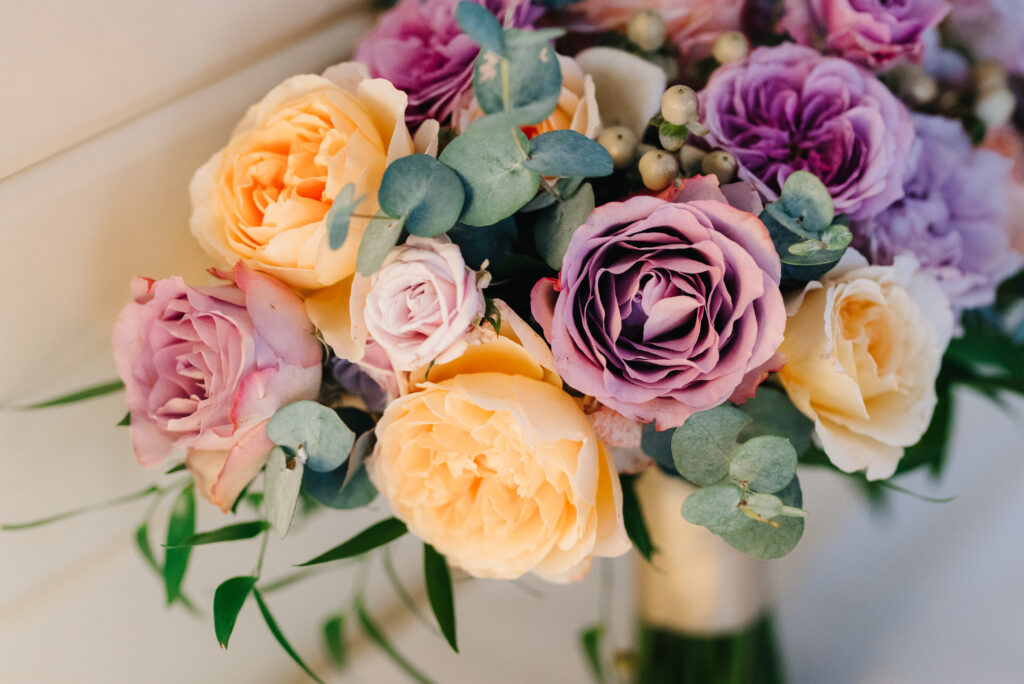
Full, layered petals read as more romantic and textured than a standard rose, and garden roses are available nearly year-round from greenhouse growers. They’re also one of the best stand-ins for peonies: a fraction of the cost, with far better availability outside a few spring weeks.
2. Peonies
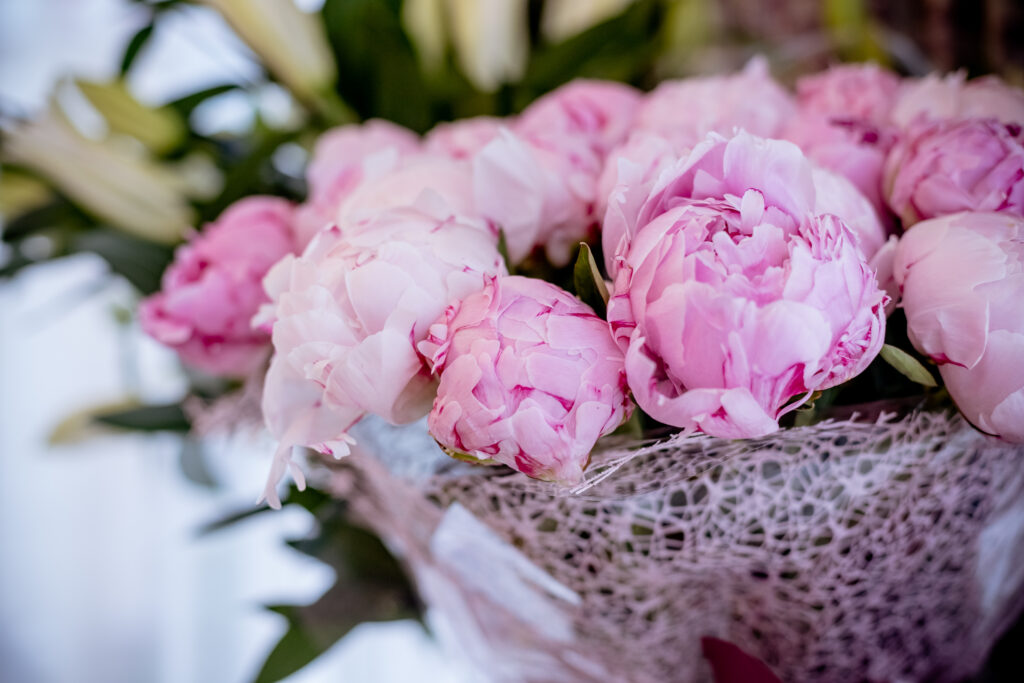
The most requested spring bloom for a reason, with a full, ruffled look that reads as effortlessly romantic. They’re only naturally available for a few weeks each spring, which is exactly why a fall wedding built around peonies pays a real premium for imported stems.
3. Ranunculus
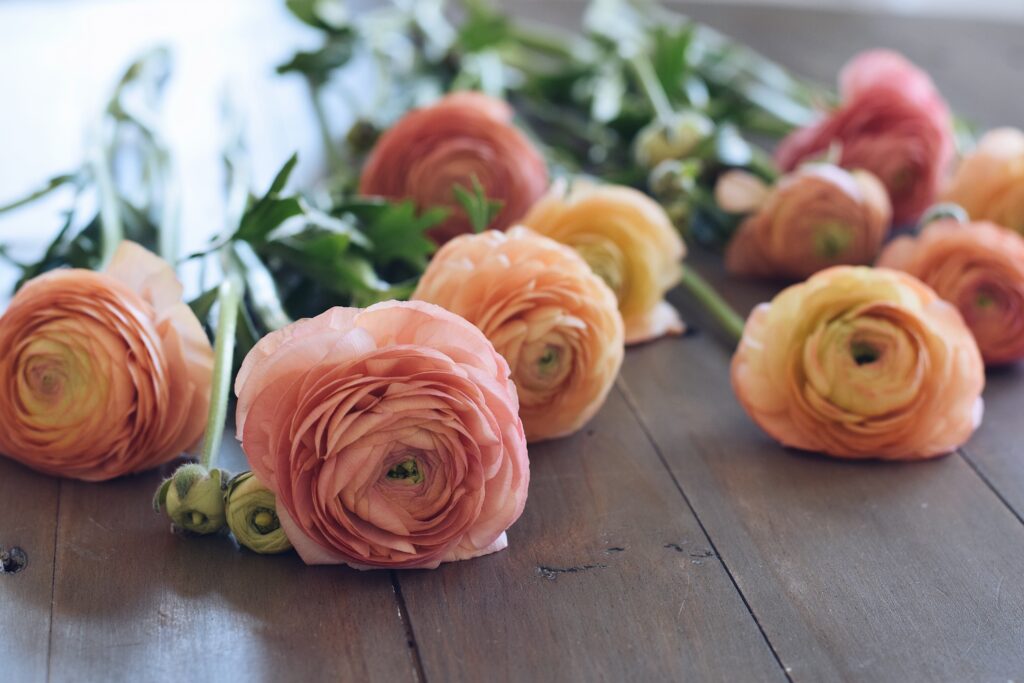
Papery, layered petals in a small, delicate bloom, often used to fill out a bouquet built around larger flowers like peonies or roses. They’re a spring bloom outdoors but available from greenhouse growers in other seasons if you want the look outside your wedding month.
4. Dahlias
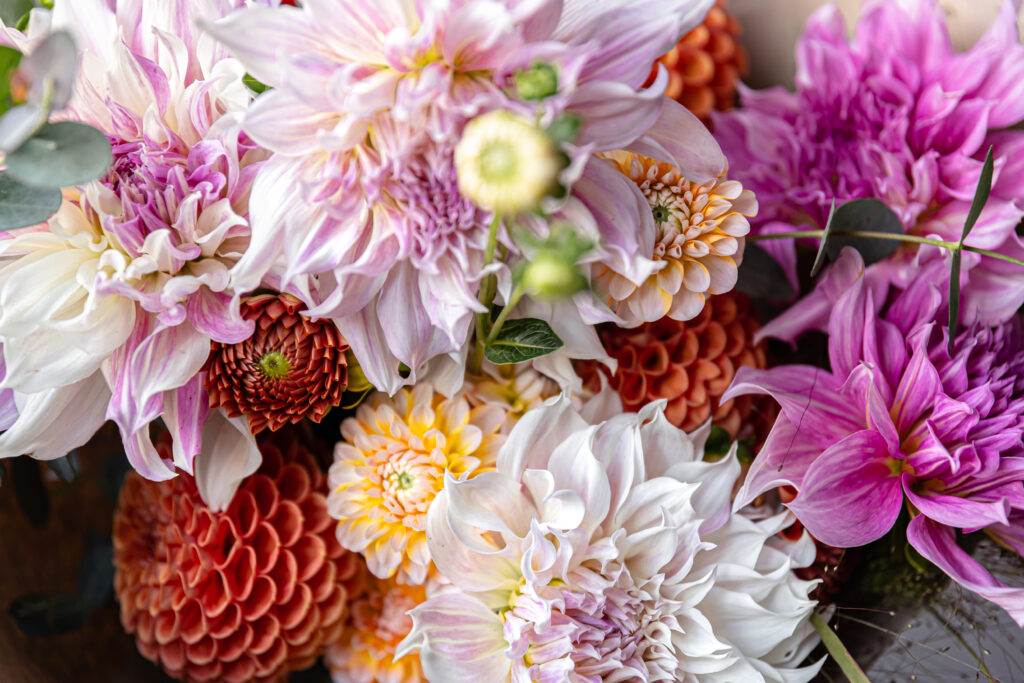
A summer and early fall bloom that comes in dinner-plate sizes down to small pom varieties, giving a lot of design flexibility in one flower. A handful of dahlias can carry a centerpiece on their own without needing much else added.
5. Hydrangeas
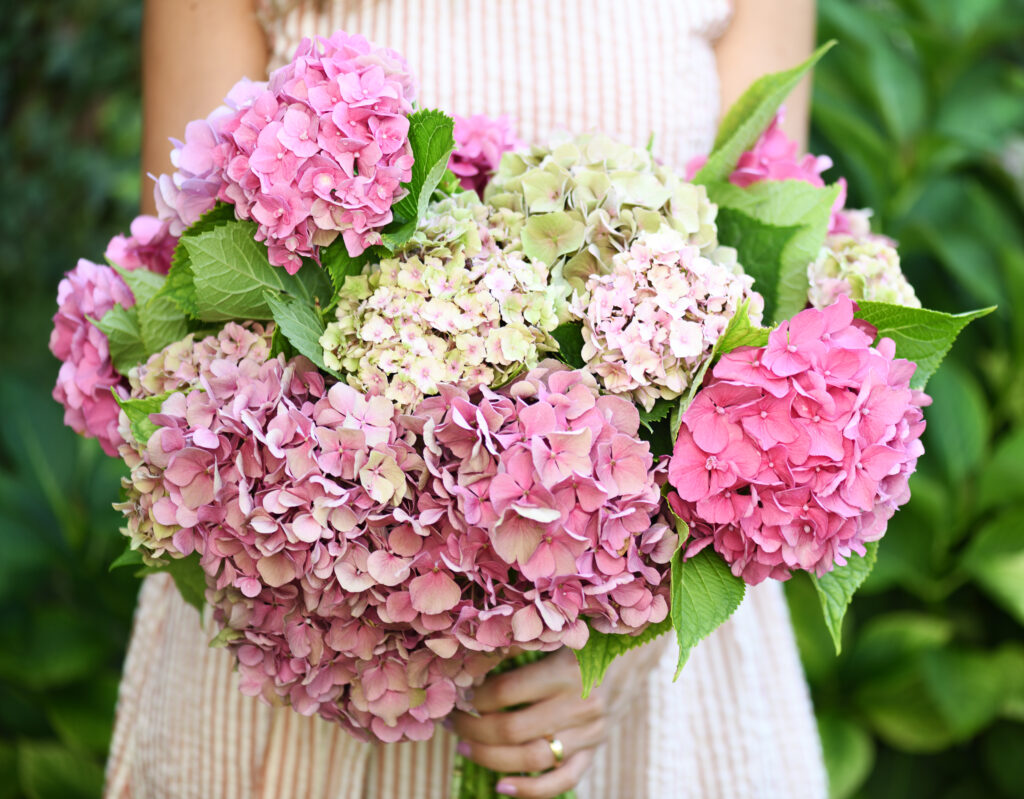
Large, full clusters that fill out a bouquet or centerpiece quickly for a relatively low cost per stem, and they’re available in most seasons. They’re one of the most efficient flowers for stretching a smaller budget across more surface area, since one stem does the visual work of several smaller blooms.
6. Tulips
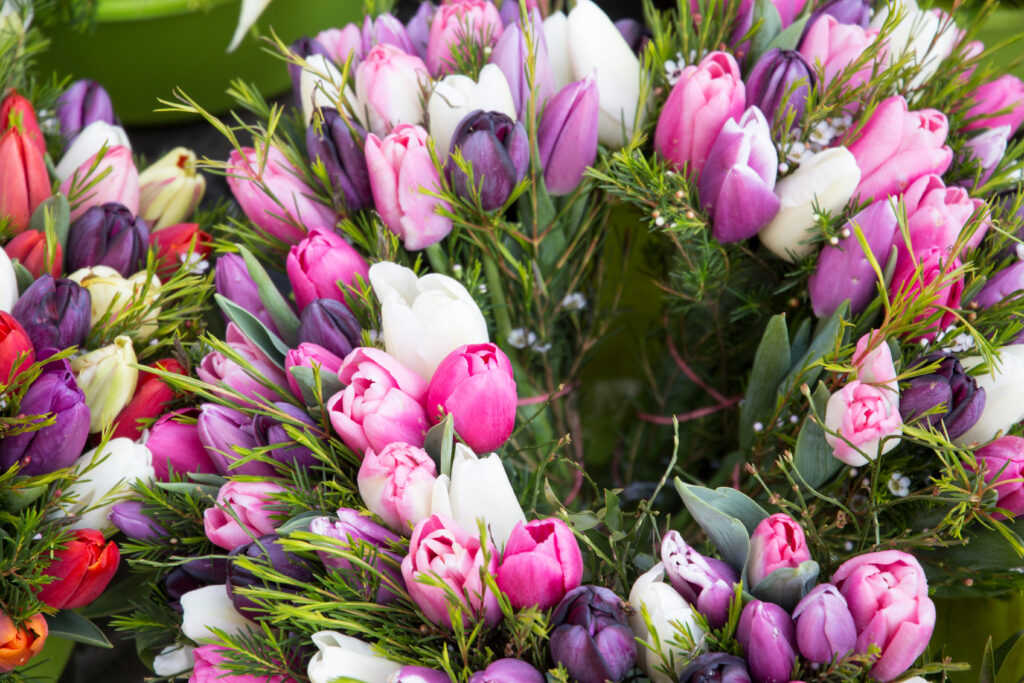
A clean, simple spring bloom that reads as modern rather than fussy, tulips work well for a couple who wants a simple bridal bouquet without a lot of texture or layering. They’re inexpensive relative to most other spring options, which makes them a practical base to build a bouquet around.
7. Sunflowers
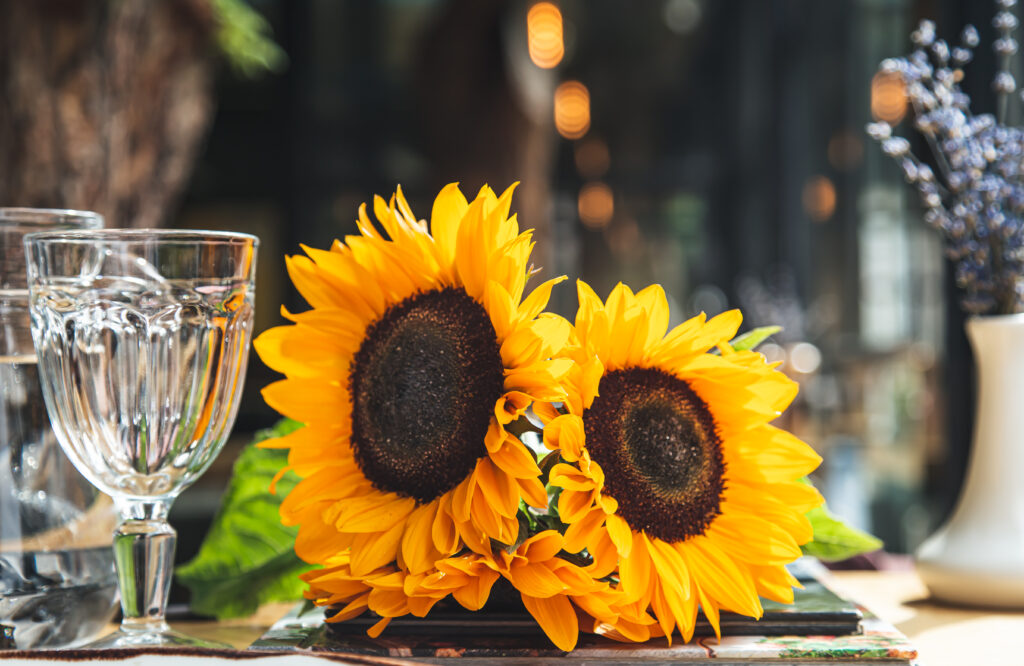
A summer bloom with a bold, casual look that suits rustic or outdoor weddings better than formal ones. A little goes a long way visually, so sunflowers work well mixed into a bouquet or centerpiece rather than used as the sole flower.
8. Chrysanthemums
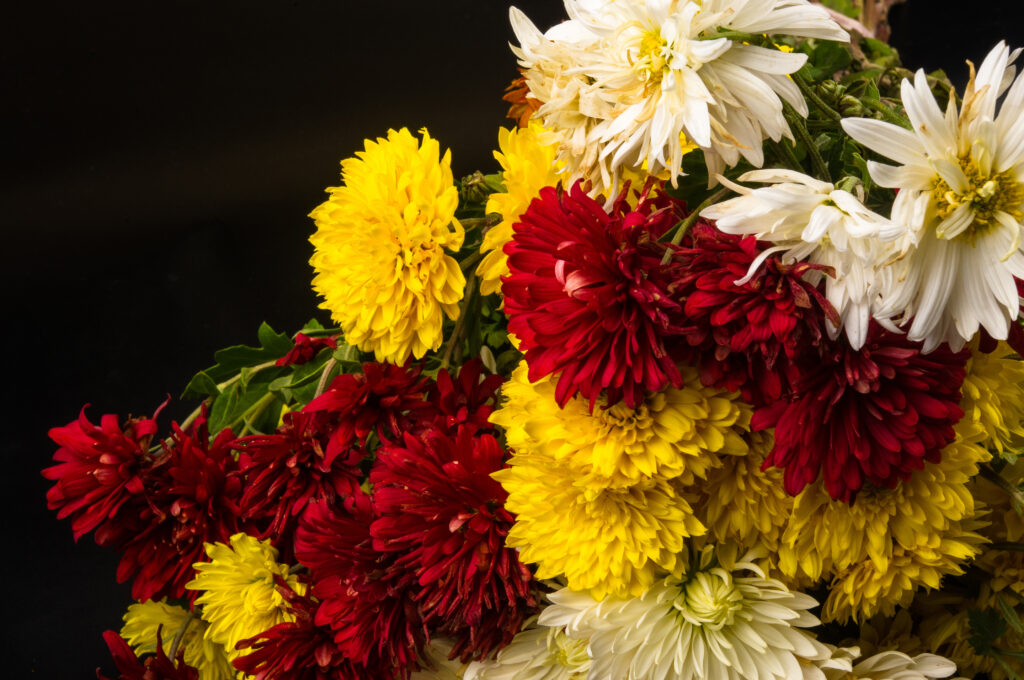
Abundant and affordable in fall, chrysanthemums come in warm, rich tones that suit that season’s natural palette. They hold up well after cutting, which makes them a dependable choice for a wedding day that runs long.
9. Amaryllis
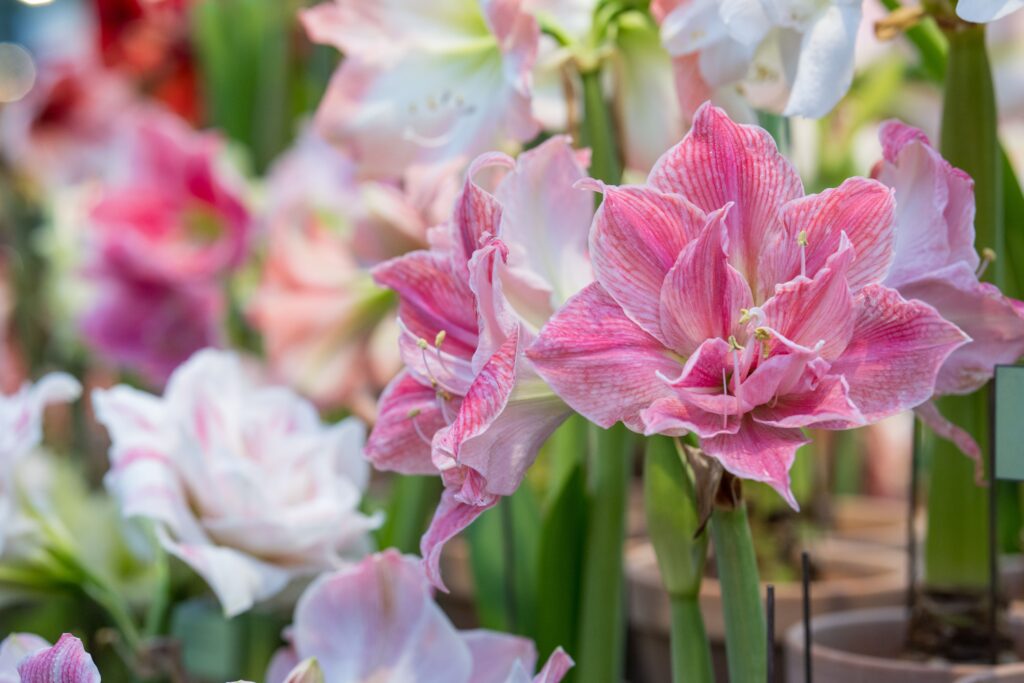
A striking, trumpet-shaped winter bloom that reads as formal and a little dramatic, amaryllis works well as a statement flower in a smaller winter bouquet or a single-stem boutonniere. Since it’s mostly greenhouse-grown or imported for weddings, it costs more than a naturally in-season flower would.
10. Anemones
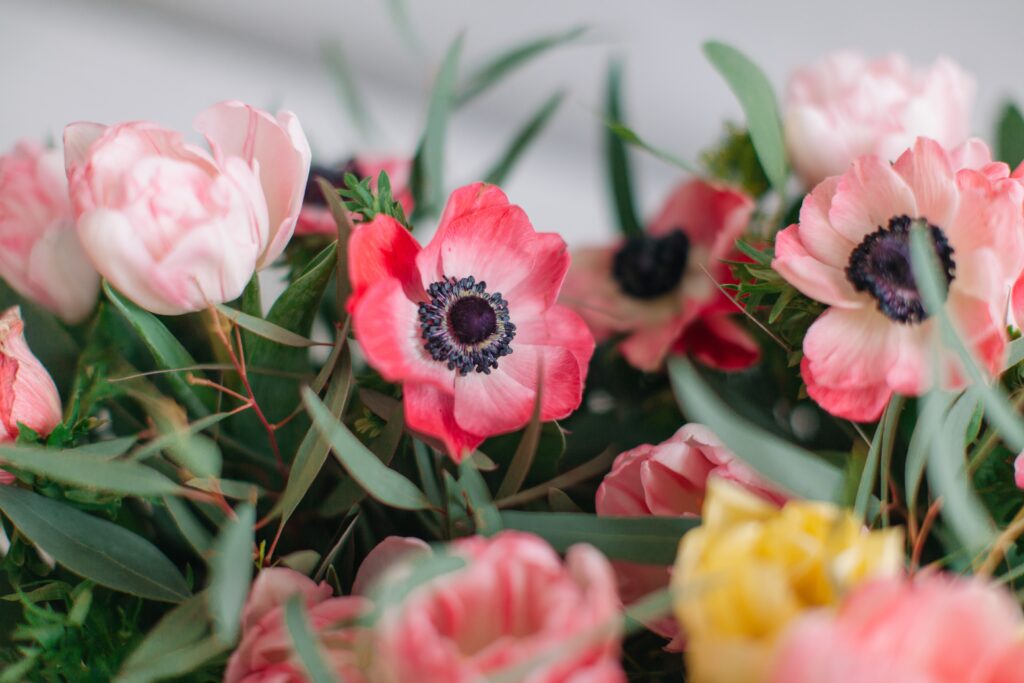
A dark-centered, poppy-like bloom that adds contrast and visual interest to an otherwise soft bouquet. They’re most reliably available in winter and early spring, and a few stems tucked among roses or ranunculus go further than a bouquet built entirely around them.
11. Carnations
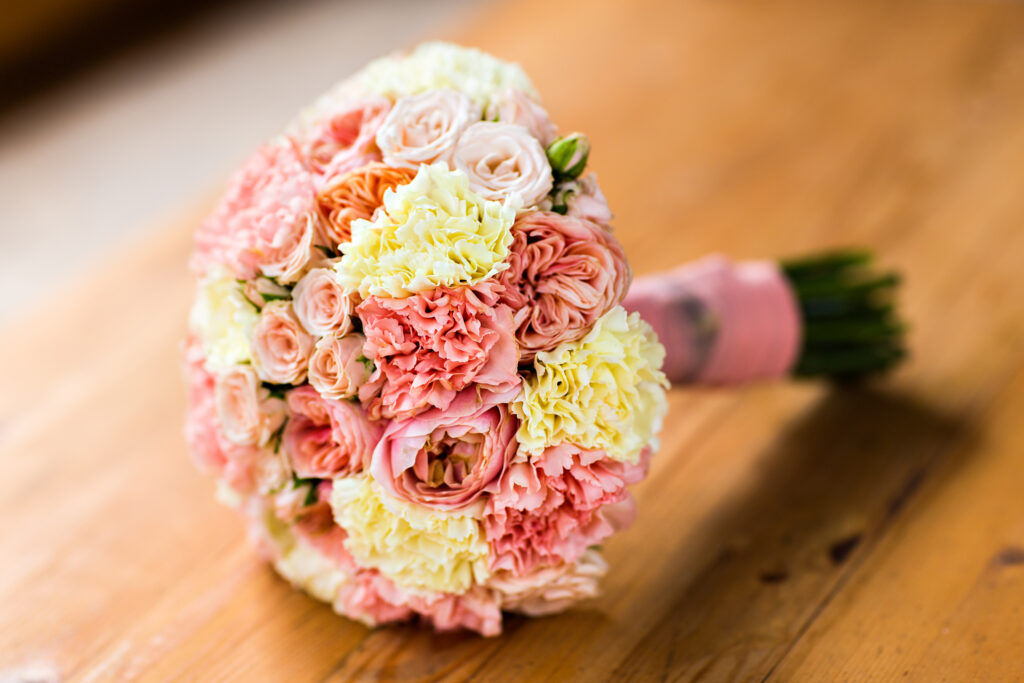
Once considered dated, carnations have had a real resurgence in ruffled, full arrangements, and they cost far less per stem than dahlias or garden roses. They hold up exceptionally well over a long day, which makes them a practical choice for a wedding with a lot of hours between getting-ready photos and the last dance.
12. Baby’s breath
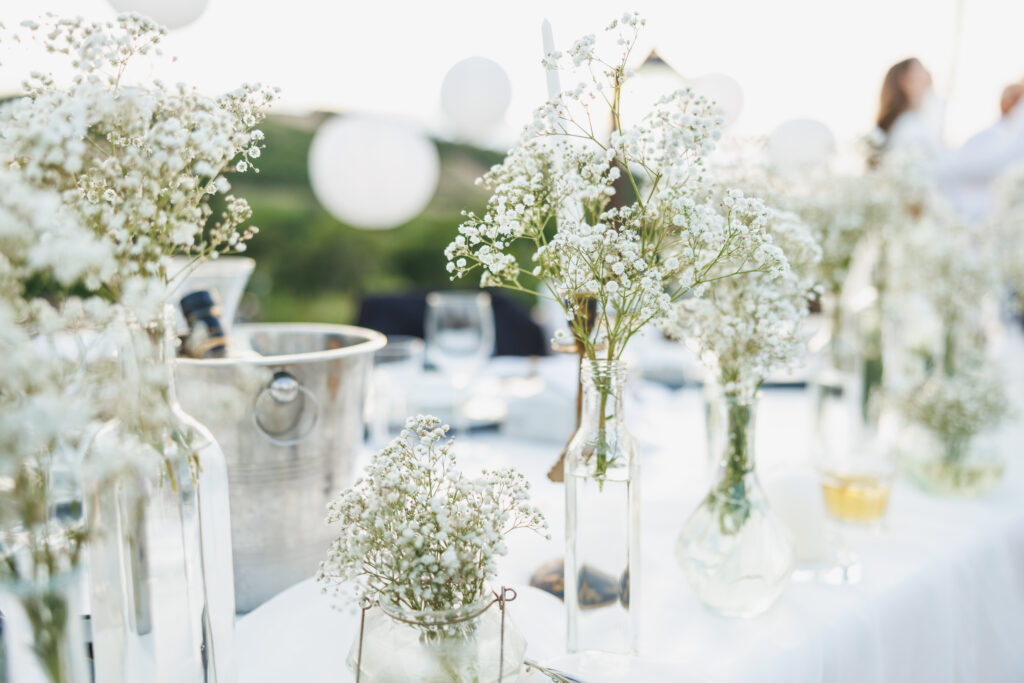
Small, airy clusters used as filler between larger blooms or, styled on its own, for a delicate, minimalist look. It also works well tucked into an updo or attached to a hairpiece, a low-cost way to bring florals into hair and accessories without a separate arrangement.
Consider this your cue to stop scrolling and start asking your florist real questions
Every flower on this list looks good in a photo. The difference between a bouquet that photographs beautifully and one that also came in on budget almost always comes down to timing: choosing blooms that are naturally in season for your wedding month instead of fighting the calendar. Pick two or three flowers to build everything around (bouquets, centerpieces, boutonnieres) rather than choosing a different flower for every application, since repetition is what makes a florist’s final invoice, and the finished look, come in more reasonably.
Bring a florist your season, your palette, and two or three flowers you genuinely love, and let them tell you honestly what’s realistic. If you’re still working out the rest of what a season-driven wedding actually looks like, from ceremony details to weather backups, planning around your actual wedding season tends to save more money than any single flower swap will.
One more keepsake worth considering
Flowers, even the most expensive ones, don’t outlast the wedding weekend. If you’re already thinking about what will last well past the bouquet, The Toast turns your guests’ toasts and well wishes into a professionally edited video keepsake, the kind of thing you’ll actually watch again on your fifth anniversary, long after the peonies are gone.
FAQs about types of wedding flowers
What are the most popular types of wedding flowers?
Garden roses, peonies, ranunculus, dahlias, and hydrangeas are among the most requested bridal flowers, largely because they hold up well after cutting and photograph consistently. Availability and cost vary by season, with peonies and ranunculus tied more tightly to spring than the others.
What wedding flowers are in season in each month?
Spring brings peonies, ranunculus, and tulips. Summer brings dahlias, garden roses, and sunflowers. Fall brings chrysanthemums, marigolds, and late-season dahlias. Winter relies more heavily on greenhouse-grown or imported blooms like amaryllis and anemones, since fewer flowers grow outdoors that time of year.
How much do wedding flowers typically cost?
The national average for wedding flowers overall is around $2,800, with a typical range of $1,500 to $6,000 depending on guest count and flower choices. A professionally arranged bridal bouquet alone usually runs $200 to $400.
What are good budget-friendly alternatives to peonies?
Garden roses closely resemble a peony’s full, layered look at a lower cost and with far better year-round availability. Ranunculus and spray roses also work well as smaller, less expensive stand-ins when used to fill out an arrangement.
Do wedding flowers need to match the season I’m getting married in?
Not strictly, but choosing flowers naturally in season for your wedding month is the most reliable way to control cost, since out-of-season blooms typically have to be imported. Greenhouse-grown staples like roses and hydrangeas are available in every season if you want something specific outside your month’s natural bloom list.