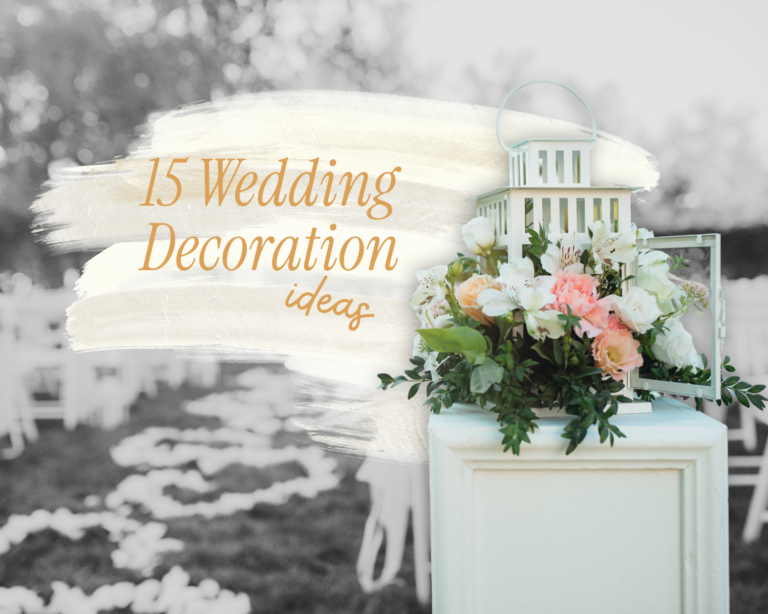
You’ve got fourteen browser tabs open, a Pinterest board with three hundred pins, and a growing suspicion that you’re supposed to have opinions about candle heights by now. Decorating the wedding is one of those tasks that feels enormous right up until you realize most of it is a handful of good decisions repeated consistently, not a hundred small ones made from scratch.
The couples whose weddings feel the most put together usually spent less time chasing trends and more time picking a handful of materials, colors, and textures, then using them everywhere. This piece walks through how to read your venue before you buy anything, what decor actually costs at different budget levels, and specific ideas for the ceremony, the reception, and the parts of the day that happen outside.
What wedding decor actually costs
Wedding-related spending has been climbing faster than overall inflation, up 8.5 percent year over year as of mid-2026, according to Marketplace, which makes it worth knowing roughly where your money goes before you start buying. Flowers and decor combined typically land somewhere between 8 and 10 percent of a total wedding budget, though that range moves depending on how hands-on you plan to be.
| Approach | Typical share of budget | What’s usually included |
| DIY and borrowed | 5 to 7% | Thrifted vases, rented linens, decor you assemble yourself with help from family or friends |
| Mid-range, mostly rented | 8 to 10% | Rental centerpieces, a florist for personal flowers only, some DIY accents |
| Full-service florist and designer | 12 to 15% | Full floral installations, custom lighting design, a decor team that sets up and strikes everything |
None of these tiers is the “correct” one. A DIY-heavy wedding budgeted carefully from the start can look every bit as finished as a full-service one, it just spends more in labor (your own) and less in cash. With that in mind, here are 15 ways to spend it well.
1. Read your venue before you buy anything
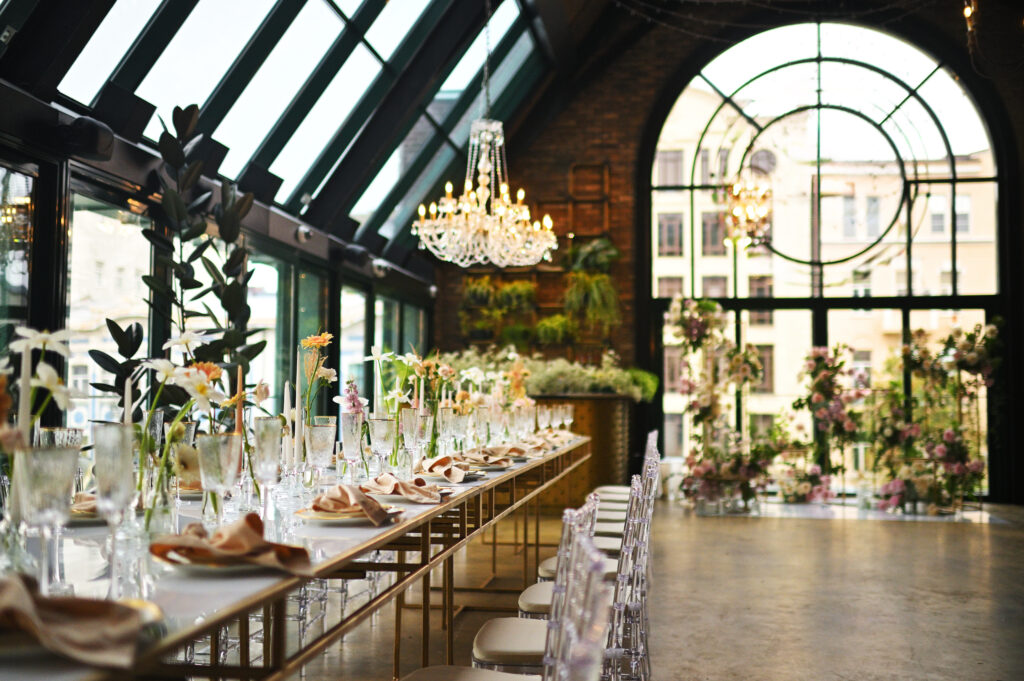
Before you add a single string light or floral arch, look hard at what your venue already gives you. A barn with exposed beams and string lights built into the rafters needs almost nothing added to feel finished. A hotel ballroom with beige carpet and fluorescent overheads needs more intentional work, but that doesn’t mean more spending, it means being deliberate about where the eye lands.
Walk the space, or look closely at photos of it fully set up for another event, and note what’s already working: interesting architecture, natural light, a fireplace, a view. Decorating your wedding well is often about editing rather than adding, pulling focus toward what the room already does right.
2. Anchor the ceremony with one arch or arbor
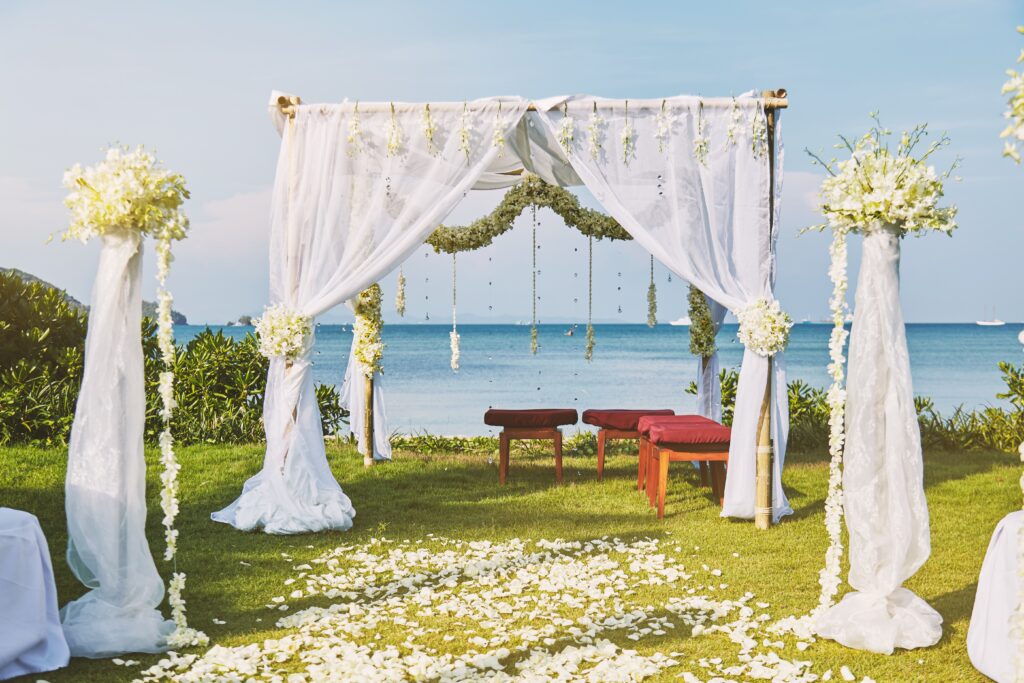
The ceremony is the shortest part of the day but the part guests photograph the most, so a single focal structure at the front does more work than almost anything else. Greenery, a few statement blooms, or draped fabric all give photographers a clean backdrop and give guests somewhere to look, and none of them need to be elaborate to read as intentional.
3. Guide the aisle without decorating every chair
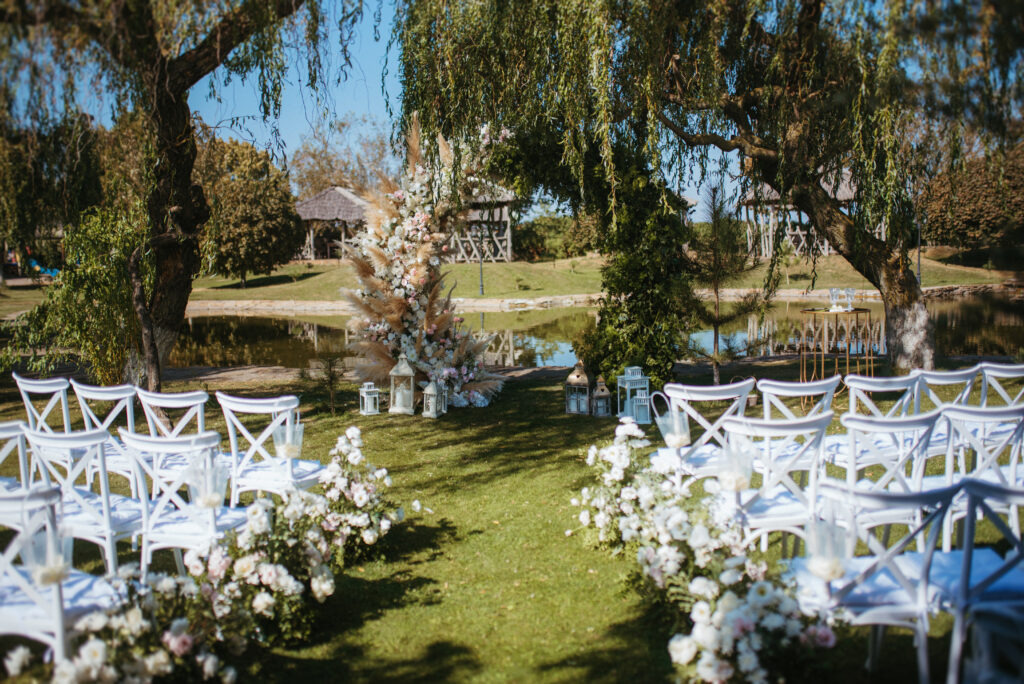
Lanterns, potted greenery, or small floral clusters placed every few rows guide guests’ eyes down the aisle without requiring you to decorate every single seat. It’s a small, repeatable detail that reads as considered rather than sparse.
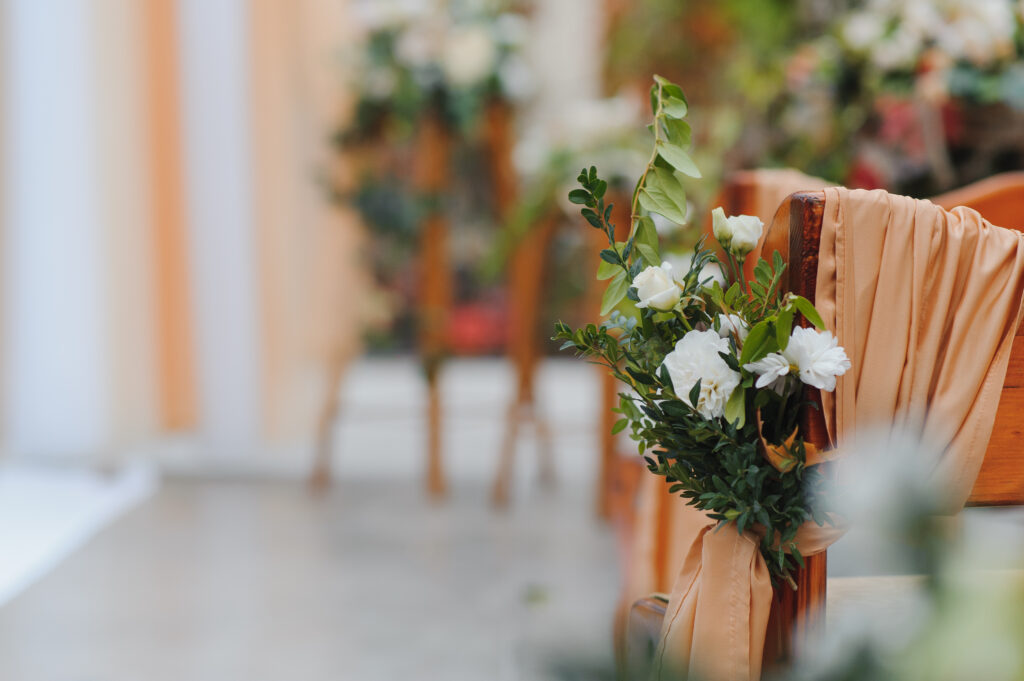
4. Keep it simple on the seating your guests actually sit in
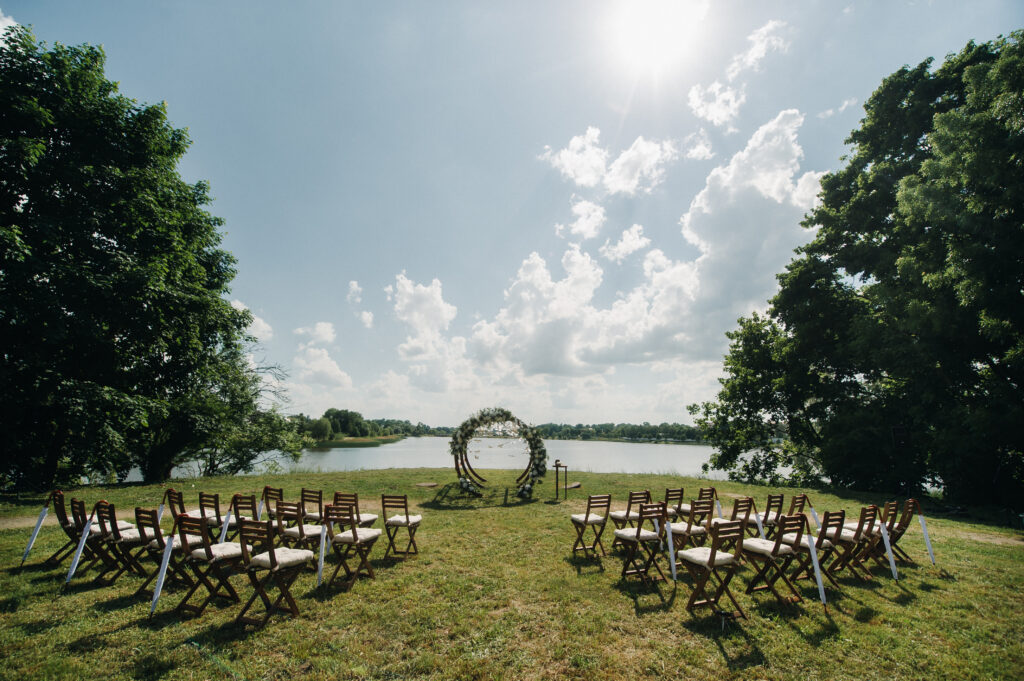
A simple ribbon or greenery accent on the aisle-end chairs of the front rows is usually enough. Decorating every chair in the room rarely gets noticed in photos and adds cost fast, so save the detail work for the spots people actually look at.
5. Give ritual moments their own small table
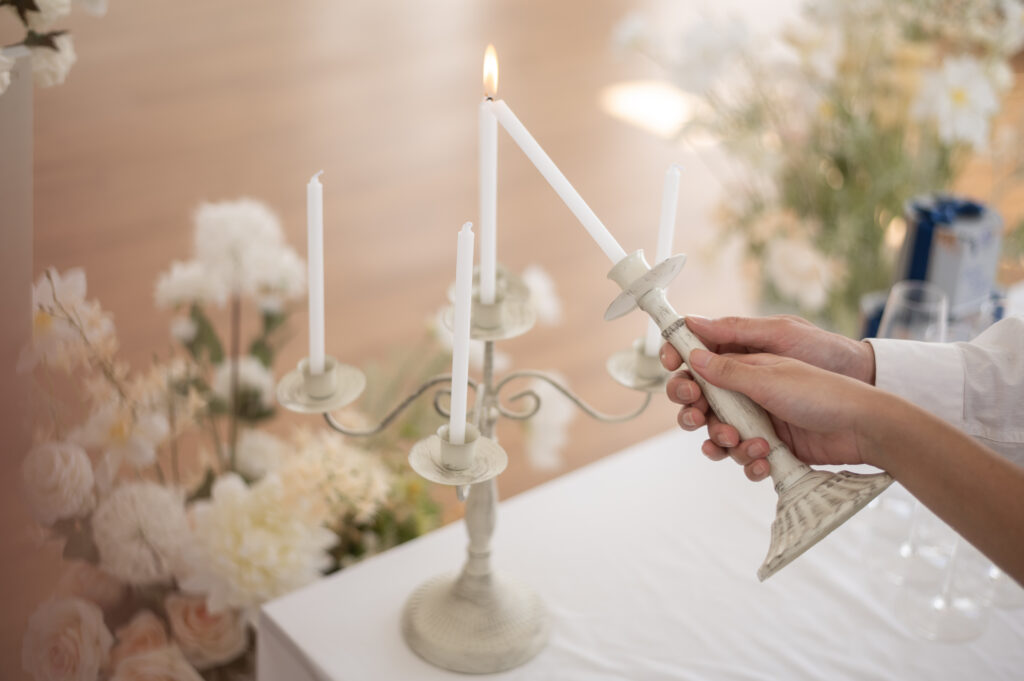
If your ceremony includes a unity candle, sand ceremony, or handfasting cords, a small dedicated table keeps that moment visually clear instead of competing with the arch behind it. It doesn’t need its own florals, just enough separation to read as its own beat in the ceremony.
6. Pick centerpieces that repeat, not compete
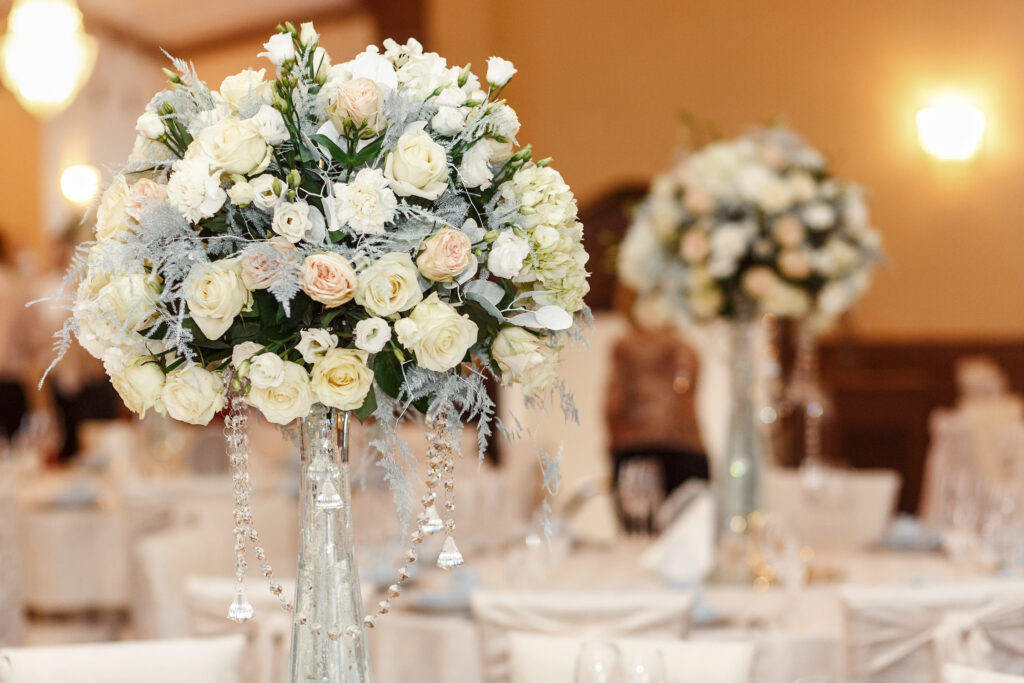
Reception decor has more surface area to cover than the ceremony, which is exactly why repetition matters more here than variety. Pick one or two centerpiece styles and alternate them table to table rather than designing each table individually. Consistency reads as more expensive than variety does.
7. Prioritize lighting over almost everything else
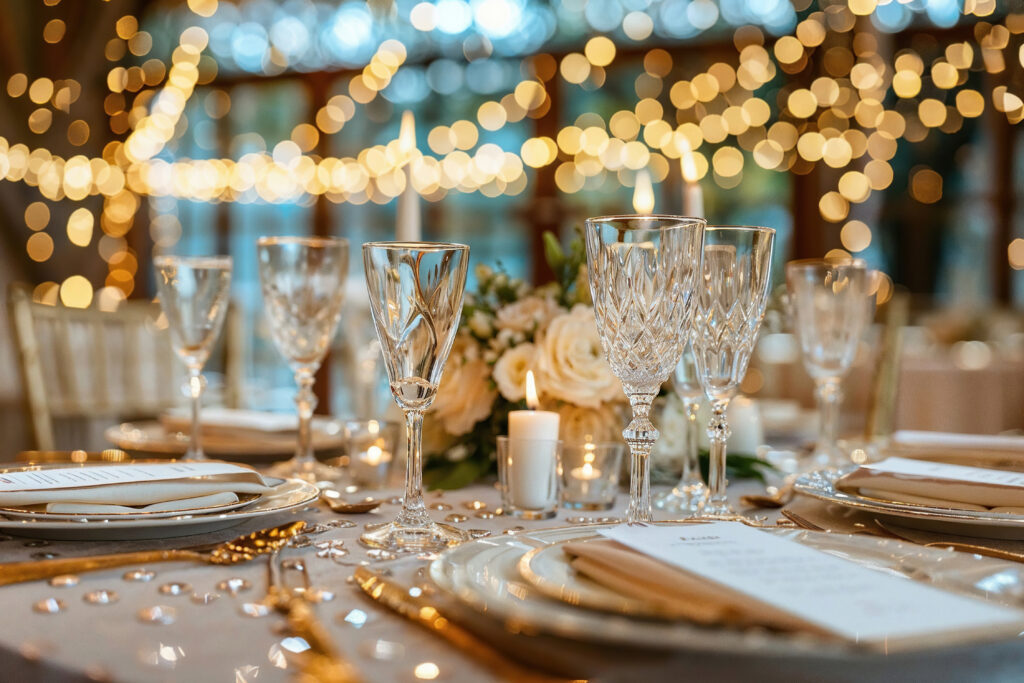
String lights, uplighting, or candles change how a room feels after dark more than any single floral choice. If you have to cut somewhere in the budget, cut flowers before you cut lighting.
8. Let your linens do more work than you’d expect
A linen color that complements your palette, even a neutral one, pulls a room together more than people expect. Skipping this step is one of the more common ways a reception ends up looking unfinished despite everything else being right.
9. Add a tablescape anchor between centerpieces
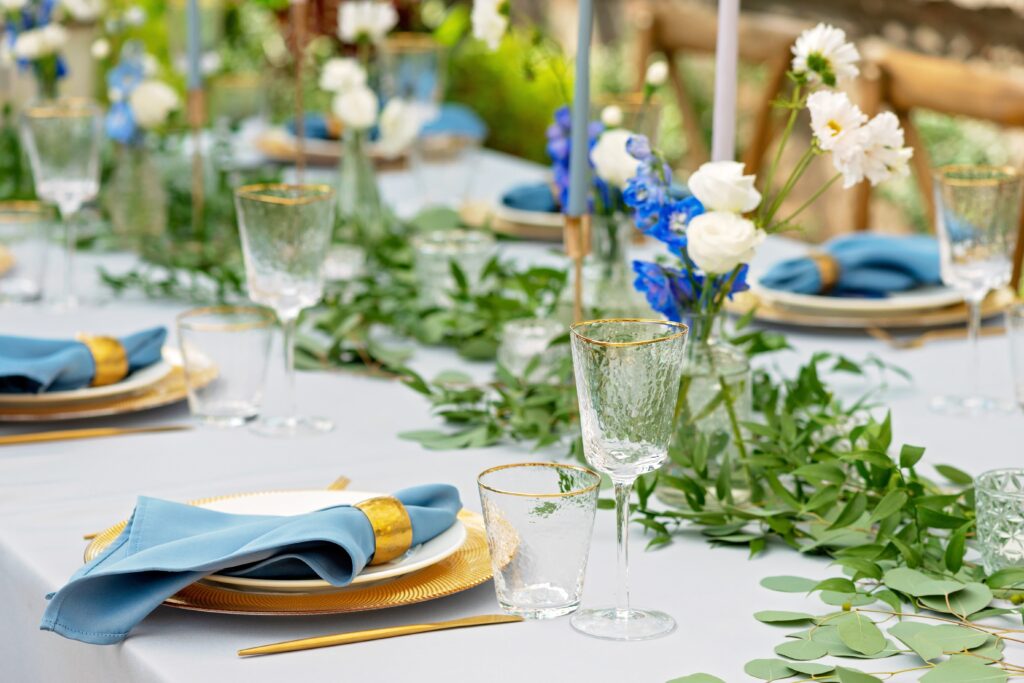
Candles, small greenery, or a runner down the center of each table fills the space between centerpieces without requiring more flowers. It’s a low-cost way to make a table feel fully styled rather than half-finished.
10. Anchor anything tall or freestanding outdoors
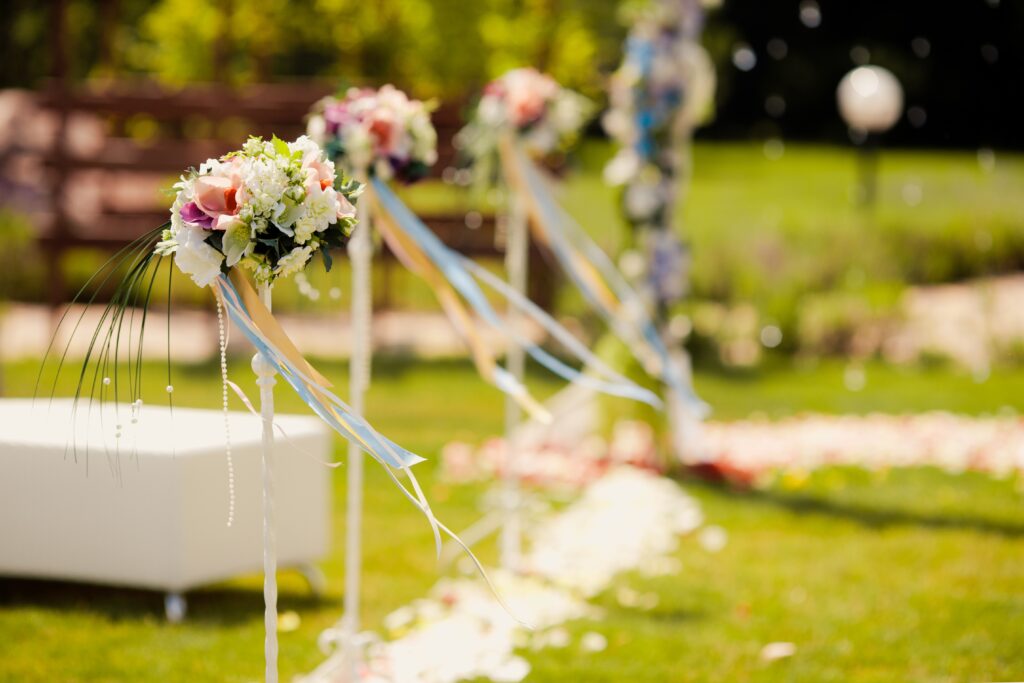
Outdoor wedding decorations have to hold up against wind, sun, and the occasional surprise weather change, so durability matters as much as looks. Arches, arbors, and freestanding signage need real weight or stakes, not just good intentions, since even a light breeze can knock over something that looked stable indoors.
11. Skip open flame if there’s any wind risk
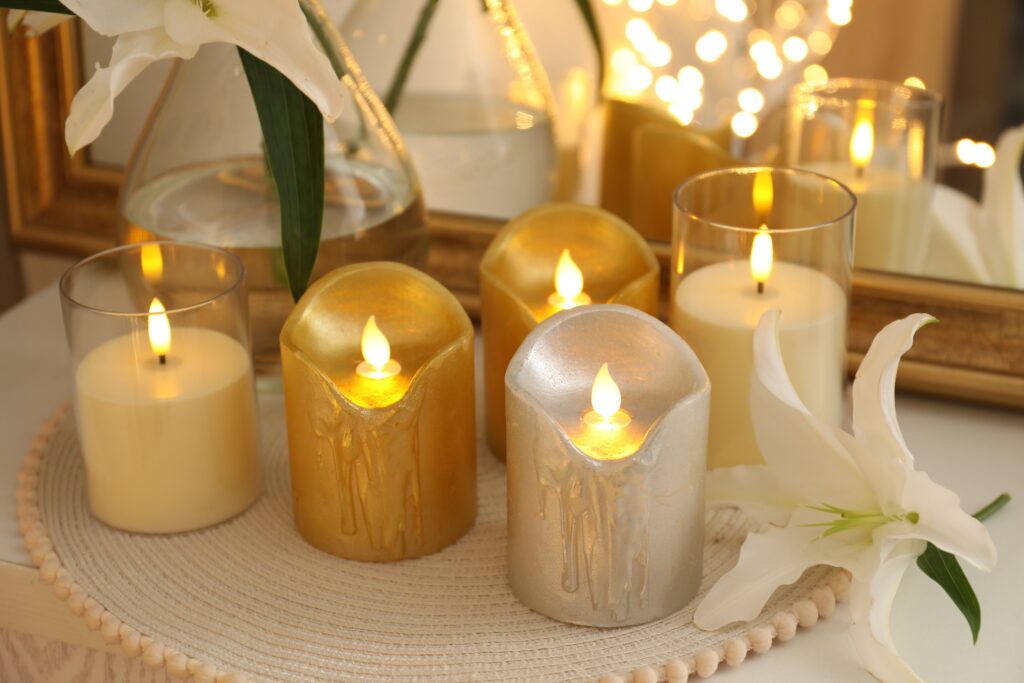
Use flameless candles instead of real ones anywhere outdoors, they’ve gotten good enough that guests rarely notice the difference, and it removes one more thing that can go wrong with a gust of wind mid-toast.
12. Bring weather-ready paper goods
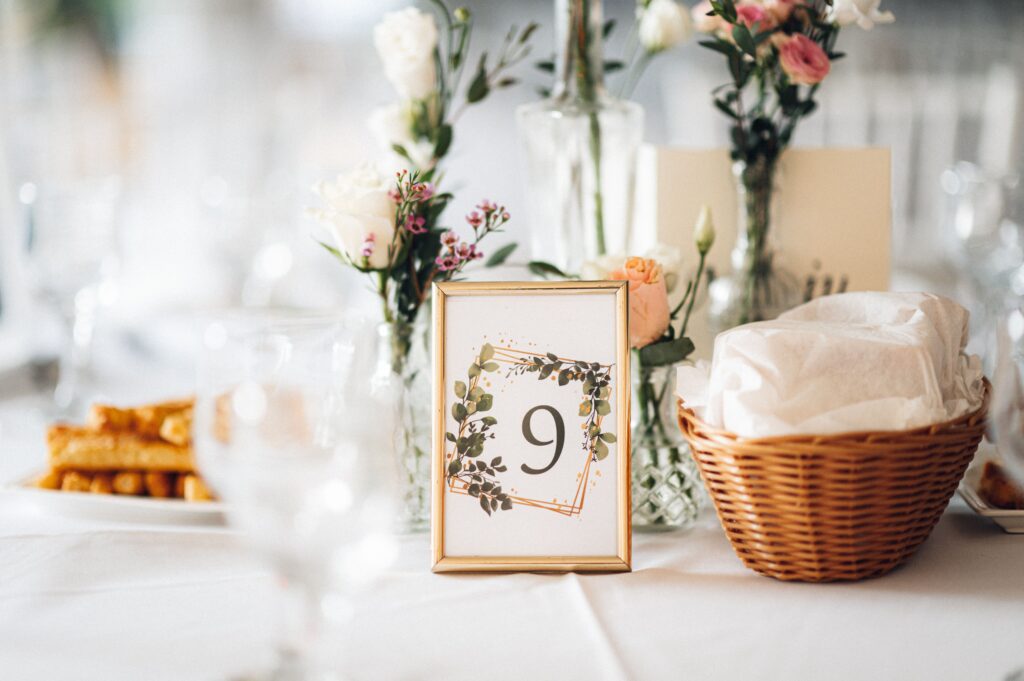
Humidity curls place cards and programs faster than most couples expect, so a slightly heavier cardstock or a laminated welcome sign holds up better outside than it would indoors. It’s a small swap that saves a display from looking wilted by cocktail hour.
13. Lean into (don’t fight) your actual wedding season
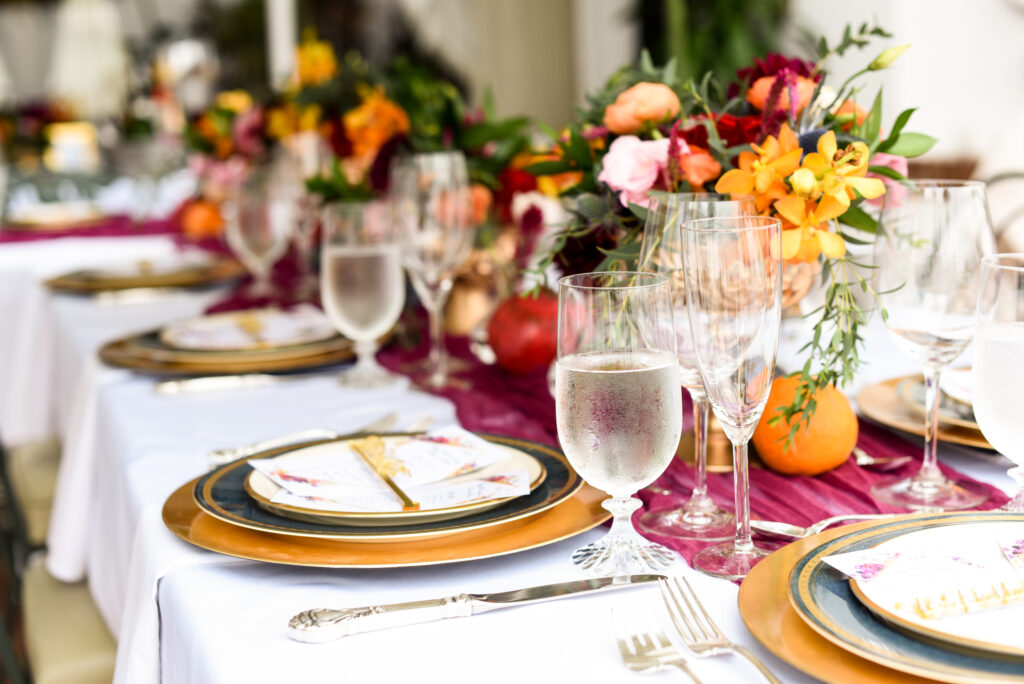
Decor that leans into the season you’re actually getting married in tends to look more intentional than decor that fights it. Spring weddings lean into pastels, garden-style florals, and lighter fabrics, which is also the season when outdoor and garden ceremonies tend to shine the most. Fall weddings can lean into rustic, moody tones (rust, burgundy, deep green) and layered textures like velvet runners or dried florals, which read as warm rather than dated when done with a light hand. You don’t have to follow the season literally, an all-white, minimalist look works in any month, but it’s a reliable shortcut if you’re not sure where to start.
14. Repurpose ceremony florals at the reception
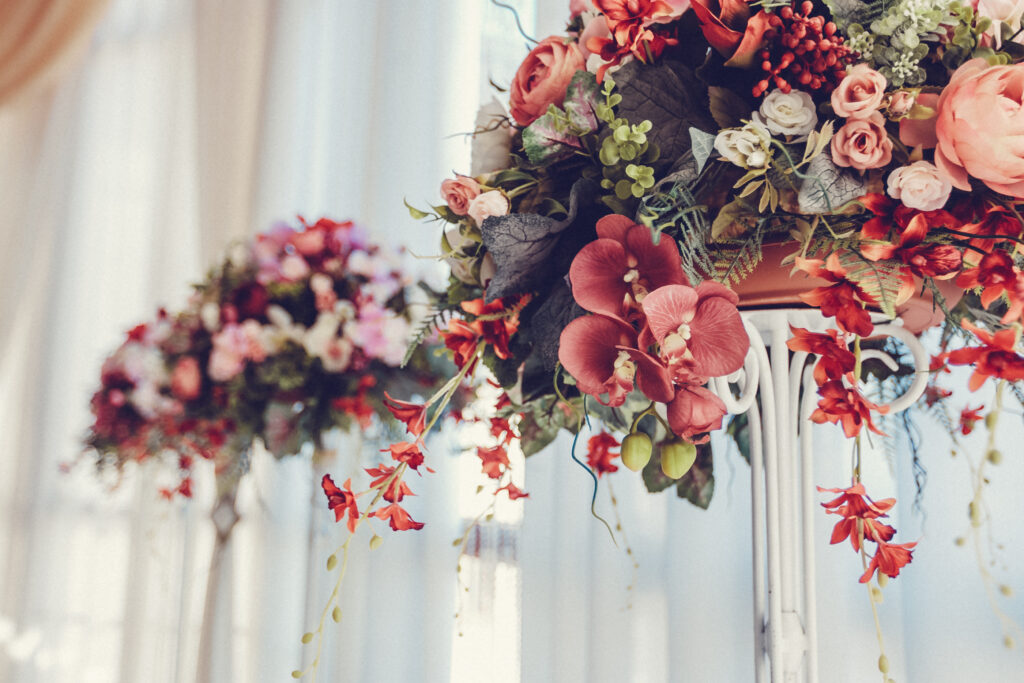
An arch’s greenery or statement blooms rarely need to stay put once the ceremony ends. Having your florist or a member of the wedding party move arch pieces to the reception’s head table or entrance stretches the same flowers across two moments instead of buying for both separately.
15. Pick a few good ideas and let them repeat everywhere
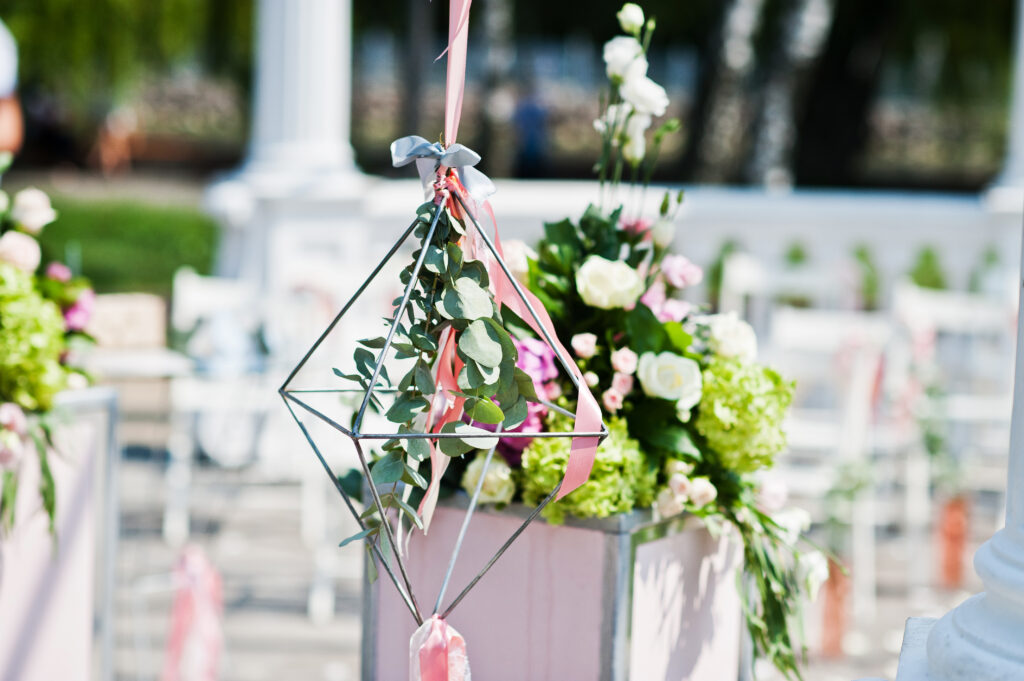
At some point, usually somewhere around pin two hundred, decorating a wedding stops being about ideas and starts being about restraint. The couples who feel calmest walking into their reception aren’t the ones who thought of the most decor ideas, they’re the ones who picked a few good ones and let them repeat throughout the space instead of layering in something new at every turn.
Consider this your cue to check with your venue before you buy anything
If you’re still deciding what your venue allows or requires for setup and breakdown, that conversation is worth having before you buy a single centerpiece, since some venues restrict candles, confetti, or anything attached to walls. Once that’s settled, the rest of this is genuinely the fun part.
Whatever tier you’re decorating at, the couples whose weddings feel the most put together usually spent less time chasing trends and more time picking a handful of materials, colors, and textures, then using them everywhere, from the aisle to the very last table.
One more thing worth capturing
Every centerpiece and string light in this piece is built to disappear by the next morning. What guests actually remember later is rarely the tablescape, it’s what everyone said and how the room felt while they were in it. The Toast turns those voices into a professionally edited keepsake video, so the feeling of the day outlasts the flowers that decorated it.
FAQs about decorating a wedding
How much should I budget for wedding decorations?
Flowers and decor combined typically run 8 to 10 percent of a total wedding budget, though a DIY-heavy approach can bring that down to 5 to 7 percent and a full-service florist and design team can push it to 12 to 15 percent. Where you land depends more on how much of the labor you’re doing yourself than on the size of your wedding.
What are the cheapest ways to decorate a wedding?
Leaning on your venue’s existing architecture, using rented rather than purchased items, and repeating one or two centerpiece styles across every table instead of designing each one individually are the fastest ways to cut cost without the room looking bare. Candles and lighting also change a room’s feel more per dollar than flowers do.
Do I need different decorations for the ceremony and reception?
Yes, though they should feel connected. The ceremony only needs to hold attention for twenty to thirty minutes, so one strong focal point (an arch, an aisle treatment) does the job. The reception runs for hours, so it needs decor that holds up under longer scrutiny: centerpieces, lighting, and linens working together.
How do I decorate an outdoor wedding without worrying about wind or weather?
Anchor anything freestanding with real weight or stakes, use flameless candles instead of open flame, and bring slightly heavier cardstock or laminated signage for paper goods, since humidity and wind affect outdoor decor in ways an indoor venue never has to consider.
Should my wedding decor match the season I’m getting married in?
It’s not required, but it’s a reliable shortcut if you’re not sure where to start. Spring decor tends to lean into pastels and garden-style florals, while fall decor leans into rustic, warmer tones. An all-white or minimalist look works in any season if that’s the aesthetic you actually want.