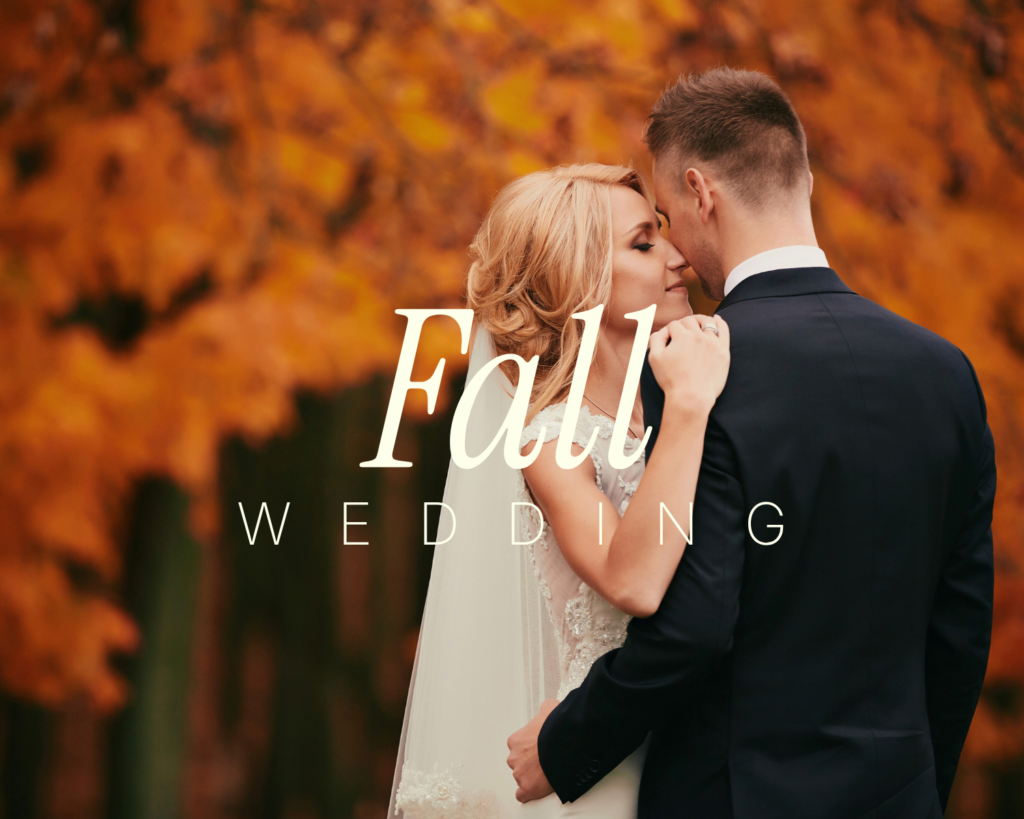
There’s a reason fall weddings dominate every venue’s calendar. The natural color palette, crisp air, cozy atmosphere, and photographic conditions that come with the season are so hard to replicate any other time of year. A fall autumn wedding feels different from any other season: warmer and more grounded. There’s an emotional quality to it that couples feel before they can fully articulate it.
But fall is also the most popular wedding season in the US. According to The Knot, 35% of all weddings happen between September and November, which makes it a more competitive booking environment than summer. October alone is the single most popular wedding month in the country. That means the venues, photographers, and vendors you want are under more pressure in fall than at almost any other time of year.
This guide covers everything you need to plan a fall wedding well: when to book, how to handle unpredictable weather, how to work with shorter days for photography, and how to make the most of the season for colors, flowers, food, attire, and everything in between.
Book even earlier than you think
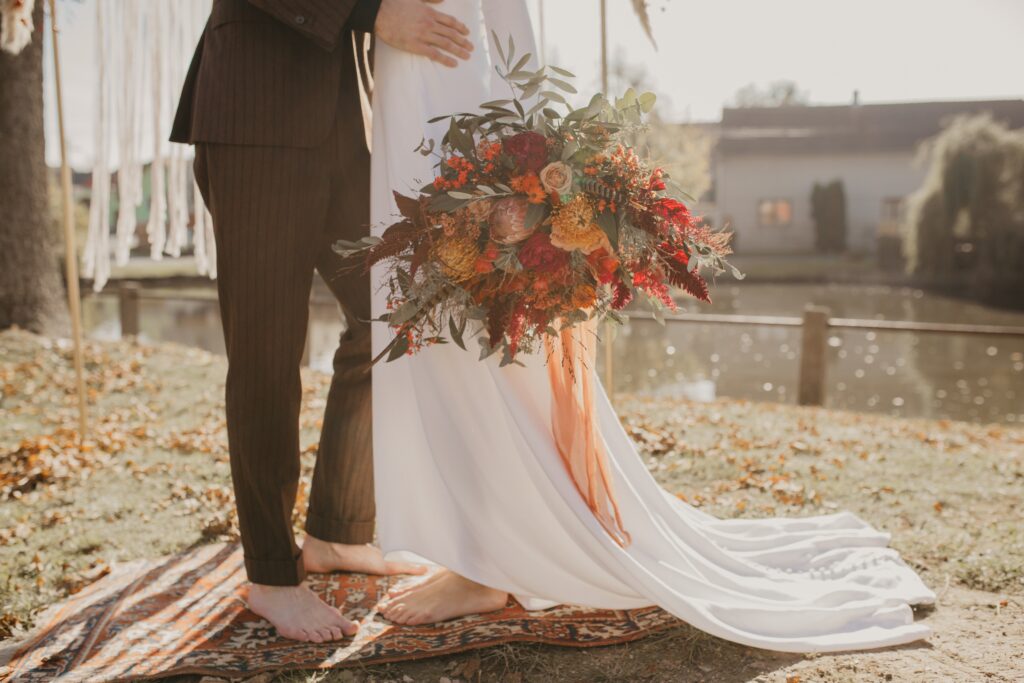
If summer requires early booking, fall requires earlier. October Saturday dates at sought-after venues fill 12 to 18 months in advance in most regions, and popular photographers in major metro areas are no different. For destination weddings or high-demand venues in cities like New York, Boston, or Chicago, 18 to 24 months isn’t unusual.
September and October command pricing comparable to June. If budget is a real consideration, November is worth a serious look. You’ll find roughly 25 to 40% more photographer availability and still get most of what makes fall beautiful, including warm afternoon light and the cozy atmosphere that draws couples to the season in the first place.
Venue: Start touring 12 to 18 months out. For peak October dates, tour earlier. Fall venues in scenic locations are often toured by multiple couples for the same weekend, so locking in your date matters more than finding the perfect option.
Photographer: 9 to 12 months minimum. For October Saturdays, go longer. A photographer you love can absolutely fill their fall calendar by the time you reach out if you’ve waited until you have everything else figured out.
Fall wedding saves the dates and invitations: Because fall dates book out fast for guests too, send fall wedding save the dates earlier than you would for other seasons. For local weddings, 6 to 8 months out is a good rule of thumb. For destination or out-of-town-heavy guest lists, push that to 8 to 12 months. Fall wedding invitations follow 6 to 8 weeks before the date.
One important caveat about foliage: Don’t choose your wedding date solely based on peak leaf color. Foliage timing shifts by 1 to 2 weeks depending on the year and the specific region. What looked stunning at your venue tour in October could look entirely different on the same date the following year. Choose a venue that looks beautiful regardless of whether the leaves are at peak, just turning, or mostly dropped.
Plan for the weather: it’s more unpredictable than you think
Fall weather is the biggest planning wildcard of any season. Unlike summer (reliably warm) or winter (reliably cold), fall spans an enormous temperature range depending on where you are and when your wedding falls.
Early September can still feel like summer: warm afternoons, comfortable evenings, no need for extra layers. Late October through November is a different story entirely in most of the country. Cold snaps and even early frost are all real possibilities. A fall autumn wedding in the same venue can feel like a completely different experience depending on the month.
Always have an indoor backup plan. This is the single most consistent piece of advice from every event planner who works fall weddings. Not having an indoor space for inclement weather is a genuine oversight. When evaluating venues, understand exactly what the indoor backup looks like, how quickly the transition can happen, and what the decision point is. That decision point matters: knowing at what time or under what conditions the backup plan gets activated makes the day-of call far less stressful.
Plan for cold evenings specifically. Even when the afternoon is beautiful, temperatures drop fast once the sun goes down. A few things that work well for outdoor fall receptions: blankets draped over ceremony seats so guests aren’t shivering during the vows and a basket of pashminas or simple wraps at the entrance. These aren’t just practical. They’re aesthetic and guests genuinely love them.
Warm signature drinks. Hot spiked apple cider or a mulled wine option do double duty: they keep guests warm and they fit the season perfectly. A signature warm cocktail is one of the easiest things you can add to a fall reception that guests will remember.
Communicate the setting to your fall wedding guest. If your ceremony or reception has any outdoor component, say so on the invitation. A simple note about the setting and a dress code that reflects the conditions (“outdoor garden ceremony” or “outdoor cocktail hour, indoor reception”) helps guests prepare practically. Nobody appreciates being underdressed for a cold October evening.
Event insurance is worth considering for any outdoor fall wedding. Weather is a genuine variable and the financial exposure of an outdoor event is real.
Photography: fall’s biggest advantage requires earlier planning
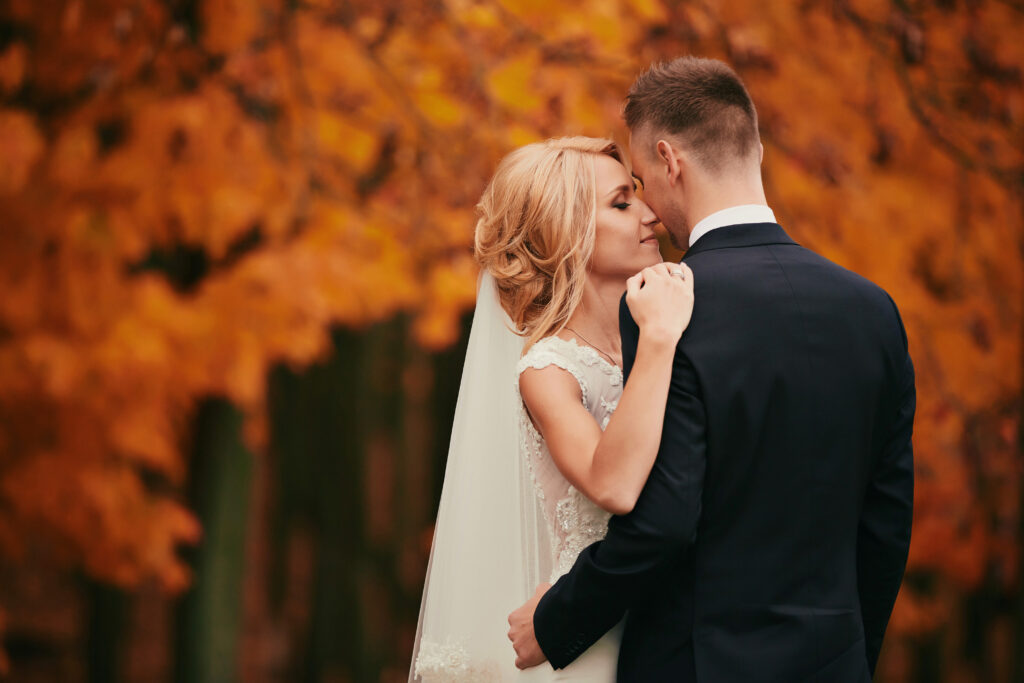
Fall gives couples photographic conditions that summer genuinely can’t match. The light in autumn has a warm quality that extends well past midday. You can get beautiful, soft portraits in the early afternoon that would require harsh editing in July. In fall, the landscape does most of the work.
Golden hour in fall arrives earlier than most couples expect. In early fall (September through mid-October), it typically lands around 6 to 8 PM. By late October and November, it can be as early as 4 to 5 PM, with sunset arriving at 5:00 to 6:00 PM in many parts of the country. This compresses the portrait window significantly compared to summer.
The most important implication: start your fall ceremony earlier than you would in summer. A 3:30 or 4 PM ceremony start is appropriate for most October fall weddings, not the 5 PM start that works fine in July. A ceremony that starts 15 minutes late in fall can push the second half of your portrait session past sunset. At that point, your photographer has to switch to flash, and flash-lit portraits feel different from natural-light ones. That inconsistency is hard to fix in editing.
Talk to your photographer specifically about the sunset time for your date and location. Not a general rule of thumb, but the actual sunset time at your venue on your wedding day. Apps like PhotoPills or TimeandDate.com give you a precise answer. Build your timeline backward from that.
Consider a first look. Doing portraits before the ceremony while there’s still full daylight means you walk into the reception with most of your photos done, and you only need a brief golden-hour session after the ceremony. For late fall weddings with early sunsets, this is often the best way to protect the light without rushing the day.
The natural backdrop that fall provides, especially at venues with mature trees or scenic surroundings, is genuinely irreplaceable. No décor budget produces what an October afternoon in peak foliage delivers on its own.
Fall wedding colors, flowers, and décor
Fall wedding colors
Fall wedding colors give couples more built-in aesthetic direction than any other season. The challenge isn’t finding colors that work. It’s narrowing down from all the options that do.
| Palette | Colors | Best for |
|---|---|---|
| Classic fall | Burgundy, gold, forest green, burnt orange, rust | Mirrors season. Barn, vineyard, garden venues. Minimal effort needed. |
| Berry tones | Deep burgundy, plum, wine + sage green, caramel, pale gray | Sophisticated, warm, elevated. Romantic without being rustic. |
| Earthy & warm | Rust, burnt orange, warm gold | Setting sun vibe. Pairs with wood, pampas grass, dried botanicals. |
| Non-traditional | Deep navy + tan/orange. All white. Dusty lilac or dusty rose. | Striking contrast or understated. Lilac balances warmth in September. |
| 2026 trending | Emerald velvet. Moody dark (plum, forest green, charcoal). Rust + navy. | Luxe and sophisticated. Choose based on venue, not just mood board. |
The classic fall palette centers on burgundy, gold, forest green, burnt orange, and rust. These work because they mirror the season itself and pair naturally with in-season florals. If you’re planning a barn or outdoor garden wedding, this palette requires almost no work to feel cohesive.
Berry tones (deep burgundy, plum, and wine) are among the most sophisticated fall wedding colors for couples who want warmth without going full harvest aesthetic. Berry tones pair beautifully with sage green and creamy caramel, which creates a color scheme for weddings in the fall that feels elevated and romantic without leaning too rustic.
Earthy and warm (rust, burnt orange, and warm gold) evoke a setting sun and pair naturally with wood, pampas grass, terracotta, and dried botanicals. If the reception has a lot of natural texture in the venue itself, this palette lets the space do the work.
For non-traditional directions: deep navy with tan and orange foliage reads as a striking late-fall combination. All white lets the natural surroundings carry all the color. Dusty lilac or dusty rose balances the season’s warm tones beautifully, especially in September when the palette isn’t fully tipped into autumn yet.
2026 wedding color themes for fall that are gaining real traction: emerald green velvet, which reads as luxurious and deeply seasonal; moody dark palettes combining deep plum and forest green; and rust paired with navy as a sophisticated combination that contrasts beautifully without feeling predictable.
One thing worth remembering: the best fall wedding colors for your wedding depend on your venue. Emerald velvet in a candlelit ballroom is stunning. The same palette in a bright, white-walled event space reads differently. Choose colors in conversation with the space, not just on a mood board.
Fall wedding flowers
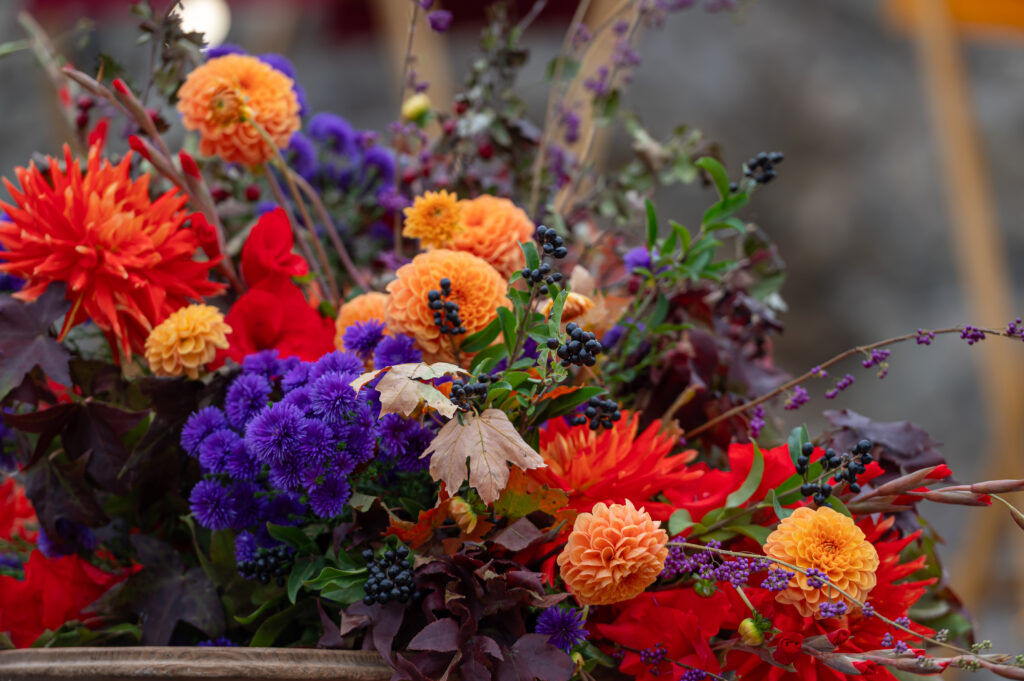
Fall is one of the most abundant seasons for in-season flowers, and using seasonal stems saves 30 to 50% compared to sourcing the same varieties out of season. Here’s what’s available month by month.
| Month | What’s available | Budget strategy |
| September | Peak dahlias. Rust mums, burnt orange celosia, gold marigolds, burgundy roses. Seasonal greenery: seeded eucalyptus, magnolia, autumn olive. | Save 30-50% using seasonal stems. |
| October | Dahlias continue. Modern spider/disbud/pompon mums (dusty rose, burgundy, antique gold). Marigolds dramatically underpriced. | Use dahlias as focal flowers. Support with mums and marigolds. |
| November | Limited availability. Roses reliable. Berries, branches, dried botanicals, foliage step in. | Incorporate branches and dried elements for striking seasonal look. |
September is peak dahlia season. Fall wedding flowers in September include burgundy dahlias, rust chrysanthemums, burnt orange celosia, gold marigolds, burgundy roses, and red amaranthus. Seeded eucalyptus, magnolia leaves, and autumn olive branches provide greenery that feels inherently seasonal.
October keeps dahlias in the mix but introduces chrysanthemums and marigolds as supporting players that are dramatically underpriced for their visual impact. Modern spider mums, disbud mums, and pompon mums in dusty rose, burgundy, and antique gold look nothing like the potted garden-center versions. Mixing dahlias as focal flowers with mums and marigolds as supporting flowers is the smartest budget strategy for October fall wedding floral arrangements.
November narrows the availability. Frost ends many domestic growers’ production by this point, and the transition toward winter stems is underway. Roses remain reliable. Berries and structural elements step in and look genuinely seasonal. Fall wedding flower bouquets in November that incorporate berry branches and dried botanicals can be among the most striking of the whole season.
Fall wedding centerpieces benefit from foliage and dried elements working harder than florals alone. Pampas grass, dried branches, autumn leaves, and seasonal berries extend arrangements while adding texture that purely floral centerpieces can’t achieve. They’re also friendlier to the budget.
Décor
Decorating for a fall wedding is easier than any other season precisely because the backdrop does so much of the work. A well-chosen venue with mature trees, natural materials, and warm lighting needs very little added decoration to feel beautiful in fall.
Fall wedding decor ideas that work well in 2026: greenhouse venues that give the feeling of being outdoors without the weather risk; serpentine tables that create an intimate, communal feel; pumpkins and gourds used as centerpiece bases rather than standalone decorations; warm candlelight and string lights that glow especially well against the season’s palette; cozy blankets as ceremony chair décor that double as take-home favors.
One note on fall wedding ideas for décor: fall can tip into generic territory quickly if every element doubles down on the harvest aesthetic. Pick two or three seasonal touchpoints and let the rest be classic. The season provides enough atmosphere on its own.
Attire: dressing for the fall wedding couple and guests
For the couple
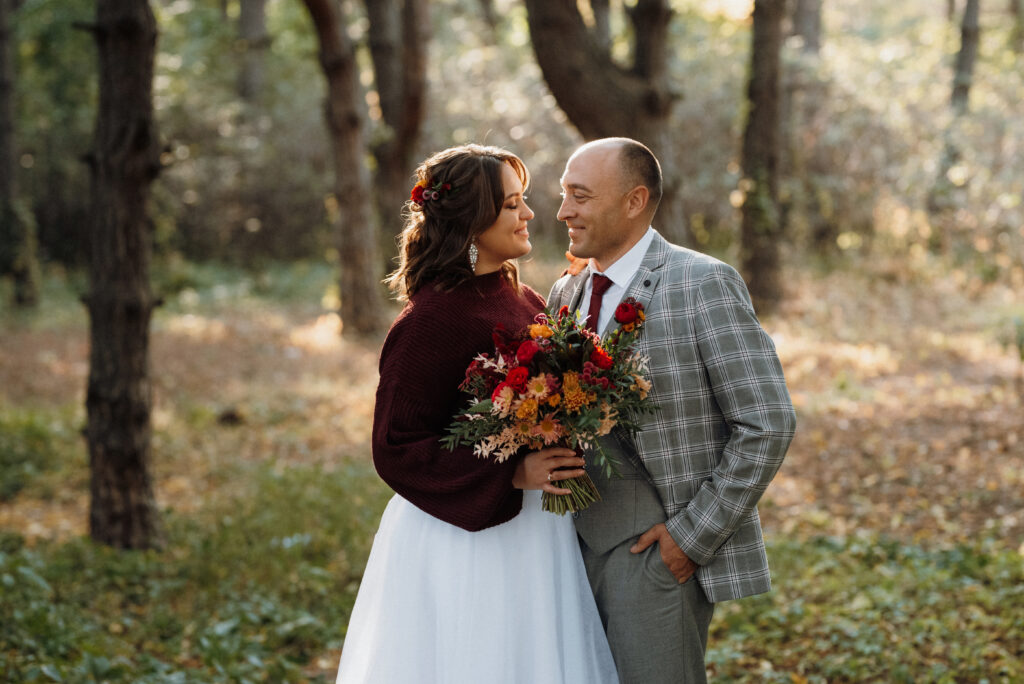
Fall bridal gowns open up fabric options that summer simply doesn’t. Velvet, heavier lace, satin, and crepe all photograph richly against fall color palettes and feel season-appropriate in a way that lighter summer fabrics don’t.
Fall wedding gowns with long sleeves or fitted silhouettes tend to look particularly strong against autumn foliage. The warm light of fall makes structured silhouettes and rich fabrics glow in a way that’s hard to achieve in harsher summer light. A detachable bolero or fitted long-sleeve layer gives fall bridal dresses versatility between an outdoor ceremony and an indoor reception.
For warmer early-fall September weddings, lighter fabrics still work. The season spans a wide enough temperature range that a September couple and a November couple should be thinking about their fall wedding dress choices quite differently.
Fall wedding suits for men and fall suits for weddings have more range than any other season. Deep navy, charcoal, forest green, and burgundy all read as genuinely seasonal in fall and photograph beautifully against autumn backdrops. Tweed and heavier wool blends fit both aesthetically and practically. A pocket square or tie in a seasonal accent like burnt orange or deep burgundy is the simplest way to connect the look to the wedding’s color palette without over-coordinating.
For guests
The attire keywords in this cluster serve a real search audience: guests figuring out what to wear to a fall wedding before they show up underdressed to an outdoor October ceremony.
Fall wedding outfits for women depend heavily on the venue and dress code, but a few directions work across most settings: midi and maxi dresses in jewel tones or tailored separates with a blazer or structured coat. Fall dresses to wear to a wedding in deeper colors like burgundy, forest green, navy, and plum feel naturally season-appropriate in a way that pale summer florals don’t.
For men, a well-fitted suit or blazer and trousers in a mid-weight fabric works across nearly all fall wedding dress codes. Lighter colors from summer start to feel seasonally mismatched in fall. Richer tones suit the season.
The most important practical note for any fall wedding guest: bring a layer. Outdoor and partially outdoor fall receptions get cold in the evening, often faster than guests anticipate. A wrap, blazer, or jacket is never overkill for a fall wedding.
Check the invitation for dress code specifics. “Cocktail attire,” and “black tie optional” all mean different things and dictate how formal to go. If the invitation mentions an outdoor component, plan for it.
Fall wedding cakes, food, and drink
Fall wedding cakes
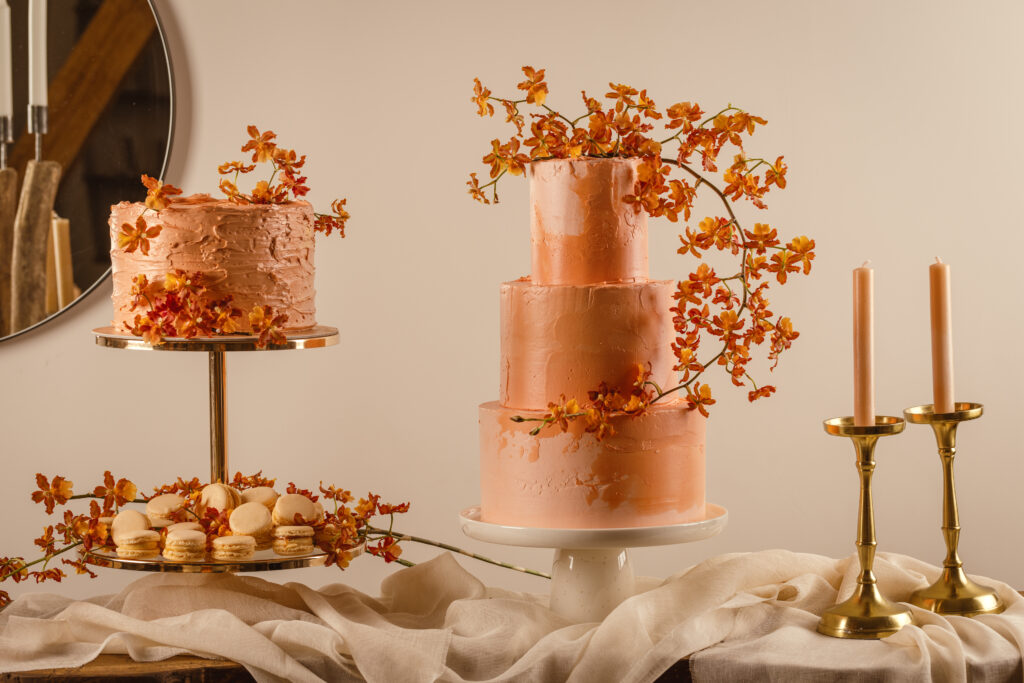
Fall wedding cakes have more natural flavor territory than almost any other season. Spiced apple, pumpkin spice, brown butter, salted caramel, maple, and chai are all crowd-pleasing flavors that feel seasonal without being predictable. A well-executed spiced apple cake with salted caramel buttercream is not a themed choice. It’s a delicious one that happens to fit the season.
Fall wedding cake ideas that are working well right now include textured buttercream in warm tones, dried floral and leaf accents, semi-naked cakes that show off autumn-toned layers, and tiered cakes incorporating fresh seasonal fruits like figs and pomegranates.
Non-cake dessert stations are a strong alternative or addition for fall: a s’mores station where guests roast their own marshmallows or a pie bar with pumpkin and pecan. Interactive dessert stations are a 2026 trend that maps well onto fall’s naturally cozy, communal atmosphere.
Food and drink
The best fall wedding menus lean into warmth and the harvest. Butternut squash soup shooters with crème fraîche and toasted pumpkin seeds make an elegant cocktail-hour appetizer. Mini baked brie bites with spiced apple compote. Caramelized onion and goat cheese tarts. These aren’t just seasonal. They’re genuinely satisfying in a way that lighter summer fare isn’t when the temperature drops.
For mains, herb-crusted roast chicken, beef bourguignon for cooler evenings, and harvest grain dishes with roasted root vegetables all feel appropriate without being heavy-handed. The goal is warmth, not a Thanksgiving rehearsal.
For drinks, an apple cider bar with hot and cold options, cinnamon sticks, caramel, and an optional bourbon addition is one of the most appreciated additions to a fall reception. Hot signature cocktails alongside cold options, including a hot toddy or warm mulled wine, serve guests practically while reinforcing the season’s aesthetic. These are the details guests mention when they talk about the wedding weeks later.
One more thing before the season turns
Fall has an emotional register that other seasons don’t. The leaves changing, the year drawing to a close, family gathering together before winter sets in: there’s an inherent awareness in the season that time moves, that moments matter, that the people in the room won’t always be together like this again.
That quality makes fall the most emotionally resonant season for a wedding. It also makes it the season where voices are most worth capturing. Your grandmother who made the trip from across the country. Your uncle whose toast at the rehearsal dinner had everyone in tears. The cousins who haven’t all been in the same room since the last family wedding. The ceremony video captures the vows. It doesn’t capture any of that.
That’s what The Toast is built for. We turn your guests’ video messages, recorded from wherever they are before or during the wedding, into a professionally edited keepsake you’ll watch long after the leaves have fallen and the season has changed. Fall brings your people together. The Toast makes sure you can hear them again whenever you need to.
Book a free discovery call, and we’ll show you what a finished keepsake looks like.