Your makeup only has to survive one day, but it’s not a normal day. It has to hold through happy crying during vows, a hug from every relative at cocktail hour, and however many hours you spend under bright photography lights before the reception even starts. Regular makeup routines, even good ones, aren’t built for that, which is exactly why wedding makeup deserves its own approach instead of just “more of what you already wear.”
The good news is that lasting all day isn’t about buying the most expensive products. It’s about a handful of specific choices, made in the right order, starting well before the morning of the wedding. Here’s what actually keeps bridal makeup intact from the first look through the last song.
Why wedding makeup fails before regular makeup does
Three things break down normal makeup on a wedding day that don’t come up on an average Tuesday. The first is tears, both yours and everyone else’s, which regular waterproof mascara handles fine but a non-waterproof formula does not. The second is physical contact: hugging, cheek kisses, and a veil brushing against your face all transfer product in a way that sitting at a desk never does.
The third is time. A typical wedding day makeup routine has to hold for 10 to 14 hours between getting ready and the last dance, which is roughly double what most people ask their everyday makeup to do. None of this means your makeup artist needs to load your face with product. It means the products and the order they go on in need to be chosen for endurance specifically.
What actually makes wedding makeup last
| Challenge | What causes it | What helps |
| Tears during the ceremony | Emotional moments, plus humidity from being outdoors | Waterproof mascara and eyeliner, a smudge-proof lip stain instead of cream lipstick |
| Fading by the reception | Long hours, talking, eating, and dancing | A long-wear foundation set with translucent powder, reapplied only at the T-zone |
| Oil and shine under photo lights | Heat from lighting plus a full day of movement | Blotting sheets instead of more powder, which can look cakey by hour eight |
| Overall wear from start to finish | 10 to 14 hours between getting ready and last call | Setting spray applied in layers, not just once at the very end |
Setting spray is the detail most people skip and shouldn’t. Applying it once after foundation and again after your full face is complete locks in each layer rather than asking one application to hold everything at once. A quality setting spray combined with a light dusting of translucent powder can keep makeup looking fresh for up to 12 hours without fading or creasing.
What a bridal makeup trial should cover
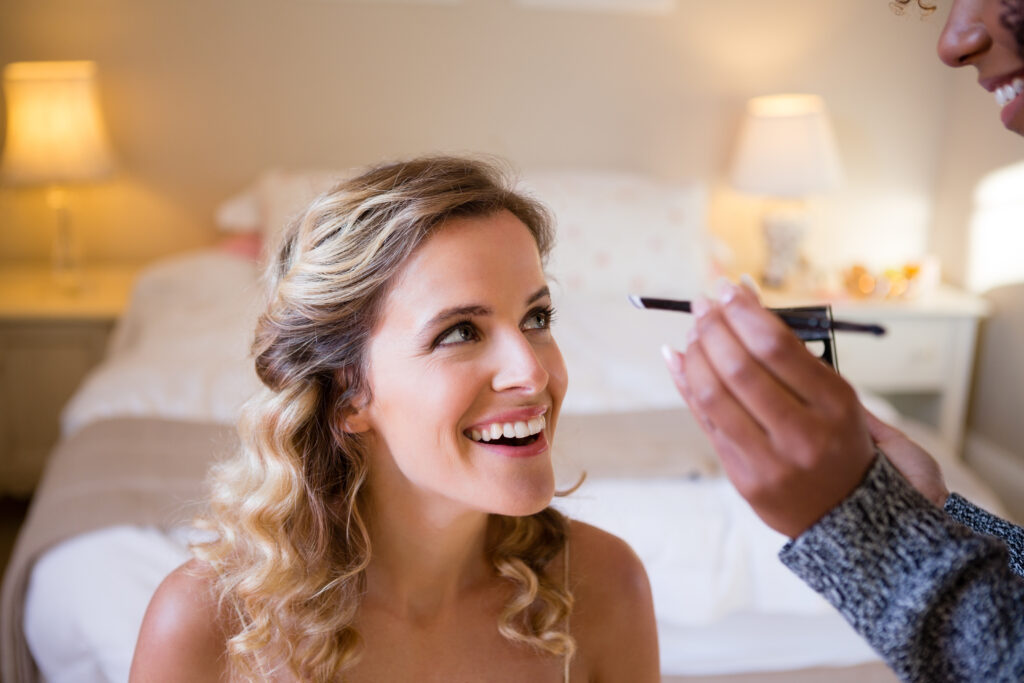
A trial isn’t just “trying on” a look, it’s a stress test. Ask your makeup artist to apply your full face at the time of day your wedding actually starts, then take photos in natural light and under whatever lighting your reception venue will use, since flash and warm venue lighting read very differently on skin than daylight does.
Plan the trial two to three months before the wedding, around the same window as a hair trial, so you can test both together and see how they read as a full look rather than separately. A standalone bridal makeup trial typically adds $150 to $300 to the cost of your day-of makeup.
Budgeting for wedding day makeup
Bridal makeup on its own generally runs $300 to $800, with a national average landing closer to $450 to $750, though it climbs to $700 to $1,500 or higher in major cities like New York or Los Angeles, according to The Knot. Each additional person in your getting-ready room, bridesmaids, your mom, a flower girl’s guardian, typically adds another $75 to $150 per face.
If you haven’t mapped out where hair and makeup sit against the rest of your spending yet, folding it into the rest of your wedding budget early keeps it from becoming a last-minute add-on you didn’t plan for. It’s also worth checking your venue and season against the plan; an outdoor June wedding in humidity needs a different product strategy than an October ceremony in a climate-controlled ballroom, which is one more reason picking your wedding date earlier in the process pays off later.
Touch-up kit essentials for the reception
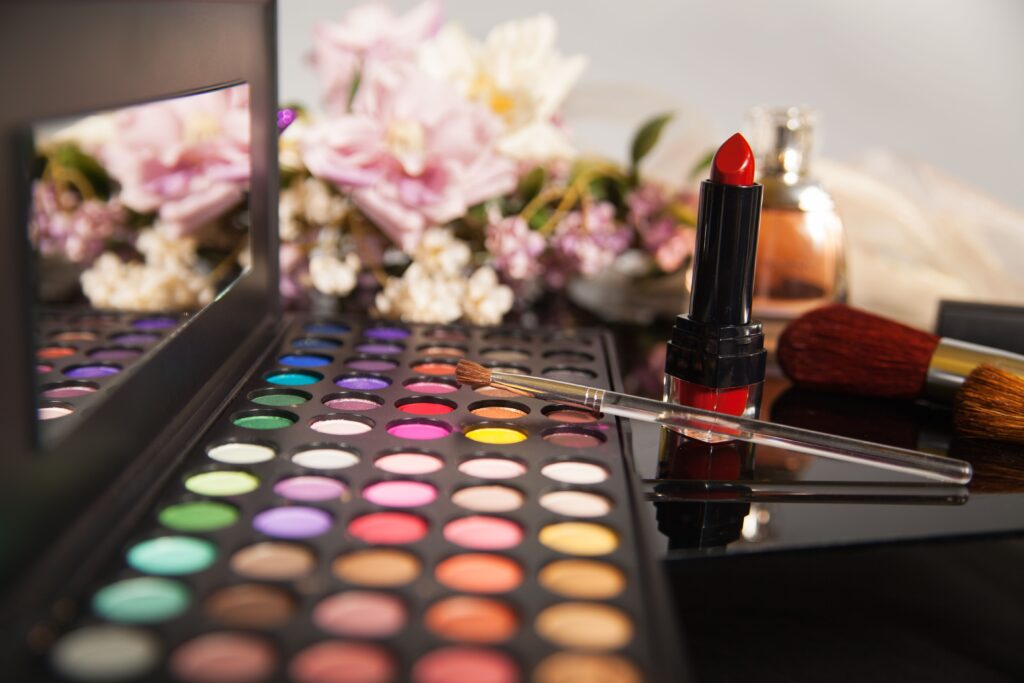
Hand a small kit to your maid of honor or planner before the ceremony starts, not after you’ve already noticed your lipstick is gone. Blotting sheets handle oil without adding more powder on top of what’s already there. A travel-size setting spray refreshes the whole face in seconds without needing a mirror and twenty minutes.
Your lip color and a cotton swab matter more than people expect, since lips fade faster than anything else on your face after eating, drinking, and talking all night. Skip loose powder for touch-ups entirely; it’s the easiest way to end up looking chalky in photos taken later in the evening.
Your makeup’s whole job is to disappear into the day, not steal it
The best compliment your wedding makeup can get isn’t “your makeup looks amazing,” it’s nobody mentioning it at all because you simply looked like yourself, just a more polished version, for fourteen straight hours. That’s the actual bar: makeup that holds up under real conditions, not makeup that only looks perfect in the first thirty minutes of photos.
Start with the trial, plan the budget honestly, and hand off a touch-up kit before you need it rather than after. The rest is just execution on a day that, unlike most others, is worth over-preparing for.
The tears, the hugs, the fourteen hours on your feet: your makeup survives all of it so you can be fully present. The Toast makes sure the moments themselves don’t just fade into memory either, turning your guests’ toasts and messages into a keepsake you’ll watch long after the touch-up kit is gone.
FAQs about wedding makeup
How much should I budget for wedding day makeup?
Bridal makeup on its own typically costs $300 to $800, with a national average closer to $450 to $750, though prices run higher in major cities. Add $75 to $150 per additional face for bridesmaids or family, plus $150 to $300 if you’re doing a separate trial.
When should I schedule my bridal makeup trial?
Book it two to three months before the wedding, ideally around the same time as your hair trial, so you can see both together. Ask for the trial at the same time of day your wedding actually starts, so the lighting and your skin’s real behavior match the day itself.
What makeup products keep your face from melting in summer heat?
A long-wear, oil-free foundation set with translucent powder handles heat better than a dewy formula that can slip by midafternoon. Waterproof mascara and eyeliner are non-negotiable outdoors, and a setting spray applied in two layers, once mid-routine and once at the end, adds real staying power.
Will waterproof makeup really survive happy tears?
Waterproof mascara and eyeliner genuinely hold up through crying far better than standard formulas, which is the main reason they’re worth using even if you don’t normally wear them. A smudge-proof lip stain instead of traditional lipstick also survives contact from hugs and cheek kisses much better.
Should I do my own makeup or hire an artist?
If you’re comfortable doing your everyday makeup and simply want it to last longer, a trial run with long-wear products at home can work. Most people hire a professional for the wedding specifically because an artist knows how to build a face that survives photography lighting and a full day, which is a different skill than a normal makeup routine.