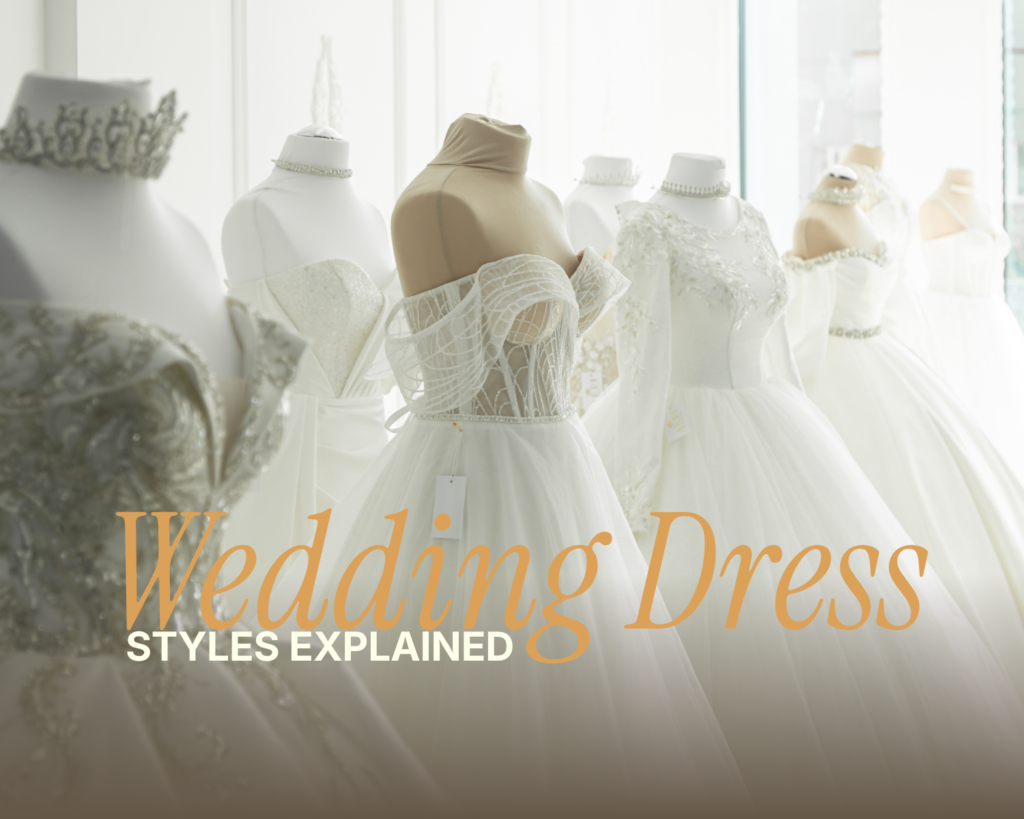
Walking into a bridal boutique for the first time is one of those moments that can go two ways. Either you feel excited and ready, or you feel completely overwhelmed by rows of gowns in fabrics and silhouettes you don’t have words for yet.
Understanding the vocabulary before you go changes everything. When you know what types of wedding dresses exist and how each one fits and moves, you can walk in with a starting point instead of a blank stare. This guide covers the core wedding dress styles, the necklines and details that go with them, how to match your silhouette to your body and venue, and a few things worth knowing before your first appointment.
The core wedding dress silhouettes
Every wedding dress starts with a foundational silhouette. The silhouette determines how the dress is structured, how it sits on your body, how easily you can move, and how it photographs. Everything else (fabric, neckline, embellishment) layers on top of that foundation.
| Silhouette | How it fits | Best for | Movement |
|---|---|---|---|
| A-line | Fitted through the bodice, flares gently from the waist | Almost every body type and venue | High and effortless |
| Ball gown | Fitted bodice with a full, dramatic skirt | Formal venues, fairytale aesthetic, creating a defined waist | Moderate (needs floor space) |
| Mermaid | Hugs from chest to knee, flares dramatically below the knee | Hourglass figures, curves, red-carpet looks | Low to moderate |
| Trumpet / fit-and-flare | Similar to mermaid but flares at mid-thigh rather than the knee | Hourglass and petite figures who want ease of movement | Moderate |
| Sheath / column | Straight and narrow, follows the natural body line with minimal flare | Minimalist styles, beach and intimate weddings, tall brides | High and lightweight |
| Empire waist | Waistline sits just under the bust, skirt flows from there | Petite frames, outdoor settings, comfort-first brides | High |
| Drop waist / basque waist | Waistline sits at or below the hip (drop) or dips into a V below the natural waist (basque) | Long-torso and hourglass figures; enjoying a 2026 revival | Varies |
The silhouettes in detail
A-line
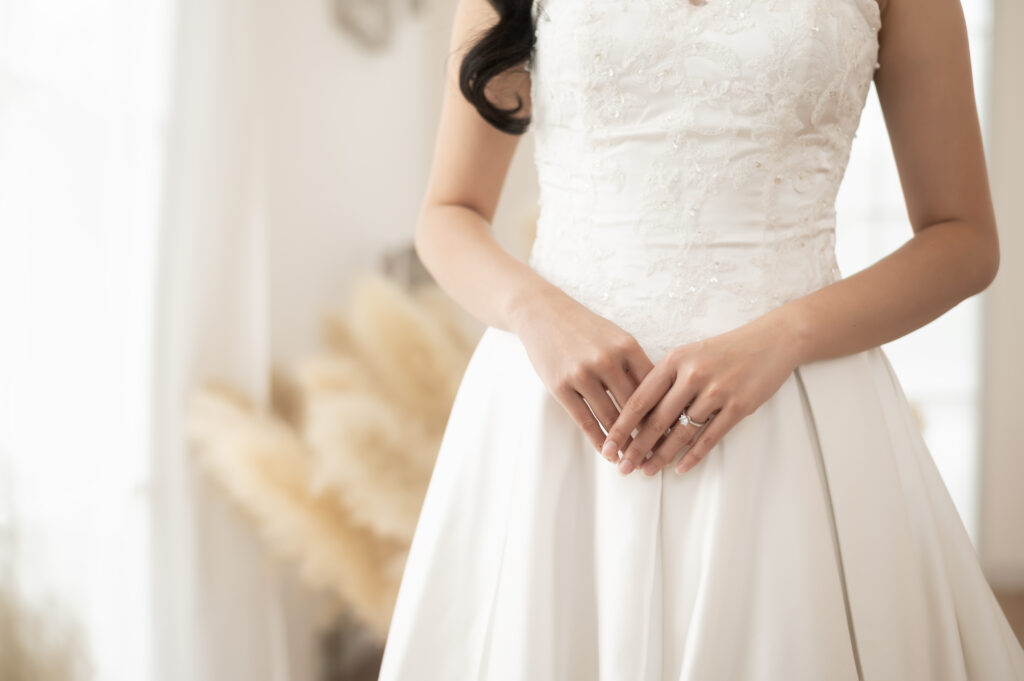
The A-line is the most universally flattering of all wedding dress shapes. It fits through the bodice and gradually flares from the waist down, creating the shape of the letter A. The gentle flare skims the hips without adding bulk, defines the waist, and photographs beautifully from every angle.
It’s a genuine starting point for almost any body type: hourglass, pear, petite, athletic, apple. If you’re not sure where to begin at your first appointment, pull an A-line first.
Movement: High. You can walk, sit, and dance comfortably.
Best venues: Works everywhere from garden ceremonies to grand ballrooms.
Ball gown
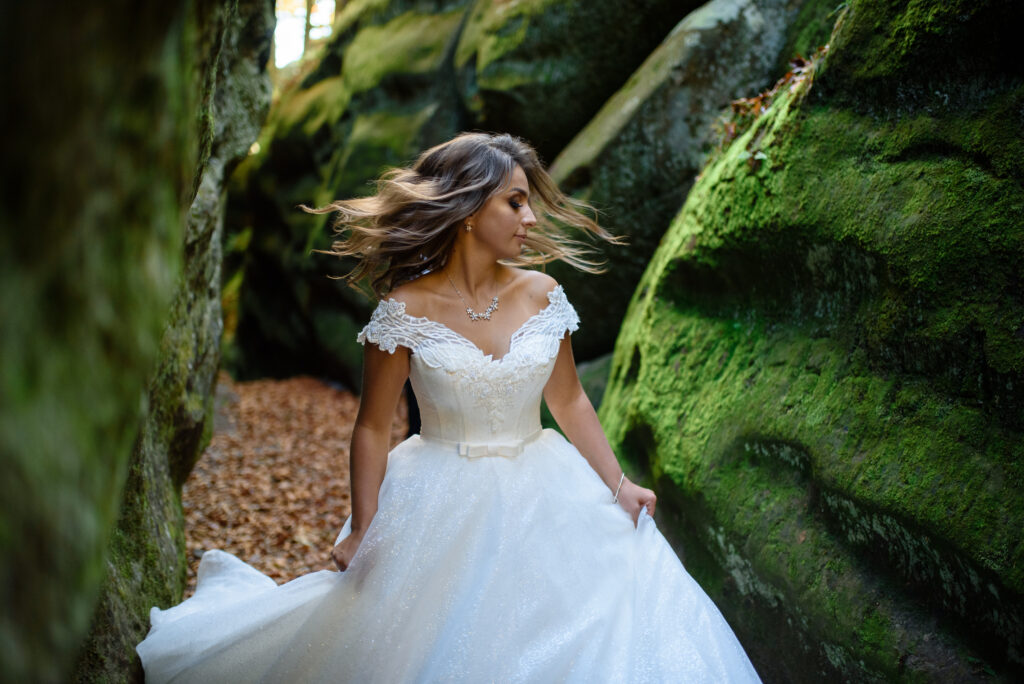
The ball gown is the classic traditional wedding dress: fitted bodice, dramatically full skirt, and a sense of occasion that no other silhouette quite matches. The contrast between the structured bodice and the volume below creates strong waist definition and a genuinely fairytale effect.
Ball gowns work beautifully on tall brides, pear shapes (the skirt balances the hips upward), and brides with smaller waists who want to emphasize that. They’re a bigger commitment in terms of logistics: restrooms, dancing, moving between venues. Try stairs and doors during your fittings.
Movement: Moderate. A lighter inner structure helps.
Best venues: Formal ballrooms, churches, and large indoor spaces.
Mermaid
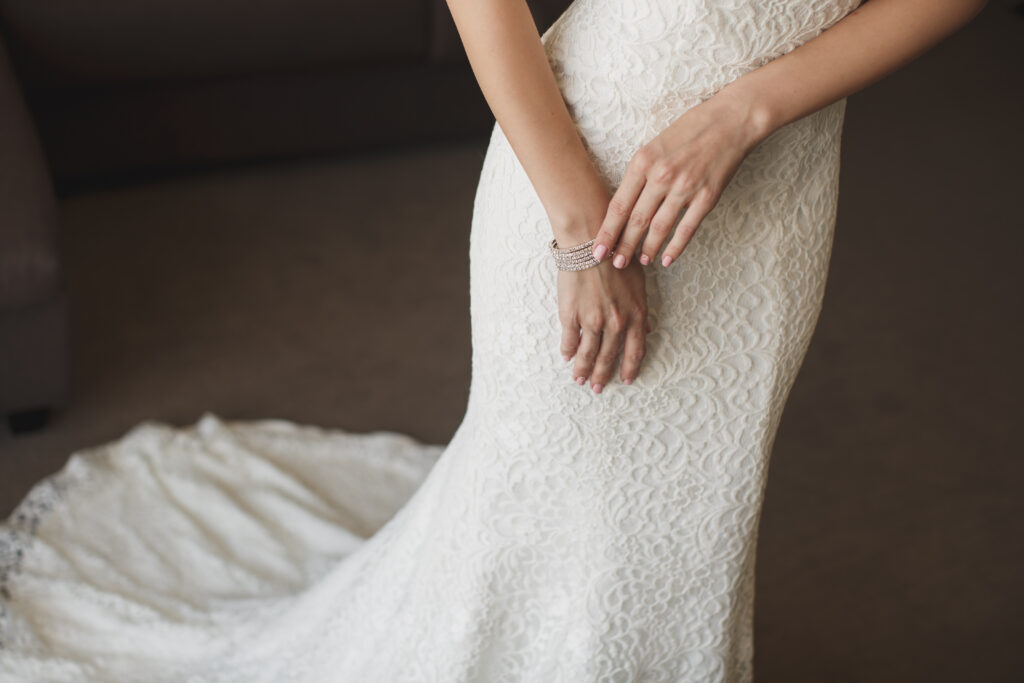
The mermaid silhouette hugs the body closely from the bust through the hips and thighs, then flares out at or just below the knee in a dramatic sweep. It’s the most body-conscious of all the different types of wedding dresses and works especially well for hourglass figures and brides who want a runway-worthy look.
It’s also the most restrictive in terms of movement. Stride length is limited, especially in the fitted section. A quality mermaid in the right fabric can be managed well, but it’s worth taking a full walk around the salon and sitting down to test it before committing.
Movement: Low to moderate. Plan for shorter strides.
Best venues: Modern venues, upscale lofts, evening ceremonies.
Trumpet / fit-and-flare
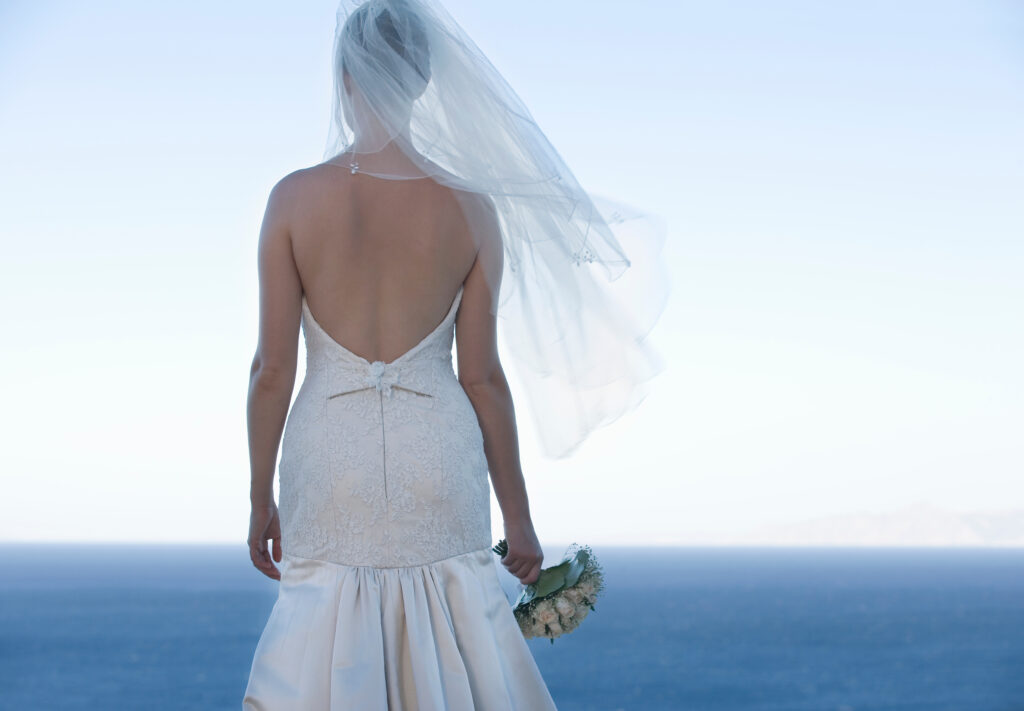
The trumpet is a softer version of the mermaid: still fitted through the bodice and hips, but flaring out at mid-thigh rather than at the knee. This means more freedom of movement with much of the same curve-celebrating effect.
Fit-and-flare follows a similar principle: fitted through the body and flaring out more gradually toward the hemline. It’s more forgiving to walk and dance in than a true mermaid and suits a wide range of figures including hourglass, pear, and petite.
Movement: Moderate.
Best venues: Works across most venue types.
Sheath / column
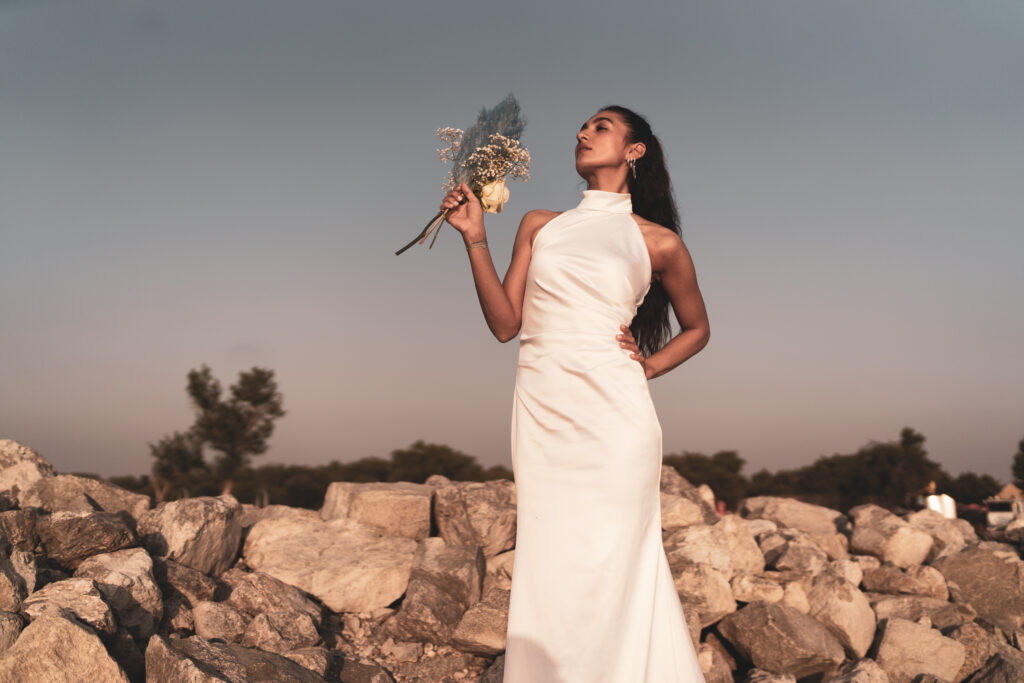
The sheath dress is the minimalist option among bridal gown styles: a straight, narrow cut that follows the body from shoulder to hem with little to no flare. It’s sleek, modern, and effortless in movement, which makes it a go-to for beach and destination weddings, elopements, and ceremonies with an intimate or contemporary feel.
The sheath suits tall brides particularly well, and brides who want the focus on accessories, veils, or a bold statement piece rather than the dress volume.
Movement: High. The easiest silhouette to wear all day.
Best venues: Beach, destination, art galleries, intimate settings.
Empire waist
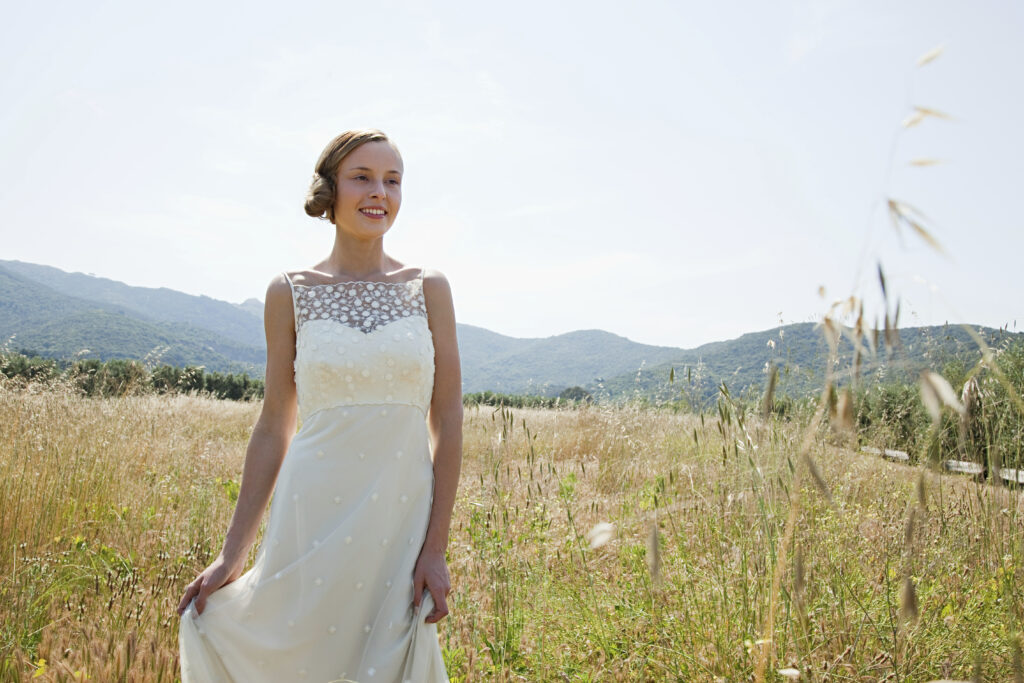
The empire silhouette places the waistline just below the bust and lets the skirt fall from there. It’s one of the most comfortable different wedding dress styles to wear for an entire day, and it elongates the figure by creating a high visual line.
It works well for petite brides (it creates the illusion of height), outdoor summer weddings (lightweight and breathable), and anyone who wants comfort as the primary consideration.
Movement: High.
Best venues: Outdoor ceremonies, garden and estate settings.
Drop waist and basque waist
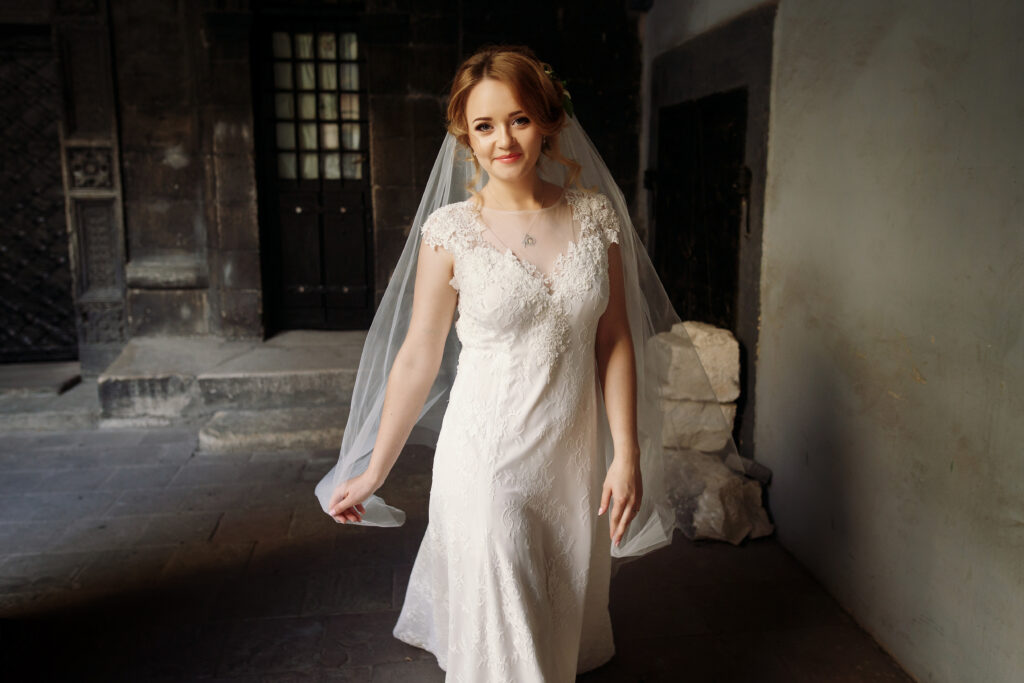
Both are having a moment in 2026. The drop waist sits at or below the hip, creating a longer torso effect and a romantic, vintage silhouette that suits hourglass and long-torso figures. The basque waist dips into a V below the natural waist before flaring, giving a deeply romantic, structured look that photographs beautifully.
These work particularly well at formal indoor venues and with more structured fabrics.
Necklines worth knowing
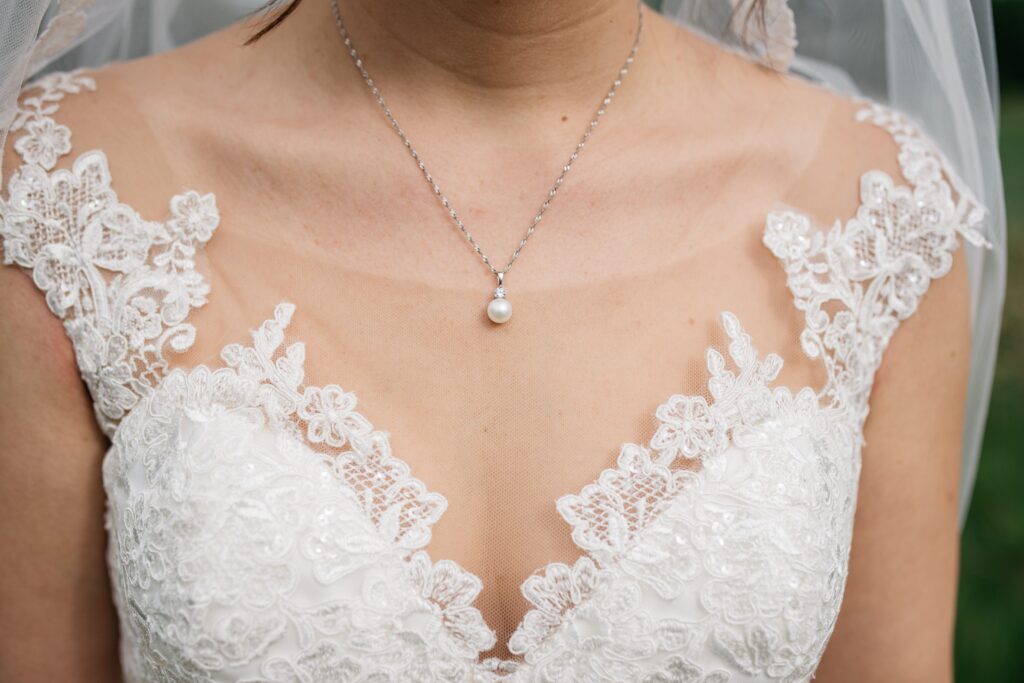
Once you have a silhouette in mind, the neckline shapes the overall look significantly. The most common wedding dress top styles and necklines:
Sweetheart: A curved neckline resembling the top of a heart. Romantic, enhances the bust, and works across most body types. One of the most popular bridal necklines.
V-neck: Creates a vertical line that elongates the torso. Flatters most shapes and can be shallow or deep.
Off-the-shoulder: Drapes across the arms, exposing the collarbone and shoulders. Creates a romantic, soft look and balances broad shoulders.
Illusion: Uses sheer fabric (often lace or tulle) over a more solid bodice to create the appearance of intricate detail on the skin. A versatile option for brides who want coverage with visual interest.
High / halter: Sits high on the collarbone. Elegant, works particularly well on brides with smaller busts and taller frames.
Square: A straight-line neckline that photographs cleanly and looks particularly strong with a minimalist gown. One of the defining 2026 bridal neckline trends.
Fabrics and what they mean for your day
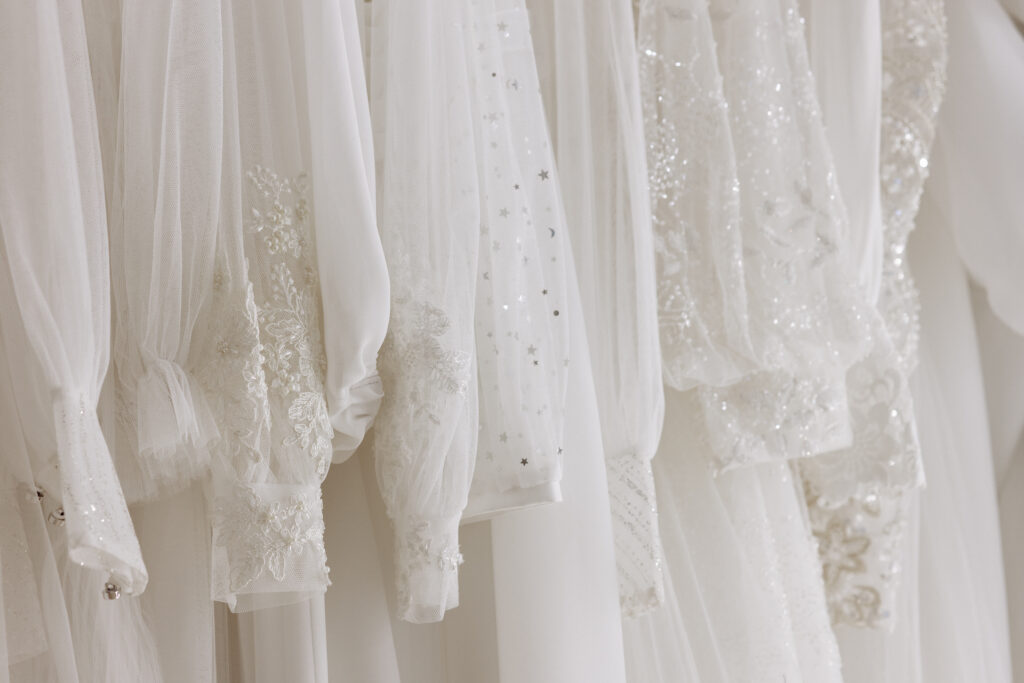
The fabric affects how the dress moves, how it photographs, and how comfortable you’ll be for 10 or more hours. Wedding gown shopping tips almost always include paying attention to fabric alongside silhouette.
Chiffon and organza: Lightweight, breathable, and great for movement. Ideal for outdoor summer and destination weddings.
Silk crepe: Smooth, fluid, and elegant. Drapes beautifully on the body. Great for sheaths and minimalist silhouettes.
Satin and mikado: Structured and weighty. Photographs with a beautiful sheen but can feel warm in summer. Better for cooler weather and formal indoor venues.
Lace: Classic, romantic, and versatile across silhouettes. It comes in many weights: a heavier lace adds structure, while a softer stretch lace moves more freely.
Tulle: Creates volume for ball gowns and adds softness to A-lines. Modern ball gowns increasingly use soft tulle layers rather than heavy crinoline for a lighter effect.
Velvet: Luxurious and deeply seasonal. A niche choice for winter weddings in formal settings.
Matching your dress to your venue and season
| Season / venue | What works well | What to consider |
|---|---|---|
| Summer outdoor | Chiffon, organza, silk crepe; A-line, empire, sheath | Heat and breathability; avoid heavy fabrics |
| Spring garden | Lightweight lace, chiffon; A-line, fit-and-flare | Uneven ground and outdoor photography light |
| Fall | Satin, heavier lace, brocade; ball gown, A-line, mermaid | Cooler evenings; layers or cover-ups help |
| Winter indoor | Mikado, velvet, heavy satin; ball gown, long-sleeve mermaid | Structure looks beautiful in candlelight |
| Beach / destination | Chiffon, crepe, lightweight lace; sheath, empire, simple A-line | Sand, wind, and ease of travel with the gown |
| Ballroom / formal | Satin, lace, structured tulle; ball gown, mermaid, basque waist | Formality of the space; photography lighting |
What to know before your first appointment
Know your measurements before you go. Most bridal boutiques size by measurement, not standard sizing, and bridal sizing typically runs smaller than ready-to-wear. Your measurements (bust, waist, hips, and height) are what matter.
Budget for alterations. Almost no bride buys a wedding dress off the rack that fits perfectly. Alterations typically run $200 to $800 depending on the scope of work. Build this into your dress budget from the start.
Wear the right undergarments. Bring (or buy) the undergarment you plan to wear at the wedding. The fit of the dress will be different depending on what’s underneath it, and it affects how alterations are sized.
Test the dress in motion. During every fitting, sit down, walk up a step, attempt a dance move, and practice the bustle if there’s a train. A dress that looks stunning standing still is only worth committing to if it also works when you’re moving through the happiest day of your life.
Start earlier than you think. Most bridal gowns require 4 to 6 months to produce, plus 6 to 10 weeks for alterations. If your wedding is in 8 months or less, be upfront about the timeline so the boutique can recommend styles available within your window.
The right dress is the one that feels like you. Every silhouette guide is a starting point, not a rule. The body type charts give you a direction, but the dress that makes you feel like yourself on that day: that’s the one.
One thing that doesn’t show up in photos
Your dress will be in every photo. It’ll be there in the getting-ready shots, the aisle walk, the first dance, and the portraits at golden hour. It’s one of the most photographed objects in your life.
But years from now, when you open those photos, what you’ll also want is sound. The voice of your dad trying not to cry during the ceremony. Your best friend’s toast. Your grandmother’s story about love that goes back fifty years.
That’s what The Toast captures: the voices of the people who showed up for you, professionally edited into a keepsake you’ll still be watching on your tenth anniversary.
The dress is how your wedding looks. The Toast is how it sounded.
Book a free discovery call and we’ll show you what a finished keepsake looks like.