Planning a wedding is one of the most exciting seasons of your life. It’s also full of fast decisions, overlapping deadlines, and emotional milestones you’ll want to remember long after the day is over.
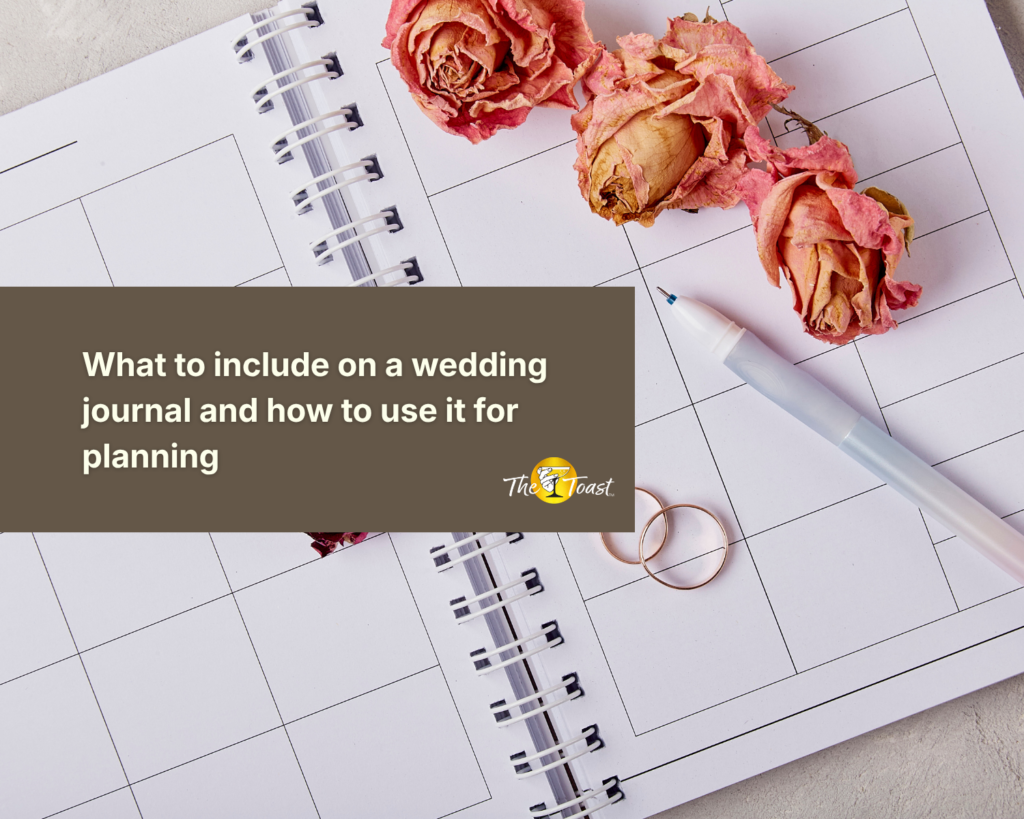
A wedding journal does two things at once: it keeps your logistics organized and it captures how the season actually felt. The vendor calls, the budget decisions, and the seating chart all have a place in it. So do the quiet moments, the funny stories from tastings, and the way you felt the day you found your venue. That combination is what separates a wedding planner journal from a regular checklist.
Whether you prefer a physical wedding planner notebook or a digital wedding planner, the sections you include matter more than the format. This guide walks through what to put in each one and how to use your journal consistently throughout the planning process.
Why a wedding journal is worth keeping
Most couples go into planning with a folder of screenshots and a handful of shared notes apps. That works up to a point. But when you’re tracking vendor deposits, writing your vows, processing a tough conversation about the guest list, and trying to remember what the florist said about peonies, it all ends up in the same chaotic pile.
A dedicated wedding planning journal separates those things into sections that make sense. It gives you one place to go instead of five. And after the wedding, it becomes something else: a record of a season of your life that went by faster than you expected.
| The wedding journal: two jobs at once | |
| Logistical helper | Emotional keepsake |
| Vendor contacts and notes | How you felt the day you got engaged |
| Budget tracking and payment dates | Letters to your partner or family |
| Task checklists and timelines | Funny or unexpected moments worth remembering |
| Guest list decisions | Reflections on big decisions as you made them |
Years from now, you’ll have forgotten most of the vendor back-and-forth. You won’t forget the way the afternoon light looked at your venue walk-through, or what your partner said when you found the dress.
The essential sections to include
1. Your vision and priorities
Start here before anything logistical. Before you contact a single vendor, write down what matters most to you as a couple. What does your ideal day feel like? What are the two or three things you absolutely won’t compromise on? What do you genuinely not care about?
This section becomes a decision-making anchor. When you’re four months into planning and facing a budget tradeoff between a live band and a photo booth, you’ll want something to come back to.
Include: a mood board or visual inspiration, your core priorities as a couple, any aesthetic or atmosphere notes, and your non-negotiables.
2. Budget and payment tracking
Your wedding planner organizer needs a dedicated budget section, not just a general list of costs. Structure it so you can see estimated versus actual spend at a glance, track deposits and balance due dates, and flag anything overdue.
A simple format works: one row per vendor, with columns for the quoted price, deposit paid, remaining balance, and payment due date. Keep this section current. Running behind on a vendor payment is one of the more stressful things that can happen during planning, and a well-kept journal prevents it.
Also include: a running total of all confirmed costs versus your overall budget, any contracts or key terms worth noting by hand, and a separate row for line items that often get forgotten like postage, gratuities, and the marriage license fee.
3. Vendor contacts and notes
Every vendor you meet goes in this section: contact name, phone, email, website, what was agreed, and key dates. Don’t rely on email threads to hold this information. Threads get buried, inboxes get full, and the week before the wedding is not the time to be searching for your florist’s number.
Beyond contact details, use this section to keep notes from each meeting or call. What did they recommend? What did you decide? What’s still open? A wedding planner book for bride and groom that tracks these details consistently saves an enormous amount of time as the day gets closer.
4. Guest list and experience planning
This section covers more than just names and addresses. Use it to track RSVPs as they come in, note dietary needs and seating considerations, and flag guests who might need special attention (elderly family members traveling far, guests who don’t know anyone else, children who’ll need accommodations).
It’s also worth using this section to think about the experience you want your guests to have. What do you want them to feel when they arrive? What stories do you want captured from the people who matter most? That thinking often gets crowded out by logistics, and the journal is where to do it.
5. Vows and letters
Give this section its own dedicated space. Writing your vows is one of the most meaningful parts of the planning process and one of the most commonly rushed. Having a section set aside for draft attempts, lines you want to remember, and thoughts that come to you at random times makes the final version much easier to write.
Use the same space for letters to your partner, your parents, or anyone else you want to write to before the day. These don’t need to be formal. They just need to exist. Many couples wish after the wedding that they’d written more down.
6. Memory keeping
This is the section that makes your bridal journal a keepsake rather than just a task tracker. Use it to write short entries after significant planning moments: the day you booked the venue, the dress appointment, the first time you saw the menu, the night you finalized the guest list.
You don’t need to write a lot. A few sentences about what happened and how it felt is enough. The engagement is a season, not just a countdown to a date. It’s worth documenting.
How to use your journal consistently
Having the sections set up is only half of it. The wedding planner scheduler approach that works best for most couples is simple: treat the journal like a weekly check-in rather than a daily task.
Set aside 30 minutes once a week to update it. Review what’s due in the next two weeks, add any new vendor notes from the week, check your budget against actual spend, and write a short entry about anything significant that happened.
That rhythm keeps the journal current without making it feel like a burden. And it means you’re never more than a week behind, which is usually where the stress starts.
A few other habits worth building:
- Write things down the day they happen. Venue walk-throughs, tastings, and big decisions are vivid in the moment. By the following week, the details start to fade. Keep your journal somewhere easy to reach so jotting a note is a two-minute habit rather than a production.
- Keep it honest. A wedding journal isn’t a highlight reel. Write about the vendor who frustrated you, the family disagreement about the guest list, the moment you felt overwhelmed. Those entries are often the ones that feel most true when you read them later.
- Don’t overthink the format. A bride journal doesn’t need to be perfectly organized or beautifully written. It needs to be used. Messy notes on the right pages are worth more than pristine blank ones.
Physical or digital: Which format works better?
Both work. The choice comes down to how you naturally keep track of things.
A physical wedding planner notebook gives you a tangible object you can open anywhere, write in freely, tape things into, and eventually keep on a shelf. It becomes an artifact of the engagement in a way a digital file doesn’t. Many couples look back at their physical journal years later and love having it.
A digital wedding planner gives you instant search, easy sharing with your partner, and the ability to link to documents, contracts, and vendor emails. Tools like Notion, Google Docs, or a dedicated planning app let you build out sections, add checklists, and access everything from any device.
The format that gets used consistently is always the better one. Some couples keep both: a digital file for logistics and contracts, and a physical journal for personal reflections and letters.
One more thing the journal can’t hold
A wedding planning book handles the written record of the planning process. It can’t hold your grandmother’s voice telling the story of how she almost missed the ceremony. It can’t hold your college friend laughing through their toast. It can’t hold the moment your dad tried and failed to get through his speech without crying.
Those are the pieces of the wedding that fade fastest, and the ones that matter most.
That’s what The Toast is built to capture. While you keep track of the planning in your journal, we take care of the voices: guest video messages recorded from anywhere, before or during the wedding, professionally edited into a keepsake you’ll watch long after the journal is on the shelf.
The journal keeps the season. The Toast keeps the people in it.
Book a free discovery call and we’ll show you what a finished keepsake looks like.