The music starts, the doors open, and suddenly everyone’s looking at the back of the aisle. If you’re not sure exactly who’s supposed to walk through those doors first, you’re not alone. The wedding processional order trips up a lot of couples simply because no one explains it clearly in one place.
This guide walks you through the traditional wedding processional order, the most common modern variations, and how to actually organize your wedding party before the big walk, so nobody’s standing around confused thirty minutes before the ceremony starts.
Why the wedding processional order matters
The processional isn’t just a formality. It’s the first thing your guests actually watch happen, and it sets the tone for everything that follows. A clean, well-timed procession tells your guests the ceremony has officially begun and quietly signals who’s who: which side is the couple’s, which relatives matter most, and who’s about to walk through those doors as your spouse.
It also keeps the ceremony itself running smoothly. When everyone knows their spot and their cue, there’s no awkward hovering by the door or a flower girl who’s not sure if it’s her turn yet. Getting the order right ahead of time means your coordinator, officiant, and musician can all work off the same plan, and you get to actually enjoy the walk instead of worrying about it.
Traditional wedding processional order, step by step
Most traditional processionals follow a similar shape, even though the specific details shift depending on religion and culture. The table below covers the standard order for a Christian or non-denominational ceremony in the US, which is the most common starting point couples work from before adjusting it to fit their own families.
| Order | Who | Notes |
| 1 | Mother of the bride | Her seating cues the start of the processional. She’s usually escorted by a son, nephew, or other close relative, then seated in the front row. |
| 2 | Officiant | Enters next, or is already standing at the altar. Some couples prefer the officiant walking in right before the groom instead of first. |
| 3 | Groom | Often enters from the side of the altar rather than down the aisle, sometimes with the best man, sometimes escorted by both parents. |
| 4 | Groomsmen and bridesmaids | Walk in pairs or individually, depending on the couple’s preference and the size of the wedding party. |
| 5 | Maid or matron of honor | Enters last among the attendants, taking the spot closest to the bride at the altar. |
| 6 | Ring bearer | Comes down the aisle just before the flower girl, carrying the rings (often on a decorative pillow, sometimes just for show while the best man holds the real ones). |
| 7 | Flower girl | Follows the ring bearer, typically scattering petals right before the bride’s entrance. |
| 8 | Bride | Enters last, traditionally escorted by her father, though it’s increasingly common for her to walk with any close family member or on her own. |
A few of the most commonly searched details worth calling out directly: the ring bearer walks near the very end of the processional, right before the flower girl and the bride, not somewhere in the middle with the rest of the wedding party. And the mother of the bride is typically the last person seated before the processional formally begins, which is why her walk is treated as the unofficial “start” signal even though the officiant and groom follow right after her. Most couples know their maid of honor and best man best for the toasts they’ll give later, not this one walk down the aisle, but it’s worth remembering they’re standing up there for the whole ceremony either way.
Modern wedding processional order variations
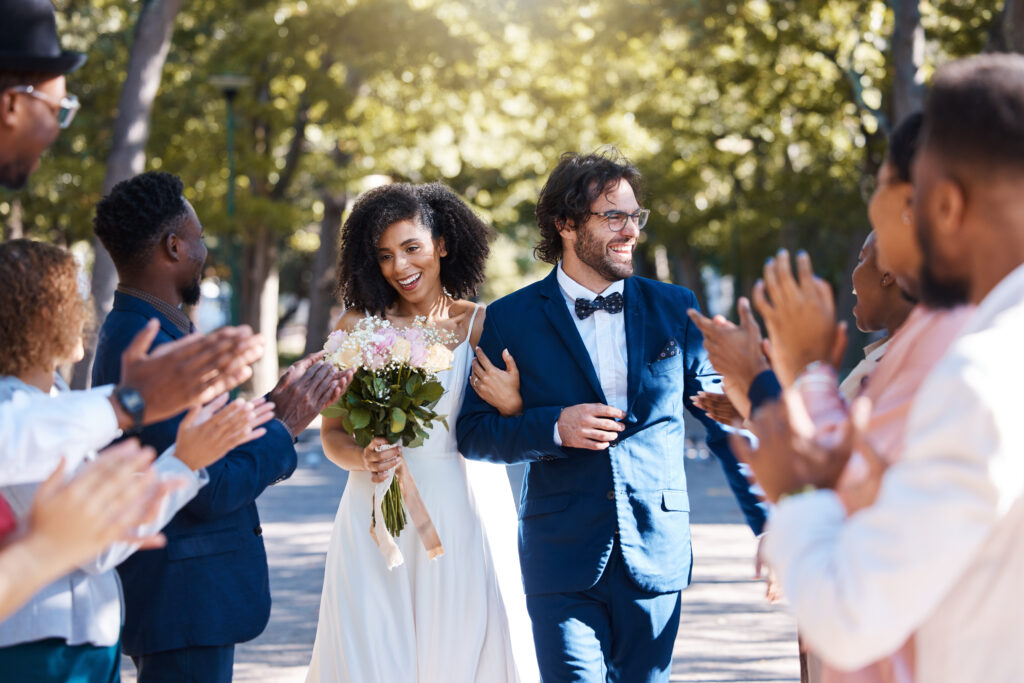
Plenty of couples still love the traditional order exactly as it is. Just as many don’t, and there’s no rule that says you have to follow it.
Couples walking in together. Some couples skip the separate entrances entirely and walk down the aisle side by side, as a symbolic statement that they’re entering the marriage as equals rather than one partner “giving away” the other.
Both parents walking the couple. Instead of just the father of the bride, it’s increasingly common for both of the bride’s parents to walk her down the aisle, and for the groom to be escorted by his parents too, rather than simply standing and waiting at the altar.
Blended and non-traditional families. Two mothers, two fathers, stepparents alongside biological parents, or a grandparent standing in for a parent who isn’t in the picture are all common adjustments. The processional can include as many or as few of these people as actually reflects your family, and there’s no requirement to fit everyone into a single traditional slot, the same flexibility applies once you’re deciding who else makes it onto your guest list in the first place.
Whatever combination you land on, the same rule applies across every version: talk it through with your officiant and coordinator early enough that it’s not being figured out the morning of.
How to line up your wedding party before the processional
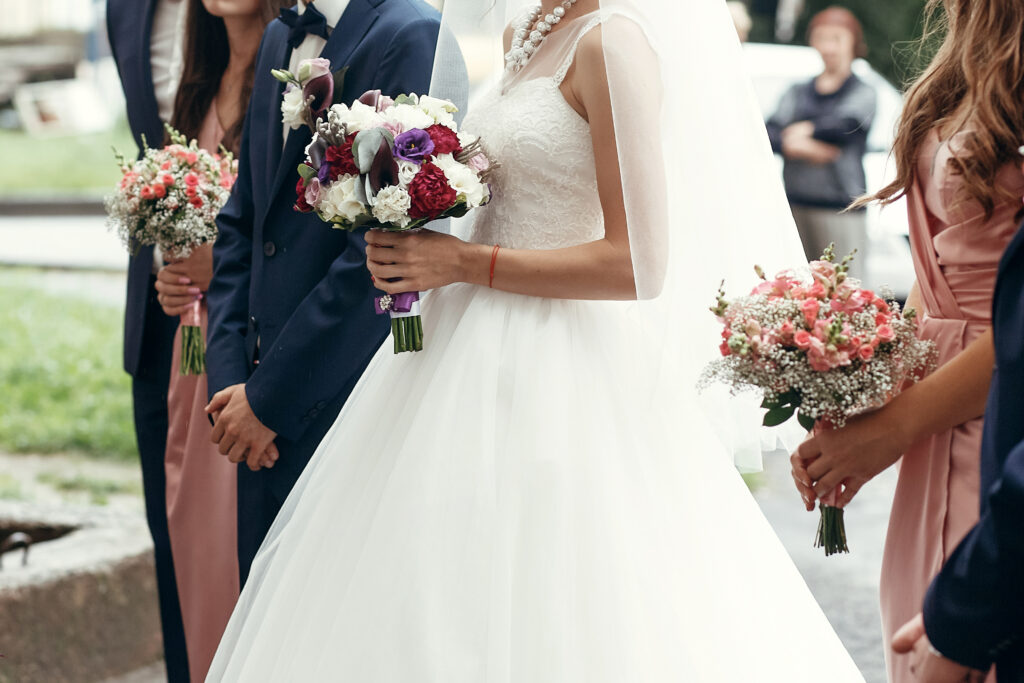
Getting the order right on paper is only half of it. You also need everyone actually lined up correctly and ready to go when the music starts.
Start by working out the physical lineup in a staging area, whether that’s a hallway, a bridal suite, or just a corner of the venue out of guests’ sightlines. Walk through the order out loud with your coordinator or officiant so everyone hears their cue and knows who comes right before and after them, not just their own spot in the list.
Decide early whether your groomsmen and bridesmaids will walk in pairs or one at a time. Pairs tend to look more formal and move the processional along a bit faster, while solo entrances let each person get a small individual moment and work better for uneven wedding party sizes.
Assign someone specific to manage timing. A day-of coordinator tends to already be tracking every other moving piece of your day, which makes them the natural person for this too, but a stage manager–minded friend, your officiant, or even your DJ or musician can cue each person if bringing on a planner isn’t in the budget. Whoever it is needs a clear, written copy of the order, since “I think we’re up” is how processionals fall apart.
Rehearse it at least once, ideally the day before at the ceremony rehearsal, and walk it at the actual pace you’ll use on the day. A processional that gets rushed through in rehearsal often ends up rushed on the day too, and it’s one of the few parts of the ceremony guests notice when it feels off.
Consider this your cue
However you order it, the processional only lasts a couple of minutes, but it’s the one moment your entire wedding gets watched by every guest at the same time. Get the timing right, and it sets the tone for everything that follows.
A lot of couples find that same instinct, wanting the day to actually sound and feel like their people, doesn’t stop once the ceremony ends. That’s the same thing The Toast is built around: turning the voices, toasts, and reactions from the day into a keepsake you can watch back long after the aisle is empty, not just something you half-remember a year later.
Work out your order early, rehearse it once, and let the rest of the day take care of itself.
FAQs about wedding processional order
Is the officiant part of the wedding party?
Not in the traditional sense of bridesmaids and groomsmen, but they’re considered part of the broader wedding party lineup for processional purposes. Officiants can be religious clergy, civil celebrants, or an ordained friend or family member, and the specific rules for who’s legally allowed to officiate vary by state and country. Many couples have the officiant enter early in the processional or have them already standing at the altar when guests arrive, so where they fall in the lineup varies more by preference than by strict etiquette.
Who walks the bride’s mom down the aisle, and when?
The mother of the bride is usually escorted by a son, nephew, or another close male relative if one is available, though she can also walk alone. She’s typically seated first, before the officiant and groom enter, which is why her walk is treated as the unofficial start of the processional.
Can the couple walk down the aisle together?
Yes, and it’s become a popular modern choice. Walking in together instead of separately is often chosen as a symbol of entering the marriage as equal partners, rather than one person being escorted to meet the other.
Does the ring bearer walk with the flower girl?
They usually walk close together near the end of the processional, but not necessarily side by side. The most common order has the ring bearer walking just before the flower girl, right before the bride’s entrance, though some couples do have them walk as a pair.
What if there’s no officiant walking in first?
That’s completely fine. Plenty of ceremonies have the officiant already positioned at the altar before guests are even seated, which is just as traditional as having them walk in. It usually comes down to venue setup and personal preference rather than a fixed rule.